One edge feels sharp or presses
An isolated point of pressure may be related to a border or contact, but the area needs assessment before material is removed. Avoid filing the denture at home, even if the location seems obvious.


A tender area beneath a denture deserves attention rather than repeated pressure. Arrange denture sore-spot care in Milton so we can examine the tissue, check the appliance, and explain the treatment and follow-up appropriate to the cause.
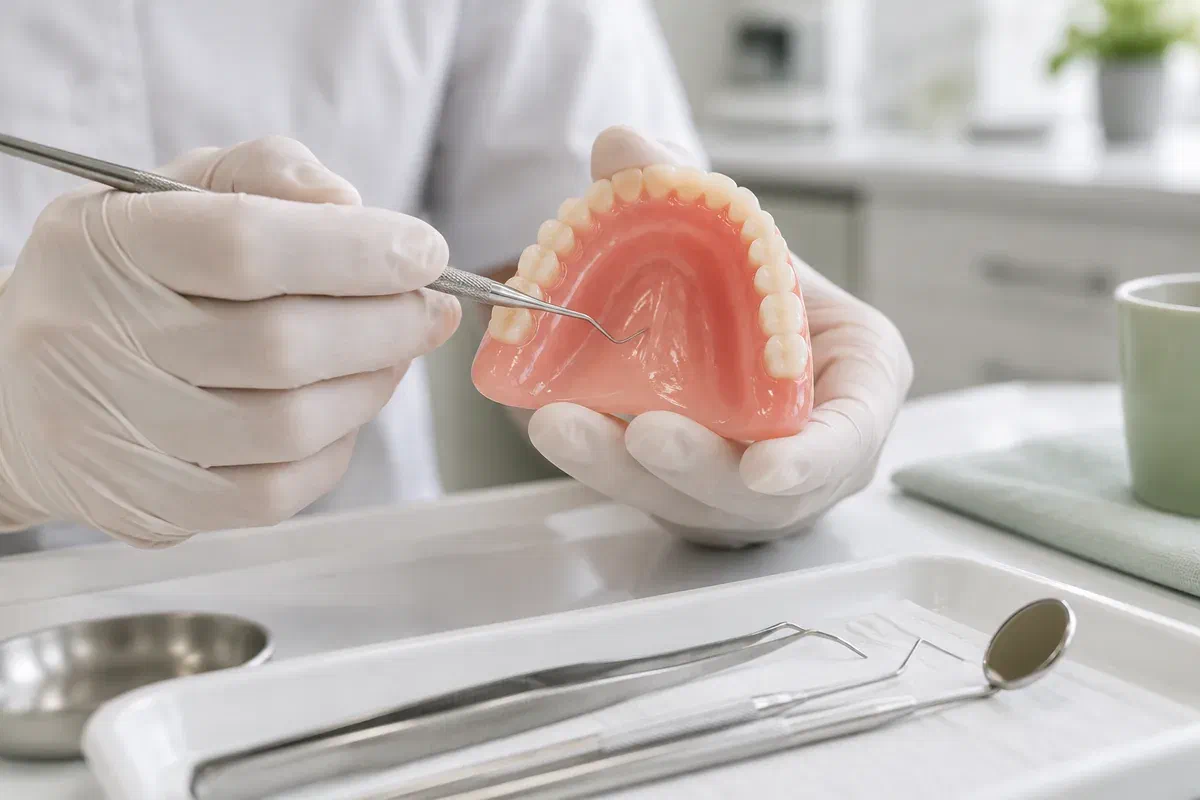
A denture sore spot is an area of tenderness or irritation associated with wearing an appliance. It may be noticed along an edge, beneath the base, or when chewing. The location helps guide the examination, but it does not by itself establish what is causing the discomfort.
A new appliance may need its fit reviewed, while a familiar denture can become troublesome after changes in the mouth or the appliance. Not every red or painful area is simply a pressure point. The tissue itself needs to be examined, especially when a sore persists or behaves differently from previous irritation.
At Milton Dental Clinic, we listen to how the discomfort affects you and assess the denture alongside the mouth. The aim is to identify the cause and choose an appropriate response, which may involve a targeted adjustment, another fit correction, or separate care for the tissue. You do not need to keep tolerating pain to prove that something is wrong.
Specific observations help the dentist understand the concern. Tell us when the soreness began, whether it changes when the denture is out, and whether the appliance has recently been made, repaired, or relined.
An isolated point of pressure may be related to a border or contact, but the area needs assessment before material is removed. Avoid filing the denture at home, even if the location seems obvious.
Discomfort during use can involve movement or the way the teeth meet. Explain whether it happens with one side or a particular action so the appliance can be assessed in relation to function.
Persistent or unusual tissue changes should not be assumed to come only from the denture. Tell the clinician about the duration, bleeding, colour changes, and any similar areas elsewhere in the mouth.
A mouth ulcer lasting more than three weeks needs a dentist or medical assessment. Arrange care sooner for worsening pain, bleeding, or other concerning changes rather than waiting for that time to pass.
The denture and the tissue beneath it provide different parts of the picture. Reviewing both helps distinguish a localized contact problem from broader instability or a mouth condition that requires a different response.
An explanation of the cause makes the care plan more useful. Ask what is being changed, what should happen as the tissue recovers, and when the area needs to be checked again. A review is particularly important when the original sore does not settle as expected.
Patient information: NHS — mouth ulcers and when to seek care
The clinician can relate your symptoms to the appliance and the examination findings. This reduces reliance on guesswork about which edge or surface needs changing and whether a denture adjustment is appropriate at all.
Removing material without a plan can change support or retention. A considered adjustment takes account of the whole appliance so that addressing one contact does not ignore the way the denture functions.
You should know how to use the appliance while the area is being managed and what symptoms warrant another call. The plan can include reassessment of both the denture and the affected tissue.
Call for advice on how to prepare for the visit, including whether to wear the denture beforehand. Do not force yourself to wear a painful appliance simply to make the sore more visible.
Describe the location, duration, and situations that bring on the pain. Mention recent dental treatment, any products applied to the area, and whether the denture feels loose or different from usual.
The dentist reviews the affected area and checks relevant features of the denture, including borders, support, and contacts. The assessment also considers whether the appearance of the tissue needs further investigation.
A suitable pressure point may be adjusted, while another finding may require a different plan. Ask what the treatment addresses and whether any additional work or referral is needed beyond the immediate visit.
Follow the instructions for wearing, cleaning, and any recommended care. Report ongoing or worsening symptoms and attend the planned review so persistent changes are not repeatedly attributed to the same presumed cause.
Instructions depend on the cause identified and any treatment provided. Ask how long to leave the appliance out, when to resume use, and which cleaning or comfort measures are suitable for your situation.
Resting the mouth and returning to use should follow the clinician's guidance. If the appliance was fitted after recent extractions, follow the specific postoperative instructions rather than applying a general denture routine.
Ask how to clean the mouth and appliance without further irritating the area. Mention any cleanser, adhesive, rinse, or topical product you use so the advice accounts for what contacts the tissue.
A sore that persists, returns repeatedly, or changes appearance needs reassessment. Explain what has happened since the visit and whether the appliance feels different, instead of simply repeating a home remedy.
These questions address preparation, adjustments, and follow-up. Advice for your own sore area depends on an examination, especially if it is persistent, changing, or associated with recent surgery.
Contact our Bronte Street clinic about tenderness beneath or beside a denture. We can examine the tissue and appliance, discuss appropriate care, and arrange follow-up to check that the concern is resolving.
Bring the denture and tell us when the discomfort started, including any recent adjustments, relines, or extractions.
