A sharp spot from the moment it goes in
Immediate pain in one place often suggests an edge or contact meeting the gum, but it still needs checking before material is taken away. Resist trimming it at home, even if the location seems unmistakable.


Fine at breakfast, aching by supper, or sore the moment it goes in each morning: the timing of denture pain says a lot. From Acton, you can book a visit where we look at your daily routine, the tissue and the appliance before choosing care.
Some people feel a twinge the moment the denture goes in after a night out of the mouth. Others are comfortable until late afternoon, when a dull ache builds under one side. Those daily patterns are clues. They point toward pressure, movement or tissue that has not had a chance to rest, but none of them settles the question alone.
A recently made appliance may need its fit refined as you wear it through full days, while a well-used one can begin to press after changes in the gums or wear on the denture. Some sore areas have nothing to do with fit, too. The gum is therefore examined in its own right, particularly when a spot has lingered or seems different from past irritation.
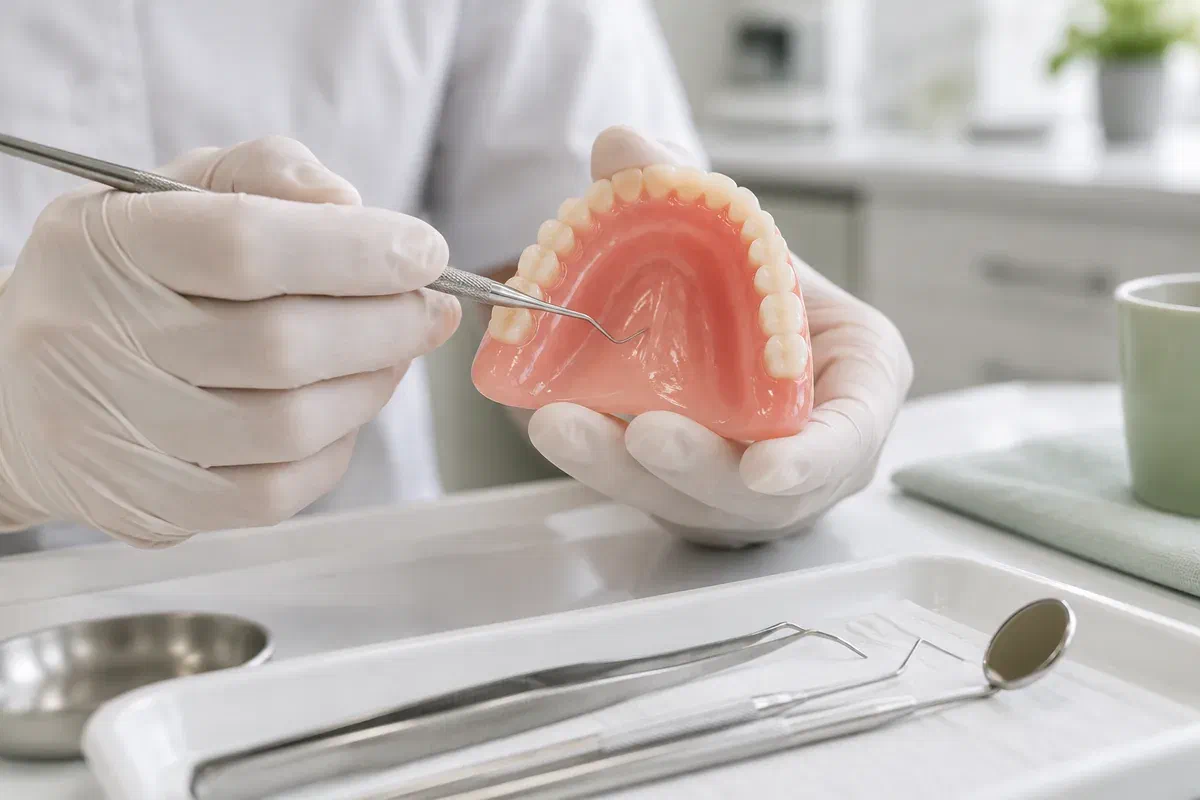
When you come in from Acton, we ask about your whole day: when the denture goes in, when it comes out, when meals happen and when the soreness peaks. Then the dentist examines your mouth and the appliance side by side. The plan that follows might be a precise adjustment, a broader fit correction or care focused on the tissue. Pushing through pain to make a point is never part of it.
Jot down when the denture went in and came out, when the ache began and whether it fades overnight. Mention whether the appliance has been newly made, mended or relined, as that changes what the dentist looks for.
Immediate pain in one place often suggests an edge or contact meeting the gum, but it still needs checking before material is taken away. Resist trimming it at home, even if the location seems unmistakable.
Soreness that grows with meals and hours of wear can reflect the denture shifting or uneven contact when you bite. Say whether it is worse on one side or after particular meals, so function can be assessed.
If the gum stays sore with the denture out overnight, or looks discoloured, bleeds or keeps changing, it needs its own assessment. Note when it first appeared and whether you have seen anything similar elsewhere.
An ulcer in the mouth that is still there after three weeks should be checked by a dentist or doctor. If the pain is climbing, the area bleeds, or something else seems off, call without waiting.
Daily habits, the tissue and the appliance each tell part of the story. Reviewing all three helps the dentist tell a single pressure point from a denture that loosens as the day goes on, or from a gum condition that needs different treatment.
Once you understand why it hurts, small changes to the routine make more sense. Ask what the dentist is adjusting, how your mornings and evenings should feel as things heal, and when to return. A review matters especially if the sore is slow to fade.
Patient information: NHS — mouth ulcers and when to seek care
Matching when the pain appears with what the examination shows lets the dentist judge which surface, if any, needs work. It also helps decide whether changing the appliance is the right move.
Trimming without a plan can reduce how securely the denture sits through a full day. A careful adjustment respects the whole appliance so one fix does not create a new afternoon ache.
Before leaving, you will hear how many hours to wear the denture, when to give the gum a break and which signs are worth a call. The follow-up may recheck both appliance and tissue.
Ask when booking whether to come in with the appliance in place. You should not need to wear a hurting denture all day so that the mark is easier to see.
Share when you put the denture in and take it out, where the soreness sits and when it peaks. Mention recent dental work, any gels or adhesives you use and whether the fit has started to feel different.
The dentist looks over the sore gum and the parts of the denture that relate to it, including borders, support and how the teeth meet, and judges whether the tissue warrants further investigation.
A confirmed pressure point can be adjusted, while a different finding may lead to another plan. Ask what this care targets and whether more work or a referral may follow.
Stick to the advice on wear and cleaning. Call if the ache returns or worsens, and keep the review, so an ongoing tissue change is not filed away as the same old rub.
Your instructions depend on the cause and the care given. Ask how long to keep the denture out, how to return to full-day wear and which cleaning or soothing steps are right for you.
Breaks from the appliance and the return to normal hours should match your dentist’s advice. If you recently had extractions, the post-operative instructions take priority over everyday denture habits.
Ask how to clean your mouth and the denture at the start and end of the day without upsetting the sore. List the cleansers, adhesives, rinses and gels you use so the advice fits.
An area that stays tender, returns or changes needs another look. Tell us how your days have gone since treatment and whether the fit feels altered, instead of repeating a home remedy.
These answers cover daily wear, appointments and follow-up. Your own advice comes from an examination, particularly for sores that persist, change or follow recent surgery.
Call our Bronte Street practice if your denture has started to hurt at any point in your day. The dentist will look at the tissue and the appliance, explain suitable care and plan a follow-up to make sure things are settling.
Bring your denture and a note of your daily wearing routine, along with when the soreness started and any recent adjustments, relines or extractions.
