A clear pressure point on one border
One spot that presses can often be traced to a single edge or contact, yet it still needs to be checked before anything is eased. Avoid the temptation to file it down at home to spare yourself the trip.


Coming from Etobicoke means each trip counts. We plan denture sore-spot visits so the gum and appliance are examined thoroughly the first time, you know what to do between appointments, and you know when nearer urgent care makes more sense.
When the drive is a longer one, it is tempting to wait and hope a tender gum settles on its own. Sometimes it does. But a sore that has hung around for days, or keeps the denture in its case, is usually better looked at sooner, with the visit prepared so that one trip covers as much as possible.
Good preparation starts with a clear picture of the problem. A spot under the base, along a flange or one that flares only with chewing each hints at a different cause, though the dentist still has to confirm it. Appliances wear and mouths change, and some sore areas have nothing to do with fit, which is why the gum gets examined on its own terms.
For people from Etobicoke, we use the call before booking to understand what is happening, then set aside time to examine the tissue and the denture together. Treatment follows the finding, from a precise adjustment to a fit correction or tissue care. We will also explain plainly which changes would justify seeking care closer to home rather than waiting for your next visit.
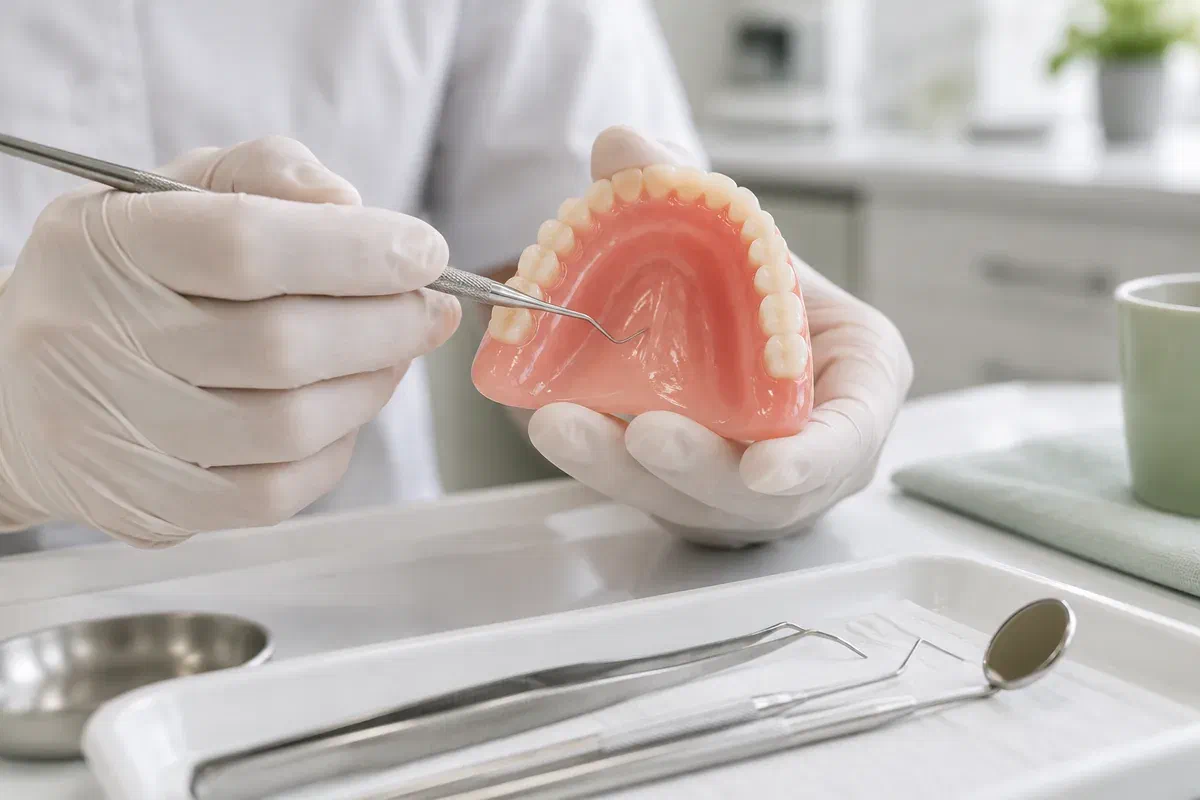
A few minutes on the phone can save a trip. We will ask when the tenderness began, whether taking the appliance out helps, and whether it was recently made, fixed or relined.
One spot that presses can often be traced to a single edge or contact, yet it still needs to be checked before anything is eased. Avoid the temptation to file it down at home to spare yourself the trip.
Discomfort brought on by eating may involve the appliance moving or the way the teeth come together. Tell us which side and which foods, so the examination can focus on the denture while it is working.
If the area grows, bleeds, changes colour or does not ease with the denture out, it should not be written off as rubbing. Let us know the timeline and whether similar patches have shown up anywhere else.
Do not wait for an available trip if a mouth ulcer has lasted three weeks; a dentist or doctor should assess it, and that may be closer to home. Increasing pain, bleeding or other alarming changes warrant prompt local care.
Examining both the appliance and the tissue in the same visit helps the dentist separate a small contact issue from instability, or from a gum condition that needs a different response. Getting that right the first time matters when travel is involved.
Leaving with a clear explanation also helps between visits. Ask what was changed, how the gum should feel over the next several days, and when a review is worthwhile. If the original sore does not calm down, that follow-up becomes especially important.
Patient information: NHS — mouth ulcers and when to seek care
Matching your account of the pain with what the examination shows helps the dentist decide which surface, if any, to adjust, rather than relying on trial and error across several visits.
Removing material without a plan can affect how securely the denture sits. A careful adjustment considers the entire appliance, so treating one area does not leave you with a looser fit.
You should know how to wear the denture while healing, which symptoms mean calling us and which mean seeking nearer care. The review can be timed to suit your travel.
On the phone, ask whether to have the appliance in before arriving. You do not need to wear a hurting denture through the whole journey just so the sore is more visible.
We ask about the location, how long it has hurt and what sets it off, along with recent dental work, products used on the gum and whether the fit feels different. This helps us book enough time.
The dentist examines the sore area and the relevant features of the denture, including its borders, support and contacts, and judges whether the tissue needs any further investigation.
A confirmed pressure point may be eased during the visit. Other findings may need a separate plan, so ask what the care addresses and whether more appointments or a referral are expected.
We go over wearing, cleaning and other care before you leave. If symptoms persist or worsen, call us, and keep the review so that an ongoing change is not mistaken for the same pressure sore.
Your instructions depend on the cause and the treatment. Before you head home, ask how long the denture can stay out, when to resume wearing it and which cleaning or comfort steps are right for you.
Resting the gum and returning to regular wear should follow your dentist’s guidance. If you recently had teeth removed, the specific surgical aftercare comes before any general denture habits.
Ask how to care for your mouth and the appliance without irritating the tender area. Tell us about the cleansers, adhesives, rinses or gels you use so the guidance covers all of them.
Should the tenderness stay, return or look different, call first. A short conversation about how it has changed helps us decide whether you need to come in, need closer urgent care, or can wait for the review.
These answers cover planning, appointments and what to do between visits. Your own advice depends on an examination, particularly if a sore is lasting, changing or connected to recent surgery.
Call our Bronte Street practice to plan an appointment for soreness under or beside your denture. We can examine the gum and the appliance, explain the treatment and arrange follow-up in a way that respects your travel time.
Pack the appliance for the trip, and tell us roughly when the tenderness began and whether it has lately been adjusted or relined, or teeth removed.
