You filed or trimmed the edge
Even a little home smoothing changes the border, and that can affect support. Tell the dentist what was removed and where, and stop further changes until the area and the appliance have been assessed.


Emery boards, extra adhesive, cushion strips from the pharmacy: home fixes for a sore denture are tempting. If you are coming from Georgetown, let us examine the gum and appliance first so the treatment addresses the real cause safely.
It seems simple. You can feel exactly where the denture digs in, so why not smooth that bit down or add a cushion? The trouble is that the spot that hurts is not always the spot causing the hurt. A denture rocking on the opposite side, for example, can drive one edge into the gum.
New appliances often need a refinement or two, and older ones can drift out of step with a mouth that has changed. On top of that, some sore areas are not pressure marks at all. A tissue change deserves its own examination, particularly when it lasts, recurs or looks unlike the rubbing you are used to.
For people from Georgetown, the appointment starts with what you have already tried, which is useful information, not something to be embarrassed about. The dentist then examines the gum and the denture together and explains what is going on. Care may be a precise adjustment, a broader fit correction or treatment for the tissue itself, and it should never require you to grit your teeth through pain first.
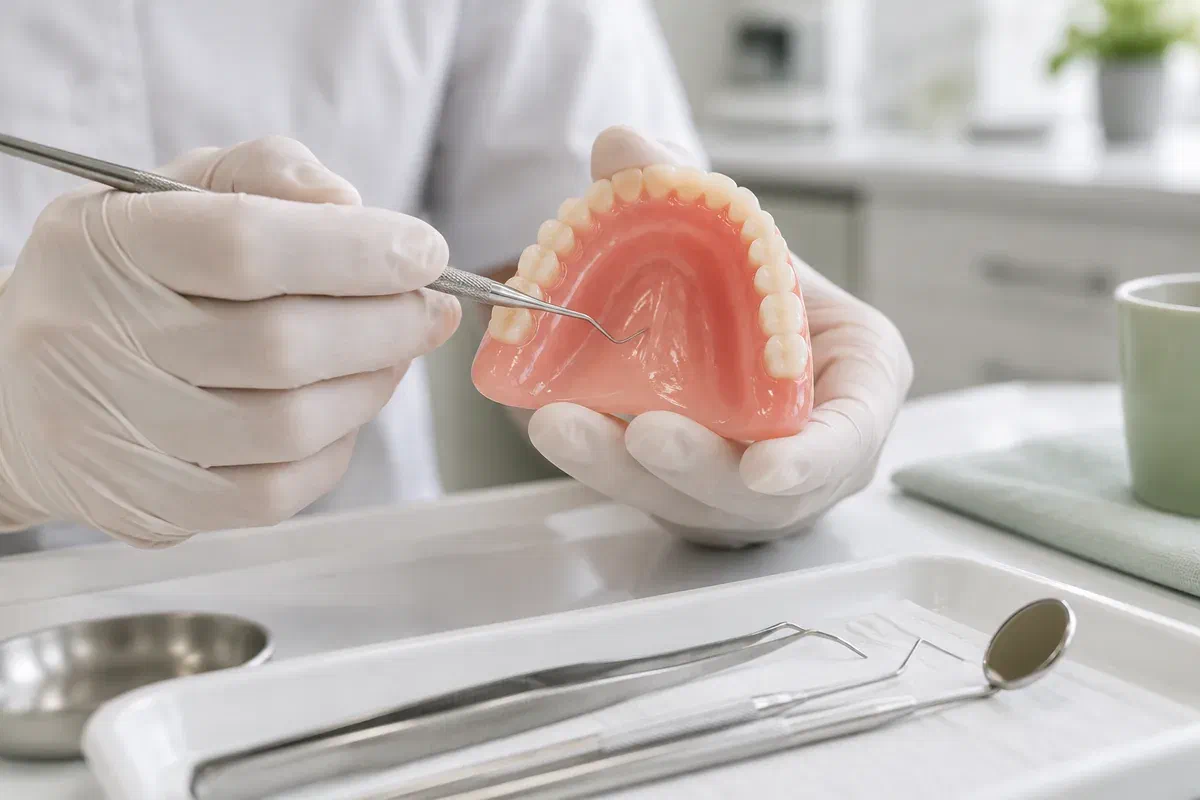
Let us know when the soreness started, whether it eases with the denture out, and if the appliance was recently made, repaired or relined. Please also list anything you have applied to the denture or gum.
Even a little home smoothing changes the border, and that can affect support. Tell the dentist what was removed and where, and stop further changes until the area and the appliance have been assessed.
Cushions and extra adhesive can alter how the denture sits and how the teeth meet, sometimes shifting the pressure elsewhere. Describe which products you used and whether eating on one side now feels different.
When an area stays tender despite soothing products, or begins to bleed or change colour, it should not be assumed to be a simple denture rub. Mention how long it has been going on and whether other spots look similar.
If a mouth ulcer has been present for three weeks or more, a dentist or doctor should examine it. Do not wait that long if pain is increasing, the area bleeds, or anything else about it seems wrong.
Home remedies treat the place that hurts. An examination of the appliance and the tissue looks for why it hurts, whether that is one contact, a denture that is no longer stable, or a gum condition that would not respond to any amount of padding.
With the cause explained, you can stop guessing. Ask what the dentist is changing, how the area should feel as it recovers and when to return. A second visit is especially useful if the sore lingers after the first.
Patient information: NHS — mouth ulcers and when to seek care
By linking your symptoms to what the examination shows, the dentist can decide which surface, if any, needs changing. That avoids removing material from a spot that was never the source.
Unplanned trimming at home can loosen a denture or reduce its support. A professional adjustment considers the whole appliance and can sometimes help correct the effects of earlier home changes.
Expect clear guidance on wear during healing, which products to keep or drop, and which symptoms mean calling. The follow-up may cover both denture and tissue.
When booking, ask whether the denture should be worn before your visit, and whether to stop any home products. Please do not wear a painful appliance for hours just to make the sore show.
Describe the location, how long it has hurt and what triggers it. Mention any filing, padding, adhesive, gels or rinses, along with recent dental work and whether the denture feels loose.
The dentist inspects the tender area and the parts of the denture involved, such as borders, support and contacts, including any areas changed at home, and decides whether the tissue needs more investigation.
A genuine pressure point may be adjusted, and other findings may call for a different approach. Ask what is being addressed and whether further work, such as a reline, or a referral is advisable.
Follow the instructions on wearing, cleaning and products. Call if the soreness persists or worsens, and keep the review, so that a lasting tissue change is not mistaken for another pressure spot.
Your aftercare reflects the cause and the treatment. Ask how long to leave the appliance out, when to wear it again, and which cleaning and comfort products are suitable, as well as which to stop.
Rest and the return to everyday wear should follow your dentist’s guidance. If the denture went in after recent extractions, the post-surgical instructions come before any general routine.
Ask which cleanser, adhesive, rinse or gel, if any, suits the healing area. Using fewer products while the tissue recovers can make it easier to see whether the treatment is working.
If the sore stays, comes back or changes in appearance, contact the clinic. Tell us how it has behaved and whether the denture feels different, rather than reaching for another home fix.
These answers cover home fixes, appointments and aftercare. Advice for your own denture depends on an examination, especially if a sore lasts, changes or is related to recent surgery.
Reach our Bronte Street clinic by phone before trying another fix. The dentist will inspect your gum and the denture, recommend proper care, and set a follow-up so you can be sure the sore is clearing.
Bring the denture and any products you have used on it, and let us know when the soreness started and about recent adjustments, relines or extractions.
