Pressure at one sharp point
Localized pressure often relates to an edge or contact, but the spot should be assessed before any material comes off. Avoid scraping or filing the appliance yourself, however clear the problem area appears.


Red, raw or tender under your denture, and not sure whether the appliance is to blame? If you are coming from Oakville, we can examine the tissue and the denture together, then explain what the finding means and which treatment fits.
You lift the denture out at night and notice a raw-looking stripe on the gum. The obvious explanation is pressure, and sometimes that is right. Yet the place a sore appears, whether under the base, along a border or where you bite, only suggests where to look. It cannot confirm the cause by itself.
Fit problems are common with a recently made appliance, and an older one can begin to rub as the mouth or the denture changes. Other tissue conditions can look similar, though, which is why the area itself needs to be examined, particularly when it has lasted a while or seems unlike any irritation you have had before.
For people travelling from Oakville, the visit begins with a conversation about what you have noticed and how it is affecting eating and wearing. The dentist then examines your mouth and the appliance as a pair. Treatment follows from what is found, whether that is a careful adjustment, a broader fit correction or care directed at the tissue. Living with the pain until it becomes undeniable is never necessary.
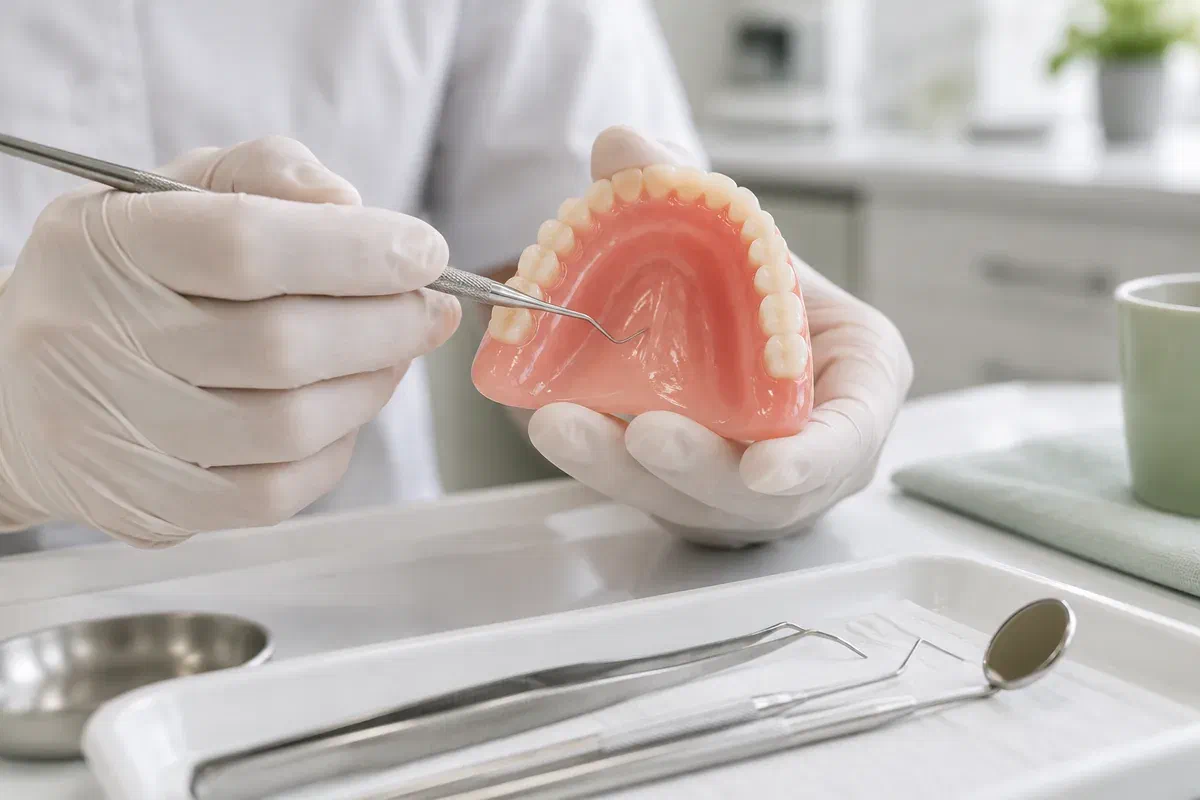
A few observations make the examination more productive. When did the tenderness start? Does it ease once the denture is out? Has the appliance been made, mended or relined in the recent past?
Localized pressure often relates to an edge or contact, but the spot should be assessed before any material comes off. Avoid scraping or filing the appliance yourself, however clear the problem area appears.
Pain that appears with chewing may point to movement or to the way the teeth come together. Mention whether it is one side, or a particular food or motion, so the appliance can be checked in action.
Tissue that stays changed is not automatically explained by the denture. Describe how long it has been present, any bleeding or colour change, and whether you see similar spots elsewhere in your mouth.
An ulcer that persists past three weeks should be examined by a dentist or doctor. Worsening pain, bleeding or other worrying signs are reasons to seek care earlier than that.
The appliance shows where it might be pressing; the tissue shows how the mouth is responding. Together they help separate a single contact from a denture that is unstable, or from a condition that needs another kind of care.
When you understand the cause, the plan is easier to trust. Ask what is being altered, how the area should change as it heals, and when it should be reviewed. A return visit is particularly valuable if the original sore is slow to improve.
Patient information: NHS — mouth ulcers and when to seek care
Matching your symptoms with the examination findings means less guesswork about which surface to change. It also clarifies whether altering the denture is the correct response in the first place.
Cutting away material without a reason can weaken how the appliance stays in place. A thoughtful adjustment considers the denture as a whole so that one fix does not undermine its function.
You should understand how to wear the appliance during healing and which changes are worth a phone call. The review may include another look at the denture and at the tissue.
When booking, ask whether you should have the denture in beforehand. There is no need to keep a painful appliance in for long periods just so the irritation is easier to spot.
Explain the location, how long it has lasted and what brings it on. Tell us about recent dental treatment, any gels or products used on the area, and whether the appliance now feels loose.
The dentist examines the sore area and the features of the appliance that relate to it, such as borders, support and contacts. Part of the assessment is deciding whether the tissue warrants further investigation.
If a pressure point is confirmed, it may be adjusted; a different finding may need a different plan. Ask what the treatment is meant to address and whether a referral or more work is expected.
Follow the wearing, cleaning and care instructions given. Report symptoms that continue or worsen and attend the review, so that a persistent change is not repeatedly put down to rubbing.
Your aftercare depends on the cause and the treatment provided. Ask how long the denture should stay out, when to wear it again, and which cleaning or comfort measures make sense for you.
Rest time and the return to normal wear should follow the dentist’s guidance. After recent extractions, the post-operative instructions you were given take precedence over any general advice for dentures.
Ask how to look after your mouth and the appliance while the area heals. Mention any cleanser, adhesive, rinse or topical product you use so the guidance covers what touches the tissue.
An area that stays tender, comes back or changes in appearance needs another assessment. Describe what has happened since the visit and whether the denture feels different, rather than trying the same remedy again.
These answers cover what to watch, how visits work and follow-up. The right advice for you depends on an examination, particularly for a sore that is lasting, changing or linked to recent surgery.
Reach out to our Bronte Street clinic about tenderness beneath or beside your denture. We can examine the tissue and the appliance, recommend suitable care and set up a follow-up to make sure the area is getting better.
Bring your denture with you and mention when the tenderness began, plus any recent adjustments, relines or extractions.
