One edge seems to bite into the gum
Localized pressure often comes from a single border or contact, but it should be assessed before anything is reduced. Leave the denture unaltered until then, so the dentist sees it as it really is.


Easing a sore spot is only half the job; checking that the gum actually heals is the other half. For households in Puslinch, we plan the first visit and the review together, so the tissue and denture are both followed until the area settles.
A quick adjustment can bring real relief, and it is easy to assume the matter is closed. Yet the true test comes a few days later, once the gum has had time to recover and the denture has been through ordinary meals again. That is when the dentist can confirm the right problem was treated.
There is good reason to check. A pressure spot from a new or worn appliance usually behaves predictably once eased, but a sore with a different cause may not. Tissue that stays red, ulcerated or tender after the pressure is gone tells the dentist something important and needs its own assessment.
If you are travelling from Puslinch, we can plan the initial examination and the review at the same time, and line them up with other family appointments where that helps. At the first visit, the dentist examines the denture and your mouth together and explains the findings. Care may be a targeted adjustment, a fit correction or attention to the tissue, with progress checked afterwards. Nobody needs to keep wearing through pain to earn a second look.
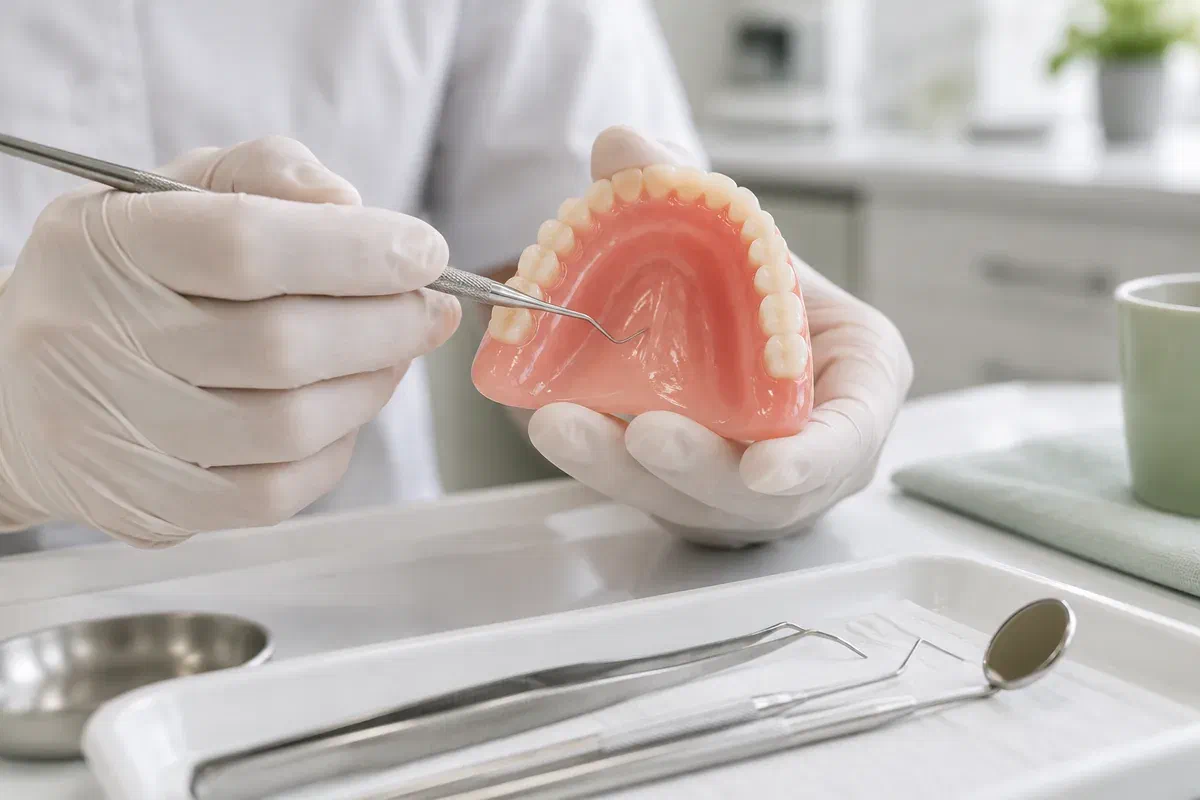
Note when the tenderness began, whether it eases overnight with the denture out, and whether the appliance has recently been made, fixed or relined. These details become the baseline the review is measured against.
Localized pressure often comes from a single border or contact, but it should be assessed before anything is reduced. Leave the denture unaltered until then, so the dentist sees it as it really is.
Soreness with chewing can involve movement or uneven contact between the teeth. Note which side and what kind of food, since the same details will help judge at the review whether things have improved.
Redness that stays put, bleeding, a colour change or an area that keeps growing should not simply be blamed on the appliance. Record roughly when it started and whether there are similar patches elsewhere.
Mouth ulcers that have not cleared after three weeks need assessment by a dentist or doctor. If pain is mounting, the area bleeds or something seems unusual, call promptly instead of waiting.
Examining both the tissue and the appliance at the start lets the dentist separate a single contact from a denture that has become unstable, or from a gum problem needing another approach. The review then shows whether that judgment held up.
Knowing what to expect helps you notice whether healing is on track. Ask what was changed, how the area should look and feel by the review, and what would be a reason to call earlier. A follow-up matters most when the original sore seems slow to respond.
Patient information: NHS — mouth ulcers and when to seek care
If the gum heals once the contact is eased, that supports the original finding. If it does not, the review becomes a chance to reconsider the fit or look more closely at the tissue.
Without a review, it is tempting to keep easing the denture whenever it hurts. Planned follow-up helps protect support and retention by making each change deliberate rather than reactive.
You will leave knowing how to wear the appliance until the review, which signs warrant calling sooner, and when the next appointment is, ideally at a time that works with your other plans.
When you book, ask whether the denture should be worn beforehand, and request the review time too if that is convenient. Please do not keep a painful appliance in all day just to make the sore more visible.
Describe where it hurts, when it began and what triggers it. Mention recent dental work, anything applied to the gum and whether the denture has started to feel loose or unfamiliar.
The dentist inspects the tender area along with the borders, fitting surface and bite of the appliance, and judges whether the tissue looks like it needs investigating further.
A confirmed pressure point may be eased. Another finding might require a different plan, so ask what is being treated, whether more work is likely and whether a referral may be needed.
At the follow-up, the dentist checks how the gum has healed and how the denture is behaving. Let us know about any ongoing or worsening symptoms so a lasting change is not mistaken for the original rub.
What you do between visits depends on the cause and treatment. Before leaving, confirm the hours out of the mouth, the day full wear can restart, and the cleaning and comfort steps to use until follow-up.
Time out of the mouth and the return to regular use should follow the dentist’s guidance. If extractions were recent, the surgical aftercare instructions come before any general wearing routine.
Find out how best to clean the gums and appliance while the area recovers. Bring up every product in the routine, from tablets for soaking to pastes and gels, so none is missed.
If soreness persists, returns or begins to look different, phone us rather than waiting for the booked date. Explain how the area has changed and whether the denture feels any different.
These answers cover review visits, scheduling and aftercare. Advice for your mouth comes from an examination, particularly when a sore is long-lasting, changing or connected to recent surgery.
Phone our Bronte Street practice when a denture starts to rub. One call can secure both the first examination of gum and appliance and the review that confirms the treatment worked.
Bring the denture and share when the soreness began, plus any recent adjustments, relines or extractions.
