It loosens when you talk
If the denture lifts in conversation, mention the moments it happens. The dentist can review how the edges relate to the surrounding tissues and whether the support beneath has changed over time.


A steadier denture is only half the decision. The other half is the cleaning, check-ups and part replacements that come with it. For people in Acton, we assess why the appliance moves and lay out the upkeep each option involves.
Most conversations about a loose denture focus on the treatment itself. Yet the part you live with is everything afterward: how you clean it each night, how often it needs checking, which components might wear and how comfortably you can handle it with your own hands.
Before any of that can be compared, the cause of the movement needs to be clear. A denture may lift or rock because the fitting surface has changed, the teeth have worn or meet unevenly, the design no longer suits the mouth, or the supporting ridges have less to offer. Stabilization is the aim; those findings shape which routes are sensible.
When someone from Acton comes in, the dentist examines the appliance and mouth, asks what you would like to do more easily, and then explains the realistic options together with their ongoing commitment. That way, the choice reflects your routine as well as the improvement you hope for.
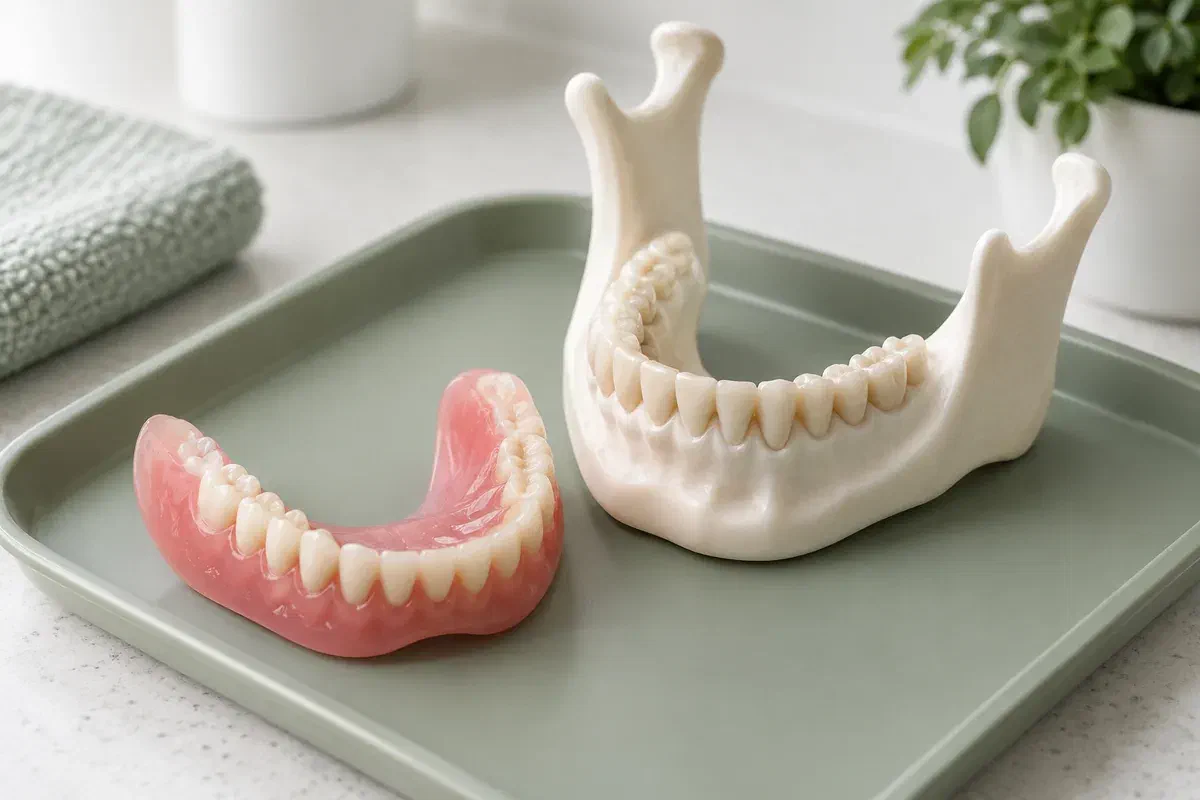
Instability usually shows up in particular situations, and your current cleaning and adhesive habits are part of the picture. Make a note of both before the appointment.
If the denture lifts in conversation, mention the moments it happens. The dentist can review how the edges relate to the surrounding tissues and whether the support beneath has changed over time.
Describe which foods and which side are involved. How the teeth meet matters alongside fit, so a new fitting surface might not settle every part of the movement on its own.
Bring the product you use and explain how you apply and remove it. That routine is useful information and lets adhesive be reviewed as one element rather than the main solution.
Mention any pain, broken part or sudden change in fit when booking. The team can advise whether the appliance should be seen promptly and whether it is safe to keep wearing it.
An assessment shows what can be improved within your current appliance and what needs a new plan. It also makes the limits of each approach easier to talk through, particularly when your mouth now provides less support than when the denture was first made.
Rather than a promise of a denture that never moves, you get an explanation of the intended improvement, the limitations that may remain and the care that maintains the result. Whether you can remove and clean the appliance comfortably is weighed as seriously as how secure it might feel.
Patient information: Canadian Dental Association — dentures and overdentures
The dentist looks at support, contacts and the condition of the appliance. Ask which factor is most significant and whether more than one should be addressed before choosing a treatment.
Approaches vary in appointments, cost, cleaning steps, maintenance and handling. Seeing those demands next to the potential improvement helps you pick something you can keep up with.
Describe what you find difficult now. You will hear where a treatment may help, how long-term care would look and where a removable denture may still have limitations.
There is no need to have decided anything in advance. Relines, replacements and implant support are compared only after the cause is understood, with their maintenance discussed as part of each.
Bring the denture and describe its age, repairs, when looseness began, how you clean it and how you use adhesive. Mention sore spots and any recent changes in your natural teeth.
Support, fit and tooth contacts are assessed together. The dentist considers whether the issue is localized or more general, and whether additional records are needed before discussing particular treatments.
For each realistic route, from working with your present appliance to replacing it or adding support, you hear the expected benefit along with the cleaning and review schedule it brings. Ask about stages and possible referrals too.
Once the chosen approach is carried out, fit and function are checked. You will leave with care instructions and a schedule for reassessing any movement or discomfort that continues.
A minor adjustment changes little at home, while a replacement or implant-retained design can change quite a lot. Ask for a routine written for the appliance and any components you now have, rather than continuing your old habits automatically.
Seating and removing a changed denture can take a different motion. Watch the team show you, then try it several times before you leave. Tell us if gripping, aligning or cleaning is hard so the routine can be adjusted to suit your hands.
Certain designs include parts that need periodic review or eventual replacement. Ask how often that is likely, how appointments are arranged and what signs should bring you in earlier.
Record whether looseness comes back gradually or suddenly and what you were doing. Those details help the dentist separate a new concern from a limitation already discussed.
Questions about cleaning and maintenance often decide which option feels right. These general answers can help you prepare for the discussion at your visit.
Book a visit at our Bronte Street practice for a denture that lifts, shifts or rocks. We will assess the appliance and your mouth, then explain the options alongside the care each one requires.
Please bring the denture, the adhesive and cleaning products you use and examples of when you want it to feel more secure.
