It rises as your tongue moves
Lifting when you speak, swallow or move your tongue can relate to how the edges sit against the floor of the mouth and cheeks. Describe when it happens so those borders and the support can be reviewed.


The upper denture feels settled, yet the lower one slides, floats or pinches. For people from Brampton, we examine the appliance that gives you trouble, explain why it behaves that way and outline realistic ways to steady it.
It is a common complaint: one denture behaves and the other will not. The two appliances rest on very different foundations, and the lower one shares its space with a busy tongue and moving cheeks, so it is not unusual for it to feel less secure even when both were made at the same time.
Understanding the reason in your own mouth matters more than the general pattern. A lower denture may move because its fitting surface has changed, because the teeth meet the upper set unevenly, because its design does not suit the ridge beneath it, or because that ridge now offers limited support. Each points toward a different discussion about treatment.
So for someone coming from Brampton, the visit starts with the denture that is causing the problem and the everyday situations where it lets you down. The dentist examines it with your mouth, considers how it meets the other appliance, and then explains which options are worth exploring and what each would demand of you.
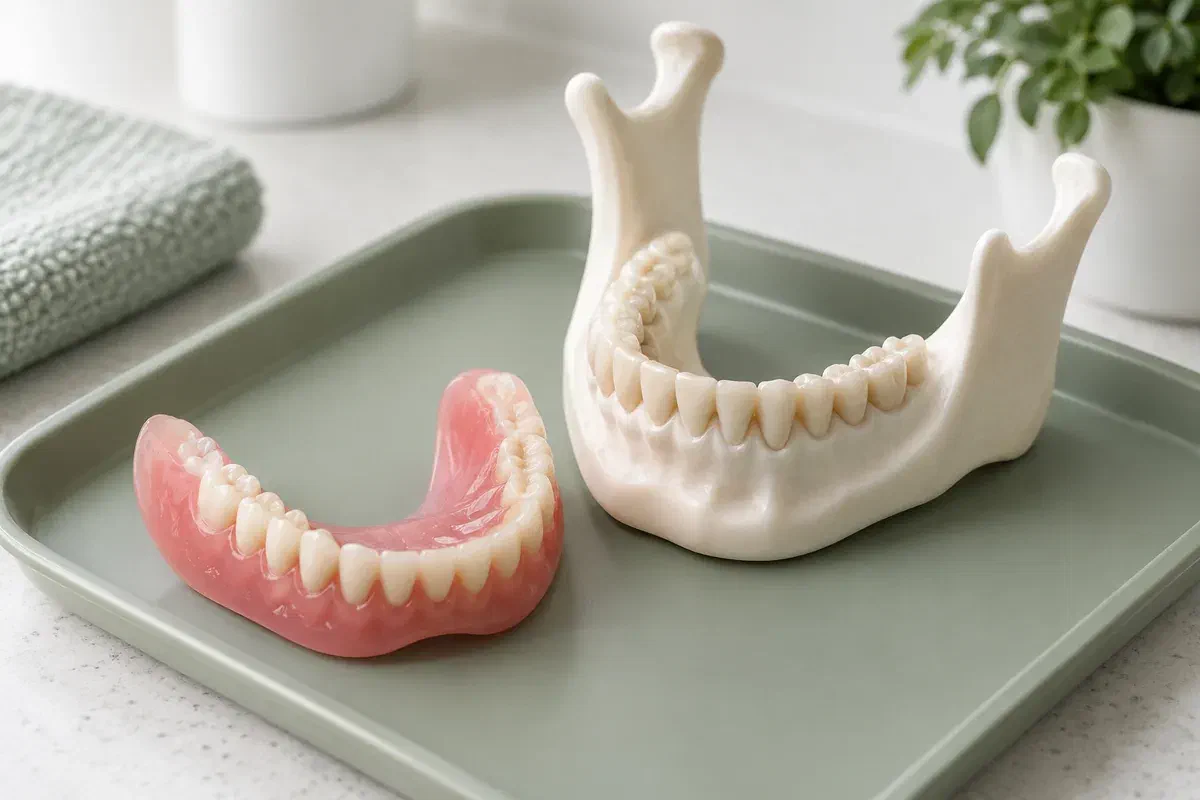
Instability in a lower denture often shows up in specific ways. Pay attention to where you feel it and what you were doing, and bring both appliances so they can be checked together.
Lifting when you speak, swallow or move your tongue can relate to how the edges sit against the floor of the mouth and cheeks. Describe when it happens so those borders and the support can be reviewed.
A lower denture that shifts with each bite may be reacting to uneven contact with the upper teeth. Because the two interact, changing only the fitting surface of the lower appliance might leave part of the issue unresolved.
If the lower denture needs most of the paste, mention it and bring the product. Its use can then be considered alongside the condition of the appliance rather than treated as the solution on its own.
Pain, a cracked base, a lost tooth or a sudden change in how the denture sits should be mentioned when booking. The team can tell you whether it needs a prompt look and whether to keep wearing it.
Examining the lower appliance in context shows which problems can be corrected within it and which need a new plan. It also helps explain limits honestly, particularly where the lower ridge has changed and offers less to rest on than when the denture was first fitted.
The aim is not a pledge that the lower denture will stay motionless. It is a clear explanation of the improvement a treatment targets, the limitations that may remain and the upkeep that follows. Your ability to take the appliance out and clean it properly stays part of the decision.
Patient information: Canadian Dental Association — dentures and overdentures
Support, the relationship with the upper teeth and the appliance’s condition can each contribute. Ask which matters most and whether both dentures need attention, not only the one that moves.
Different options require different visits, costs, maintenance and handling. Looking at those requirements next to the expected benefit helps you choose what suits your circumstances and comfort.
Describe the meals and moments that feel hardest. The dentist can explain what a proposed treatment may improve and where a removable lower denture might still have limits.
No decision needs to be made before your first visit. Whether to adjust, reline, replace or consider implant support becomes clearer once the cause has been reviewed.
Tell us how old each denture is, what repairs they have had and when the lower one began to move. Mention adhesive, sore areas and any recent change in natural teeth that remain.
The dentist examines the mouth and each appliance, paying attention to how the upper and lower teeth come together. This shows whether the problem is local or wider, and whether additional records are needed.
We explain what could be improved within the current lower denture and what would need replacement or other support. Ask about likely benefit, treatment stages, maintenance and whether a referral might be suggested.
Next steps follow the option you choose. Afterward, fit and function are checked, you receive care guidance, and a plan is made to reassess any movement or soreness that persists during normal use.
Aftercare depends on whether you had an adjustment, a reline, a new denture or added support. Ask for instructions that match the new set-up, including how the two appliances should be cared for together.
After a change, the appliance may need a slightly different technique to insert and remove. Ask for a demonstration and practise with the team. Mention any difficulty with grip or cleaning.
Some designs include components that need periodic review or replacement. Find out what ongoing care involves, how it is booked and what signs should bring you in sooner than planned.
Note whether looseness comes back gradually or suddenly, and during which activity. That detail helps tell a new concern apart from a limitation already explained during planning.
The lower appliance tends to raise its own questions. These general answers may help you prepare, and your examination will show what applies to you.
Arrange a visit to our Bronte Street clinic to have a lower denture that slides, lifts or rocks properly examined. With both appliances in front of us and your mouth examined, we can talk through which approaches could genuinely steady it.
Please bring both dentures, any adhesive you use and a few examples of when the lower one feels least secure.
