Certain sounds unseat it
Some people find particular sounds, a wide smile or a yawn makes the denture drop. Describe them, so the dentist can examine how the edges meet the soft tissues and whether the support has shifted.


A click mid-sentence, a lift on a long phone call, a hand raised to cover your mouth. If you are coming from Burlington with a denture that moves when you talk, we examine why and explain what could make it steadier.
Speech asks a lot of a denture. Lips, cheeks and tongue are constantly moving, and an appliance whose edges or support have changed can lift, drop or click in the middle of an ordinary conversation. Some people start speaking more quietly or avoiding long calls without quite realizing why.
Movement while talking may come from the borders of the denture, from a fitting surface that no longer matches the gums, or from the overall design. Chewing problems can sit alongside it or have a separate cause. Because those sources differ, the response could be an adjustment, a new fitting surface, a replacement or, for some people, implant-related support.
When someone from Burlington comes in with this concern, we listen first. Tell us the words, settings or expressions that bring the movement on, and what you would like to do without worrying. After examining your mouth and the appliance, the dentist explains which options deserve a closer look and what each one involves.
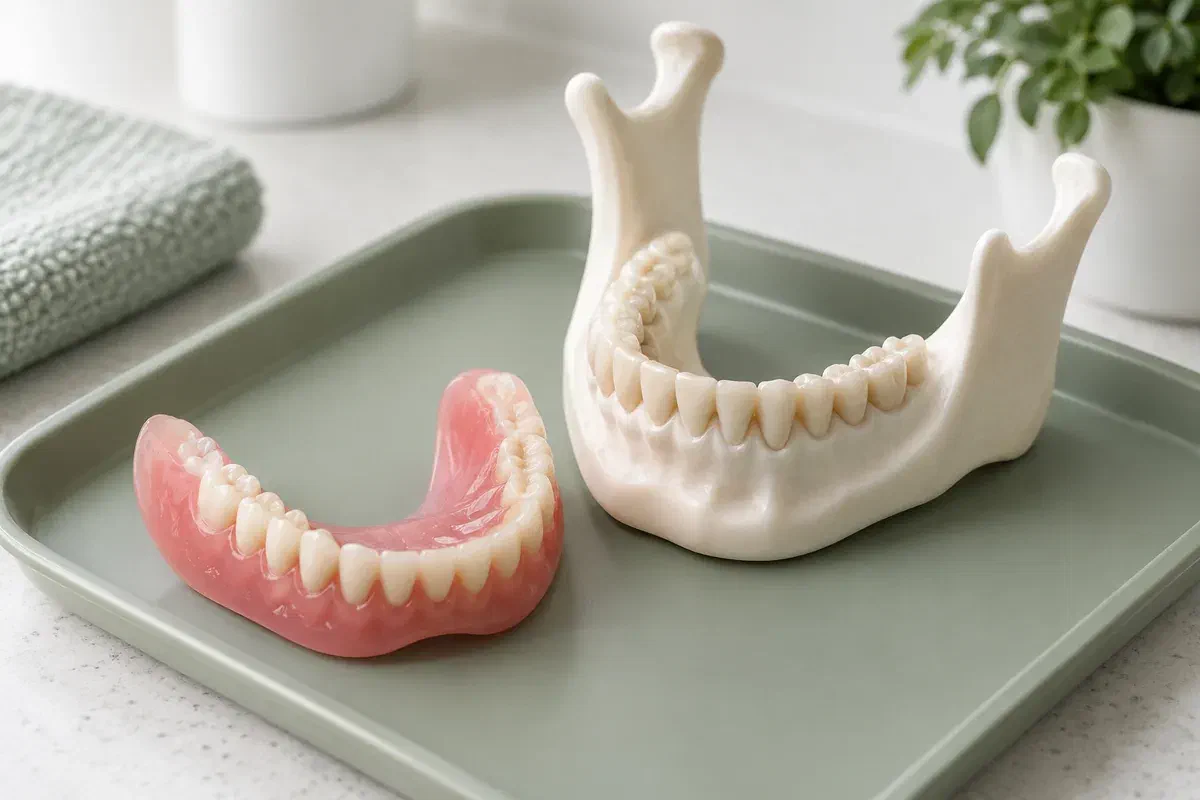
Instability while talking often has a pattern. Pay attention for a few days to the situations involved, and bring examples of both the steady moments and the unsettled ones.
Some people find particular sounds, a wide smile or a yawn makes the denture drop. Describe them, so the dentist can examine how the edges meet the soft tissues and whether the support has shifted.
Rocking during meals may share a cause with movement in speech or may be separate. Tell us which foods and which side are involved, since uneven contacts can matter as much as the fitting surface.
Using adhesive mainly before social events or calls is telling. Bring the product, explain when and how much you apply, and it can be reviewed as one part of the assessment instead of the whole remedy.
If the denture is painful, broken or has suddenly changed in fit, say so when you book. The team will advise how soon it should be seen and whether to keep wearing it before then.
Understanding the source of the movement shows which problems can be addressed within your current denture and which need another plan. It also makes it easier to be candid about limits, particularly when the mouth has less support to offer than when the appliance was first made.
You will not hear that the denture will never shift again. What you should get is an explanation of the improvement being aimed for, what may stay the same, and the care required to maintain it. Comfortably removing and cleaning the appliance remains part of every option.
Patient information: Canadian Dental Association — dentures and overdentures
Reviewing borders, support, contacts and the condition of the denture can reveal the main contributors. Find out which matters most for you and whether more than one should be addressed before treatment.
Approaches differ in the number of visits, cost, upkeep and how the appliance is handled day to day. Looking at those demands next to the expected benefit helps the choice fit your life.
Describe the speaking situations that worry you. The clinician can tell you which of those a proposed treatment is likely to improve, and which may stay a little awkward with any removable appliance.
You do not have to arrive with a treatment in mind. Relines, new dentures and implant options are discussed once the cause has been reviewed, not before.
Bring the appliance and explain its age, any past repairs and when the movement started. Mention adhesive, sore areas and recent changes in remaining natural teeth or in how the denture feels when you talk.
The dentist examines your mouth and the denture together, including the borders and how the teeth come together. This helps show whether the problem is localized or broader, and whether further records are needed.
We outline what might be improved within the existing appliance and what would require replacement or additional support. You can ask about likely benefit, stages, maintenance and whether a referral could be involved.
The next steps depend on the option chosen. Afterward, fit and function are checked, care instructions are given, and a plan is set for reviewing any movement or discomfort that persists in daily life.
Aftercare varies with the treatment, whether an adjustment, reline, replacement or added support. Request instructions specific to the new arrangement instead of continuing an older routine by default.
If inserting or removing it feels different, ask for a demonstration and try it under guidance. Mention any difficulty gripping, aligning or cleaning it so a workable daily routine can be found.
Some designs have parts that need periodic review or replacement. Ask what ongoing care is planned, how visits are arranged and what changes in fit or handling warrant an earlier appointment.
Write down whether looseness returns slowly or suddenly and what you were doing. Bringing those notes helps the dentist tell a new concern apart from a limitation already explained during planning.
Movement during speech raises its own questions. These general answers may help you prepare, though your examination will show what applies in your case.
Book an appointment at our Bronte Street clinic to have a denture that lifts, clicks or rocks properly examined. We will review the appliance and your mouth, then explain the options that may address the cause.
Bring the denture, your adhesive and a short note of the conversations or meals where it feels least secure.
