Front bites unseat the denture
If biting into bread or fruit with your front teeth lifts the back of the denture, describe it. The dentist can examine how the borders and support behave under that kind of pressure.


An apple you slice instead of biting, a steak you skip, a sandwich eaten only on the left. From Georgetown, we can examine why your denture tips during meals and talk through approaches that might let you chew with more confidence.
The menu tends to shrink slowly. Crunchy vegetables go first, then tougher meats, then anything you have to bite with the front teeth. By the time someone asks about stabilization, they may have reorganized every meal around a denture that rocks or lifts under pressure.
Chewing is where fit and bite meet. A denture can tip because its fitting surface no longer follows the gums, but it can also tip because the teeth on it are worn or touch unevenly, pushing it off balance with each bite. Design limits and reduced support in the jaw are other possibilities. Each finding leads to a different conversation.
For someone coming from Georgetown, the starting point is a description of the foods and moments that cause trouble. The dentist then examines the appliance and your mouth together and explains which options might help, what each could realistically change at the table and what it would ask of you afterward.
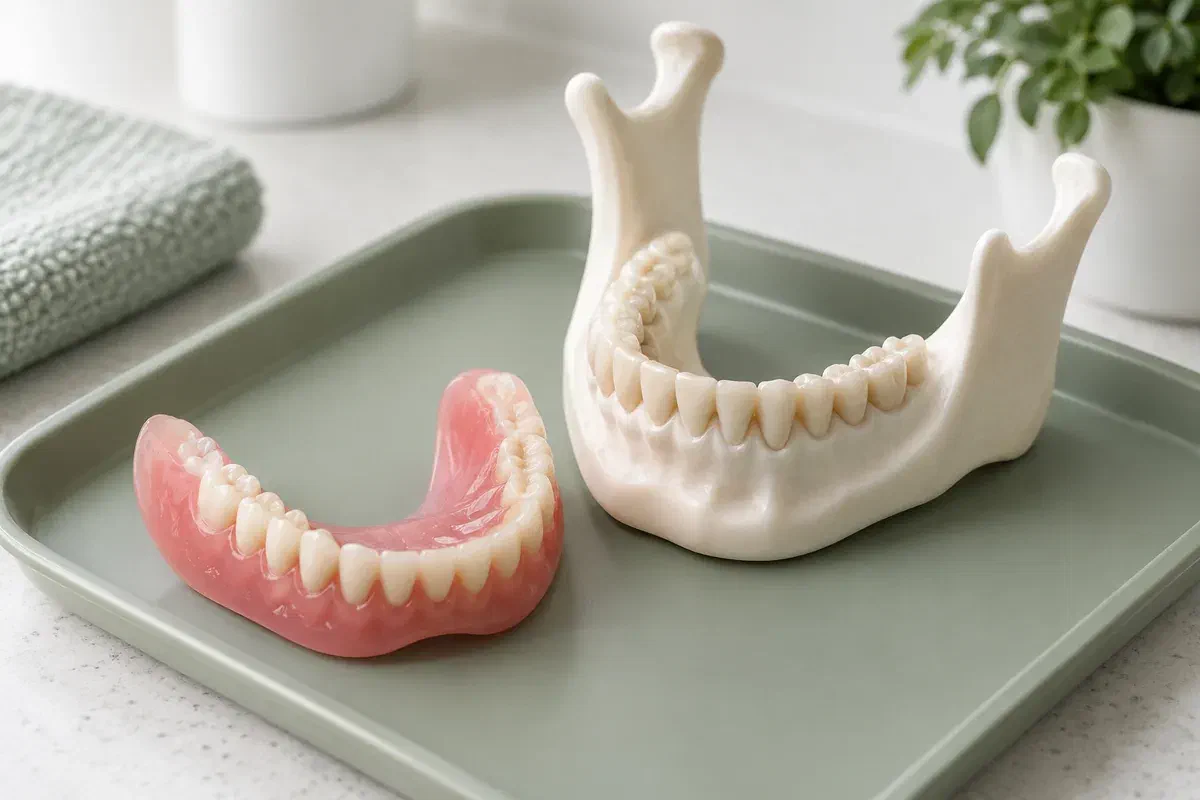
Meals give the clearest evidence of instability. Over a few days, note which foods cause trouble, on which side and whether the denture also moves when you are not eating.
If biting into bread or fruit with your front teeth lifts the back of the denture, describe it. The dentist can examine how the borders and support behave under that kind of pressure.
Movement that appears only when chewing on one side often involves the way the teeth meet. Because contacts and fit work together, adjusting the fitting surface alone may not resolve it.
Reapplying paste ahead of each meal is a pattern worth sharing. Bring the product, explain your routine and it can be considered alongside the appliance rather than relied on as the whole fix.
Mention pain, a broken tooth or base, or a sudden change in fit when booking. The team can advise whether the denture needs a prompt look and what to eat or avoid until then.
Examining the denture in function helps tell apart issues that can be corrected within it and those that call for a new plan. It also allows a straightforward talk about limits, especially if the jaw now offers less support than when the appliance was made.
A good assessment will not promise you can eat anything without the denture ever moving. Instead it clarifies what improvement is intended, what limits may remain and what upkeep will be needed. Being able to take the appliance out and clean it remains part of every option.
Patient information: Canadian Dental Association — dentures and overdentures
Support, tooth contacts and wear can each affect chewing. Ask which matters most in your mouth and whether more than one needs attention before treatment is chosen.
Approaches differ in visits, expense, maintenance and handling. Weighing those alongside the chewing improvement you hope for helps you choose what suits your routine.
Describe the foods you miss. The dentist can explain which might become easier with a given treatment and which may remain challenging with any removable denture.
There is no need to pick a treatment first. Whether an adjustment, reline, replacement or implant support makes sense is discussed once we know what is unsettling it at meals.
Bring the denture and tell us which foods cause problems and when they began. Share its age, repairs, adhesive use, any sore spots and changes in your remaining natural teeth.
The dentist examines the mouth and the appliance, paying close attention to how the teeth meet when you close and chew. This shows whether the issue is local or broad and whether records are needed.
We outline improvements possible within the current denture and those that would need replacement or other support. Ask about expected benefit at meals, the stages involved, upkeep and any referral.
After the chosen treatment, fit and function are reviewed. You will receive care instructions and a plan to revisit any rocking or soreness that continues once you return to normal eating.
Aftercare differs for an adjustment, a reline, a new appliance or added support. Ask for guidance on cleaning, handling and easing back into firmer foods that matches the treatment you had.
Start with softer choices and cut food into smaller pieces while you adapt. Practise inserting and removing the denture under guidance, and mention any difficulty with grip or cleaning.
Some designs have parts that need periodic review or replacement. Confirm what ongoing care involves, how it is scheduled and which changes in fit or chewing should prompt an earlier visit.
If rocking returns, record whether it was gradual or sudden and what you were eating. That makes it easier to tell a new problem apart from a limitation discussed during planning.
Eating is often where instability matters most. These general answers may help you prepare, and your examination will clarify what applies to your denture.
Book a visit at our Bronte Street clinic for a denture that rocks or lifts when you eat. We will assess the appliance and your mouth, then explain what might help it stay steadier through a meal.
A short list of the foods you now avoid or prepare differently is very helpful, along with the denture itself and your adhesive.
