It still lifts when you speak
Movement during conversation, even with adhesive in place, may point to the borders or the support around the denture. Mention the moments it happens so those areas can be examined closely.


One strip of adhesive used to be enough. Now it is three, and the denture still slips by lunch. From Mississauga, a visit to our Milton clinic can show why the support has changed and which treatments may genuinely help.
Adhesive can be useful, but when the amount keeps climbing it is usually compensating for something. The fitting surface may have drifted away from the shape of the gums, the teeth may be wearing unevenly, or the jaw may simply provide less support than it did when the appliance was made.
Finding that underlying reason is what stabilization really means. It is a goal rather than one fixed procedure. Depending on the findings, the conversation might cover refining the existing denture, renewing its fitting surface, making a new one, or, for suitable people, exploring implant-related support.
Anyone travelling in from Mississauga can expect the first visit to focus on understanding rather than selling a solution. Tell us how your adhesive routine has changed and what the denture still lets you down on. After examining your mouth and the appliance, the dentist explains which options are worth considering and what each would require.
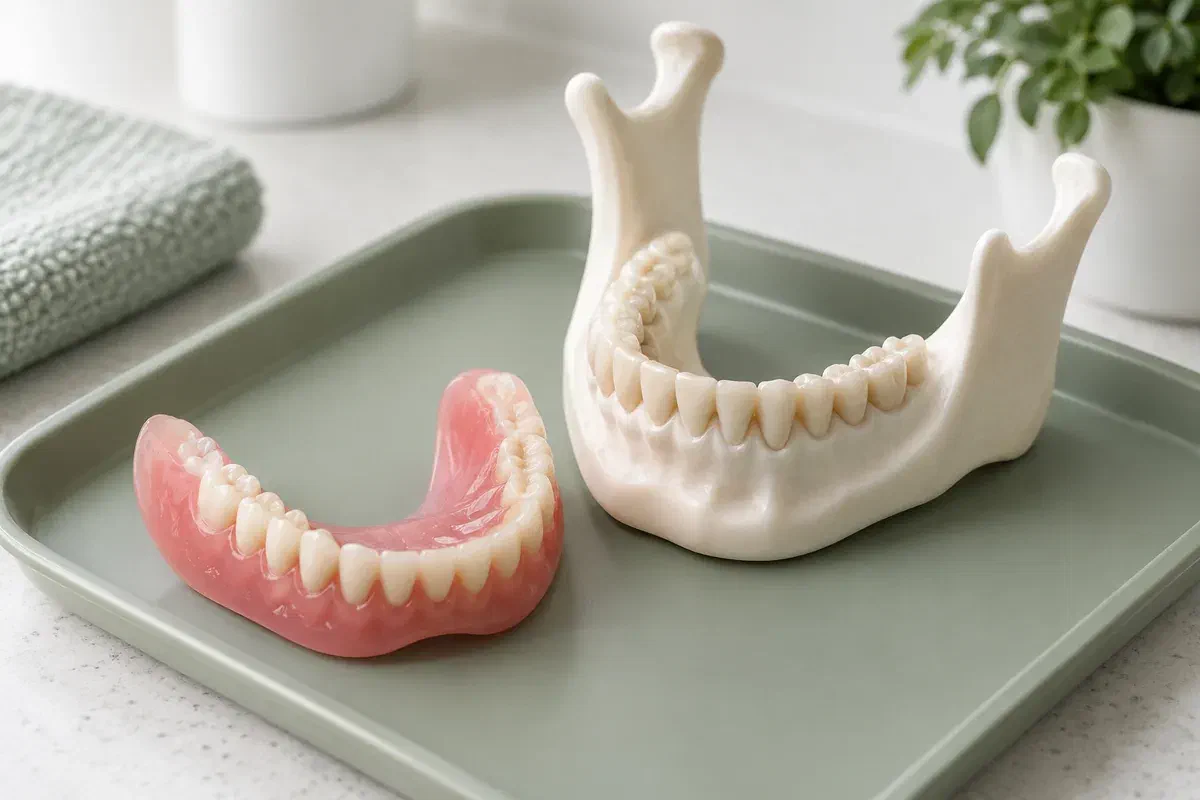
Changes in how you use adhesive are worth tracking. Over the week before your appointment, notice when the denture holds well and when it lets go despite the paste.
Movement during conversation, even with adhesive in place, may point to the borders or the support around the denture. Mention the moments it happens so those areas can be examined closely.
If the appliance holds at rest but tips when you eat, the bite may be part of the story. Uneven contacts can push a denture loose, which is why fit and tooth contacts are assessed together.
Note how much you apply now compared with a year ago, and bring the product. That trend is valuable information, and it lets adhesive be reviewed as one factor rather than the whole answer.
Mention any pain, a fractured piece or an abrupt change in fit when you call to book. The team can advise whether the denture needs to be seen soon and how to manage in the meantime.
An examination separates what can be improved within your current denture from what needs a new approach. That distinction also helps set honest limits, which matters most when the ridges of the jaw have changed and offer less to hold on to.
Nobody can promise a denture that never moves. A useful assessment instead explains the improvement a treatment is meant to deliver, the limits that may remain and the upkeep it will need. Being able to remove the appliance and clean it thoroughly stays on the table throughout.
Patient information: Canadian Dental Association — dentures and overdentures
Support, contacts and the denture’s own condition can each contribute. Ask the dentist to rank the findings and to say whether several need attention before any option is chosen.
Treatments differ in appointments, fees, maintenance and everyday handling. Comparing those factors against the benefit you want makes it easier to pick something that works for your week.
Share which meals or conversations are hardest now. You will hear which of those a proposed treatment could improve and which limitations a removable denture may still carry.
Come in with an open mind about treatment. Relining, replacing or adding implant support can all be weighed once the cause of the movement has been looked at.
Bring your denture and your adhesive. Share the appliance’s age, repairs and when the looseness began, along with any sore patches or changes to your remaining natural teeth.
Your dentist checks the support, fit and contacts with the denture in place and out. The aim is to see whether the issue is confined to one area or reflects wider change, and whether more records would help.
You will hear what could be improved within the current appliance and what would need a replacement or different support. Ask about the expected benefit, treatment stages, ongoing upkeep and any possible referral.
Treatment follows the approach you agree on. Afterward, the fit and function are reviewed, care instructions are provided, and a plan is made to revisit movement or discomfort that continues in daily use.
Your routine will depend on the treatment, whether an adjustment, a reline, a new denture or extra support. Ask for instructions tailored to that, including whether adhesive still has a place.
An improved fit may change how the denture goes in and comes out. Ask for a demonstration and practise with the team watching. Raise any trouble with grip, alignment or cleaning so the routine can be adapted.
Certain designs include parts that need inspection or replacement over time. Confirm what is expected, how those visits are booked and what changes should prompt you to call before the planned date.
If looseness returns, note whether it happened gradually or overnight and during which activity. That helps the dentist distinguish a new issue from a limitation discussed when the plan was made.
Adhesive tends to raise questions once the amount starts growing. These general answers may help, and the examination will show what applies to your denture.
Schedule time at our Bronte Street practice to have a denture that shifts, lifts or rocks examined properly. Once the appliance and your gums have been checked, we can explain what is likely behind the slipping and how it might be handled.
Please bring the denture, your current adhesive and notes on when it holds and when it lets go.
