Lifting mid-sentence
If the denture drops or clicks while you talk, note the words or situations involved. The dentist can examine how its edges relate to the cheeks, lips and tongue, and whether the support underneath has changed.


Reline, new denture or implants: it is hard to choose when you are not sure why the appliance moves. From Oakville, one assessment visit can sort out the cause first, so the options you compare actually fit your situation.
People often arrive having already read about relines, replacements and implant-retained dentures, and wondering which one they need. It is a reasonable question, but the honest answer begins somewhere else: what is making this particular denture move, and in which situations?
A fitting surface that no longer matches the gums calls for a different response than teeth that have worn flat or meet unevenly. Some appliances have design limits that no adjustment will overcome, and some mouths now provide less natural support than the denture was built for. Each of those findings changes which treatments are worth weighing.
For anyone making the trip from Oakville, the aim of the first appointment is to make that picture clear. The dentist examines the denture and your mouth together and asks what you would most like to do more comfortably. You then hear which approaches are realistic and what each would involve, from treatment visits to long-term care.
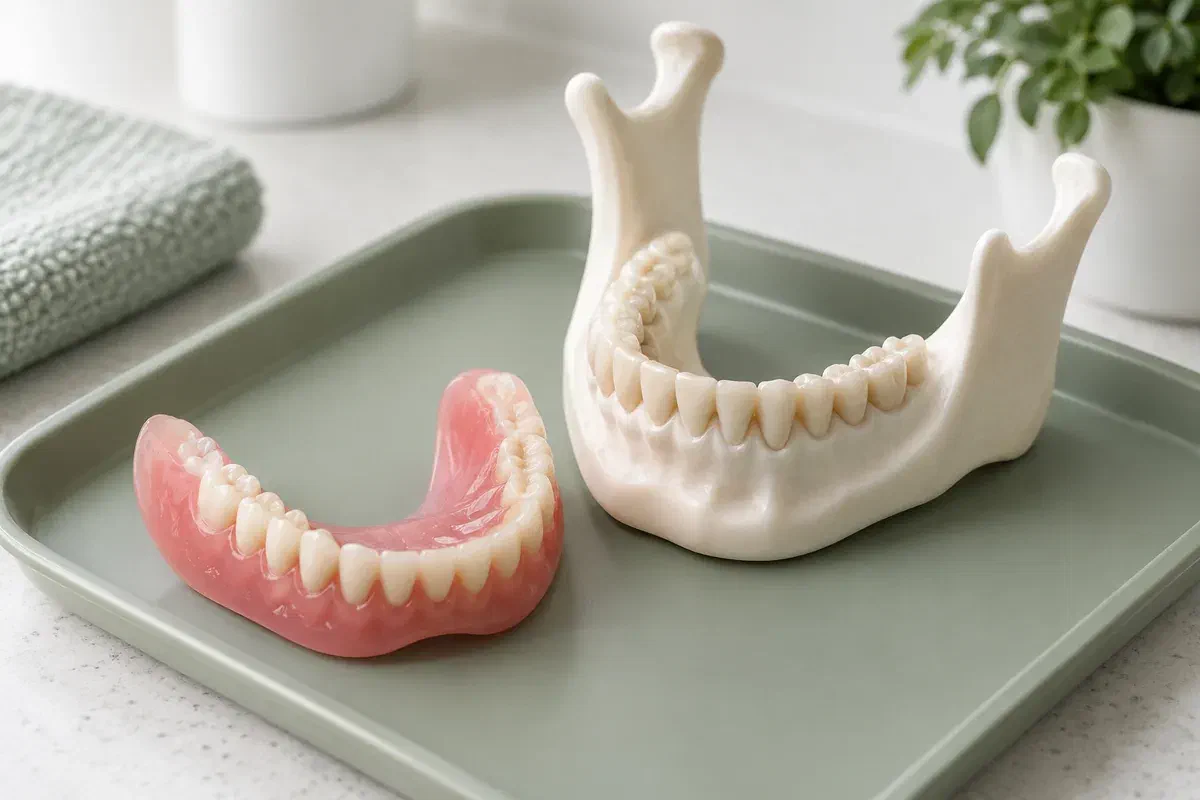
Before deciding on any treatment, it helps to know exactly what the denture does and when. A few notes over the week before your visit can make the examination more focused.
If the denture drops or clicks while you talk, note the words or situations involved. The dentist can examine how its edges relate to the cheeks, lips and tongue, and whether the support underneath has changed.
Rocking that appears with certain foods, or only on one side, can involve the way the teeth come together. Since fit and contacts interact, renewing the underside alone might not resolve every part of it.
Growing dependence on adhesive tells the dentist something useful. Bring the product and describe how you apply it, so its role can be judged together with the appliance instead of standing in for a solution.
Pain, a cracked base, a lost tooth or a sudden change in fit should be mentioned when you call. We can suggest whether a prompt visit is needed and whether the denture should be worn until then.
Once the causes are known, it becomes easier to see what could be handled within the existing denture and what would need a new plan. The assessment also opens an honest conversation about limits, which matters when the jaw and gums no longer offer the support they once did.
The goal is not a promise that the appliance will stay perfectly still. It is a clear account of what a treatment is meant to improve, what may remain the same, and what upkeep will be required. Being able to take the denture out and clean it well remains part of the comparison.
Patient information: Canadian Dental Association — dentures and overdentures
Support, tooth contacts and wear on the appliance can all play a role. Ask which factor carries the most weight in your case and whether two or more need addressing before treatment begins.
Appointments, cost, maintenance and daily handling vary between approaches. Weighing those against the improvement you want helps the decision suit your schedule and your comfort with ongoing care.
Describe what currently feels difficult and ask what change is reasonable to expect. The clinician can point out where treatment may help and where a removable appliance could still feel limited.
There is no need to commit to a reline, a new denture or implants before you come in. Those choices are discussed only after the reason for the movement has been examined.
Bring the denture and tell us its age, any repairs and when looseness began. Mention adhesive, areas that get sore and any recent change in your natural teeth or in how the appliance feels.
The dentist evaluates support, fit and contacts together. That shows whether the issue is confined to one spot or reflects wider changes, and whether additional records are needed before treatment can be discussed.
You hear what could be changed within the current denture and what would require replacement or another form of support. Ask about expected benefit, number of stages, upkeep and any referral that might apply.
Next steps depend on the option you choose. After treatment, fit and function are reviewed, care instructions are explained, and a plan is made to reassess movement or discomfort that continues in ordinary use.
What aftercare looks like depends on whether you had an adjustment, a reline, a replacement or added support. Ask for directions that match the new set-up, rather than assuming the old routine still applies.
If the way the denture seats has changed, ask the team to show you and then try it yourself under supervision. Speak up if gripping, lining it up or cleaning feels awkward so the routine can be adjusted.
Some designs include parts that need checking or replacing periodically. Confirm what ongoing care is expected, how appointments are scheduled and which signs mean you should come in early.
Note whether looseness crept back or appeared suddenly, and what you were doing at the time. That information helps separate a new problem from a known limitation discussed during planning.
Choosing between relines, replacements and implant support raises practical questions. These general answers can help you prepare for the conversation at your visit.
Book time at our Bronte Street practice to have a shifting or rocking denture examined. We will look at the appliance and the mouth that supports it, then explain the choices that may address the cause.
Please have the denture with you, plus the name of any adhesive you use and a few examples of when you would like more security.
