It lifts more when you talk
If speech has become less secure since other dental work, mention the timing. The dentist can check the denture’s edges and whether any parts that rely on your natural teeth still engage properly.


A tooth comes out, a crown goes on, a clasp no longer grips the way it did, and suddenly the denture feels different. Coming from Rockwood, you can have the appliance and your remaining teeth reviewed together to find a steadier fit.
Dentures are designed around the mouth as it was on the day they were made. Since then, a natural tooth may have been removed, repaired or crowned, or the gums may have reshaped. Any of those can leave an appliance that once sat well a little out of step with its surroundings.
Sometimes the link is obvious, such as a partial denture that loosened right after an extraction. Other times the change is gradual and the cause less clear. The fitting surface, the way the teeth meet, the design and the amount of support left in the jaw may all be involved. Stabilization begins with working out which ones matter.
Anyone travelling from Rockwood can bring the denture along with a rough history of recent dental work. The dentist examines the appliance, your natural teeth and your gums together, then explains what might restore a steadier fit and what each approach would involve over time.
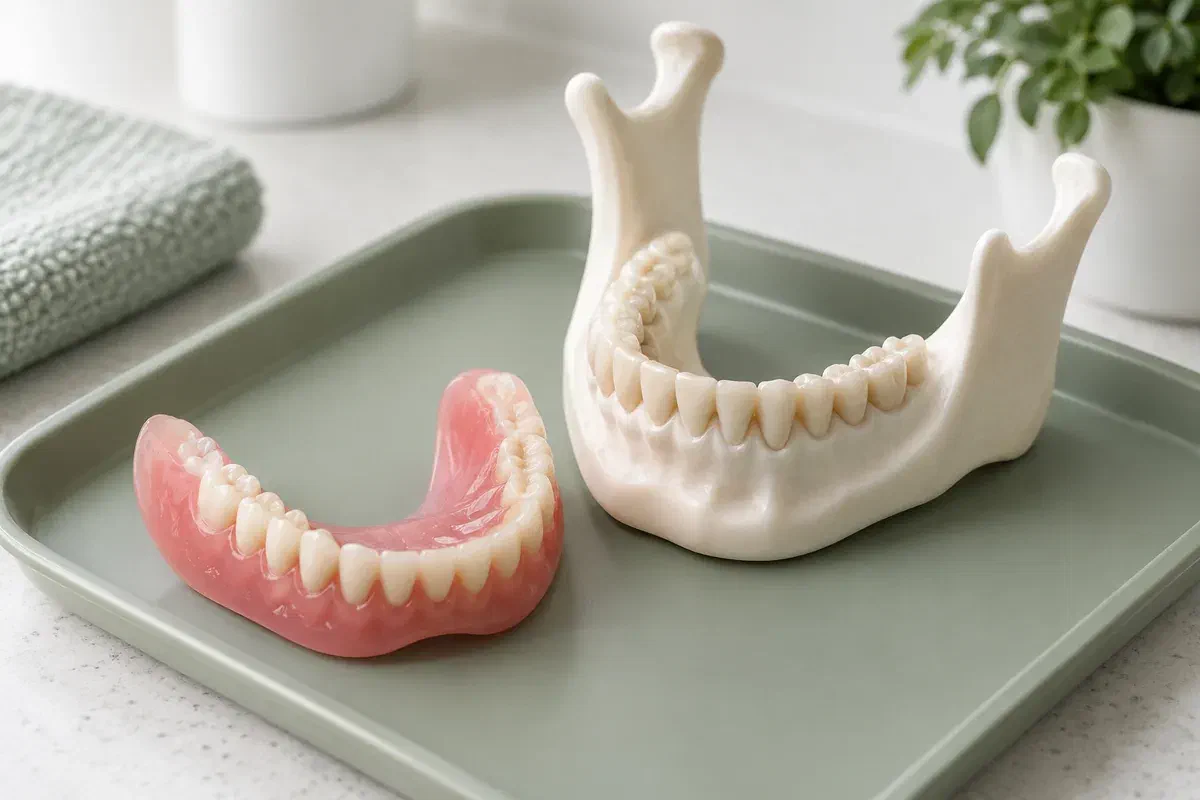
Movement often follows a change elsewhere in the mouth. Try to recall any recent extractions, fillings or crowns, and when you first noticed the denture behaving differently.
If speech has become less secure since other dental work, mention the timing. The dentist can check the denture’s edges and whether any parts that rely on your natural teeth still engage properly.
A new crown, a filling or a lost tooth can alter how the teeth meet. Because contacts and fit interact, the bite is examined alongside the fitting surface instead of assuming one change will settle it.
Starting to use paste after years without it is a meaningful change. Bring the product and say when you began, so its role can be reviewed together with the appliance and your remaining teeth.
When you call, mention pain, a loose or broken natural tooth, a cracked denture or a sudden change in fit. We can then advise how urgently to come in and whether it is wise to keep wearing the appliance.
Reviewing the denture together with your natural teeth shows which problems can be corrected within the existing appliance and which require a different plan. It also helps make limits clear, especially where the jaw now gives less support than when the denture was first fitted.
No one can guarantee that a denture will stay perfectly still. What a careful assessment provides is an explanation of the intended improvement, any limits likely to remain and the care that keeps things working, including how comfortably you can remove and clean the appliance.
Patient information: Canadian Dental Association — dentures and overdentures
Support, contacts, the condition of the appliance and the health of nearby teeth are reviewed together. Ask which factor matters most and whether treating one depends on another.
Each approach brings different visits, costs, maintenance and handling. Seeing those beside the expected improvement helps you choose a route that suits how often you can travel in.
Explain which situations bother you most. The clinician can tell you what a proposed treatment may change and where a removable appliance is likely to keep certain limits.
No treatment choice is needed before you arrive. Adjustment, relining, replacement or implant support are discussed only after the examination has shown what changed and why the denture moves.
List any extractions, fillings or crowns since the denture was made, along with its age, repairs and when movement began. Mention adhesive and any sore spots.
The dentist assesses your natural teeth, the support under the denture and how everything meets when you bite. That shows whether the concern is local or wider and whether further records are needed.
You will hear what might be modified in the current denture and what would require replacement or other support. Ask about benefit, the number of stages, upkeep and whether any referral might be involved.
Once treatment is done, the fit is reviewed with your natural teeth in mind. Care instructions follow, along with a plan to revisit movement or discomfort that continues during normal use.
What you do at home depends on the treatment and on the teeth that remain. Ask for instructions that cover both the appliance and any natural teeth it relies on or rests near.
A modified or new denture may need a slightly different technique. Watch a demonstration and try it yourself before leaving, and say if grip, alignment or cleaning around clasps is tricky.
Some designs include parts that need periodic attention, and natural teeth benefit from regular examination too. Ask how both will be scheduled and what changes mean calling early.
If the denture moves again, note whether it was gradual or sudden and whether any tooth feels different. That helps separate a new problem from a limitation already discussed.
Changes to natural teeth raise particular questions for denture wearers. The answers below are general, and the examination will show how they apply to your own mouth.
When a denture has started to lift, shift or rock after other dental work, our Bronte Street team can help. We will look at it with your natural teeth and gums, then explain which options could bring back a steadier fit.
Please bring the denture, the adhesive you use and a note of any dental work you have had since it was made.
