A tooth has detached intact
Bring it in a secure container rather than trying to press or glue it back into position. The clinician can assess whether the piece and its attachment area are suitable for reuse.


A detached or damaged denture tooth does not always mean replacing the whole appliance. Discuss denture tooth replacement in Milton, including the surrounding base, the bite, and whether a focused repair is appropriate.
Denture tooth replacement concerns an artificial tooth that has come away from, or been damaged within, an existing appliance. It is different from replacing a natural tooth. The work needs to account for the denture material, the surrounding base, and how the repaired tooth will meet the opposing teeth.
You may have found the tooth after a drop, noticed it moving during a meal, or discovered an empty space without knowing when it detached. Keep any safely recovered piece and bring it with the denture. Its condition can help the assessment, even if a different tooth ultimately needs to be selected.
At Milton Dental Clinic, we review whether the remaining appliance is suitable for a focused repair. We also ask about previous damage and how the denture felt before the tooth came away. A useful plan explains the proposed replacement, the limits of matching an older appliance, and any other work needed for fit or function.
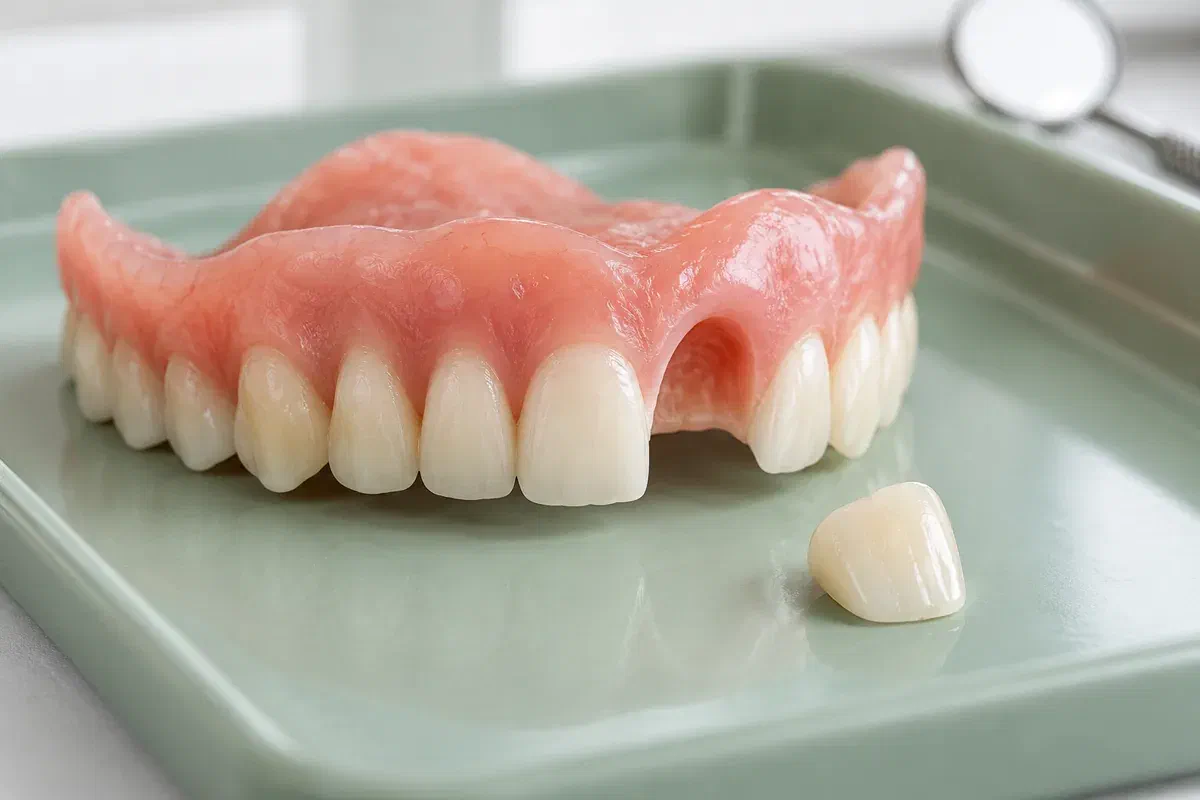
The missing or damaged tooth is only part of the assessment. Its attachment area, the condition of neighbouring denture teeth, and the contacts during biting help determine whether replacement is reasonable.
Bring it in a secure container rather than trying to press or glue it back into position. The clinician can assess whether the piece and its attachment area are suitable for reuse.
Describe how the damage occurred and whether the denture now feels sharp or different. A fractured tooth may require replacement, but the surrounding appliance should be checked before deciding on the scope of work.
Repeated detachment deserves a review of the circumstances, material, and bite. Tell us about previous repairs so the recommendation addresses the pattern rather than treating the latest event in isolation.
Contact the clinic about a loose denture tooth before continuing ordinary use. Do not deliberately pull at it or test the attachment by biting harder.
If the rest of the denture remains appropriate, replacing a damaged or missing artificial tooth may preserve features that already work well. That can include an acceptable tooth arrangement and familiar appearance, while addressing the particular area of damage.
A focused repair has a limited scope. It does not renew all the teeth, resolve every fit problem, or automatically correct an unsuitable bite. Ask what condition the remaining denture is in and whether the proposed work is a reasonable longer-term repair or an interim measure.
The base around the tooth matters to the repair. Understanding its condition helps explain whether a replacement can be incorporated appropriately or whether additional damage changes the recommendation.
An older appliance may have wear or colour changes that make a perfect match difficult. Ask how the replacement tooth will be selected and what differences may remain visible after the work.
The replacement should be considered as part of the way the denture functions. Tell the dentist if that area felt high, uncomfortable, or repeatedly stressed before the tooth detached.
The steps depend on the damage, material, and whether laboratory work is needed. Ask about timing and any period without the denture before making arrangements around work, travel, or family commitments.
Explain when the problem occurred and what you noticed beforehand. Mention earlier repairs and bring any relevant appliance information you have, especially if the denture was made elsewhere.
The dentist checks the affected area and the suitability of the remaining denture. The mouth and bite may also need assessment to identify concerns that replacing the tooth alone would leave unresolved.
Discuss whether the original tooth can be used or a replacement is needed. Ask about appearance, material compatibility, cost, expected timing, and any additional work recommended for the surrounding base.
The repaired appliance needs assessment for comfort, contacts, and function. Follow the care instructions and report any unusual contact, pressure, or movement instead of assuming that a visually complete denture must fit correctly.
The repaired area becomes part of an appliance that still needs routine cleaning and review. Ask whether the repair material or the reason for the original damage changes any of your care instructions.
Ask when and how to return to your normal eating routine. If the replacement feels like the first point of contact or the denture rocks differently, contact the team for assessment rather than testing it repeatedly.
Use a protected surface when cleaning and a secure container when transporting the denture. Confirm suitable products and avoid scraping at the repaired area with household tools.
A new line, looseness, or altered feel around the replacement tooth needs review. Explain when you first noticed it and whether the denture was dropped or subjected to an unusual force.
Patient information: Canadian Dental Association — denture care
A small missing component can raise practical questions about appearance, timing, and whether the appliance can still be used. These answers help prepare for an assessment of your particular denture.
Contact our Bronte Street clinic about a detached, chipped, or missing artificial tooth. We can assess the denture and explain whether replacing that tooth is an appropriate way to restore the appliance.
Bring the appliance and any safely recovered pieces without attempting to glue them together.
