The tooth came off intact
Store it in a lidded container rather than pushing it back. If the tooth and its socket are suitable, reuse may be an option, which the clinician will confirm.


Worried about going without your denture while a tooth is fixed? Coming from Caledon, ask about timing and lab work up front, then let us assess the base, bite and repair options.
For many wearers, the broken tooth is less worrying than the thought of handing the denture over. Work meetings, school runs, meals with family and simply feeling yourself in public all depend on it. Knowing what the repair involves, and roughly how long it may take, makes planning much easier.
This kind of work is done on the appliance itself, not on your gums or any natural teeth. Before anything is scheduled, the clinician studies the pink acrylic where the tooth was seated, the colour and wear of the teeth on either side, and the way a replacement would land against the opposite arch. Some repairs are handled without laboratory help and others rely on it, which is why an honest timing estimate only comes after that examination.
Households in Caledon, from Bolton to the smaller villages, often have full calendars. Call first, describe the damage, and raise the timing question before the visit rather than after. Dr. Anjum will look at whether the denture can take a focused repair, find out whether anything felt off in the days leading up to the break, and lay out the realistic options, the limits of each and how long each is likely to take.
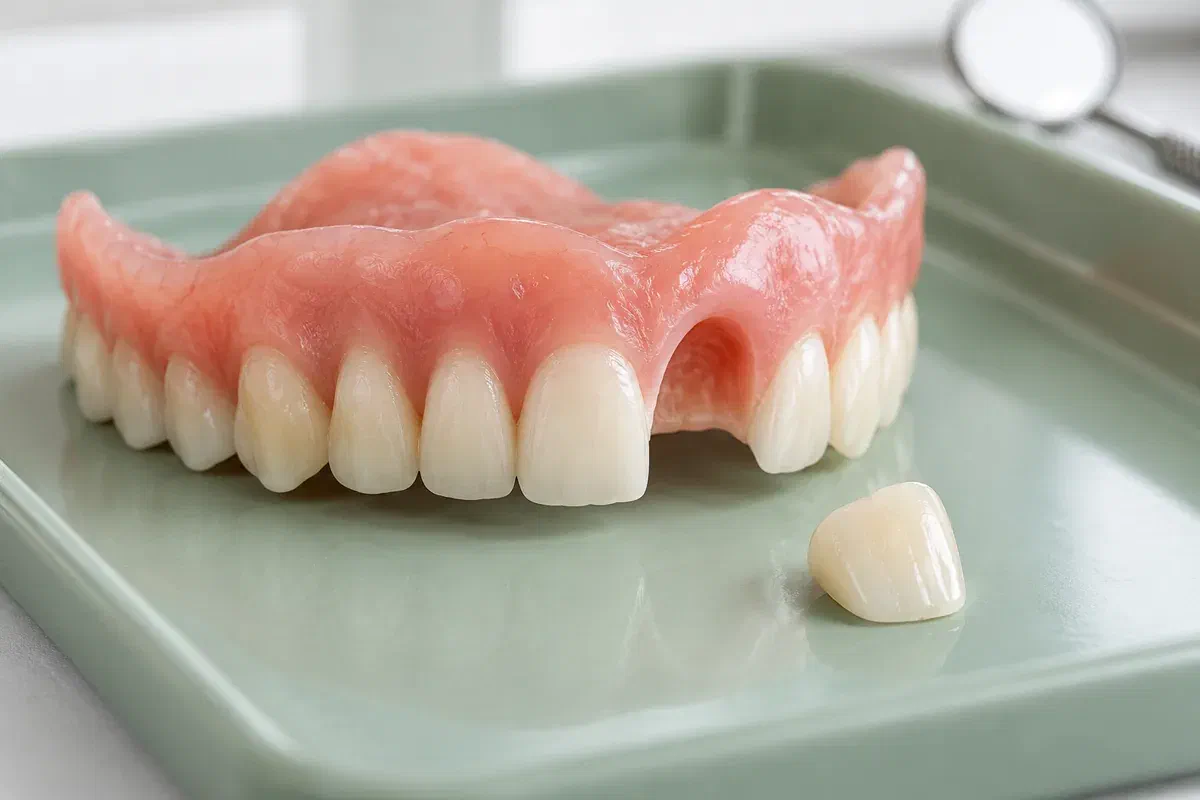
What broke, and how, influences both the plan and how long it takes. The attachment area, adjacent teeth and how your bite meets that spot help determine whether a straightforward replacement is suitable.
Store it in a lidded container rather than pushing it back. If the tooth and its socket are suitable, reuse may be an option, which the clinician will confirm.
Describe how it happened and whether anything feels sharp. A damaged tooth usually needs replacing, and the base is examined before the scope and timing are decided.
Repeated detachment may point to the bite, the material or the appliance's age. Mentioning previous repairs helps the plan address the cause rather than only the latest break.
A tooth that has started to wobble is worth a call before your next proper meal. Please don't tug at it or bite hard to see if it stays.
When the base and remaining teeth are in reasonable condition, replacing one tooth can keep the fit and appearance you rely on. It typically involves less upheaval than making a new appliance, which matters when your days are busy.
That said, a single replacement won't solve everything. It doesn't renew other worn teeth, tighten a loose fit or correct a bite that has shifted over time. Find out what the dentist thinks of the rest of the denture, and whether this repair should carry you for a good stretch or is simply a way to keep going while a fuller plan is arranged.
If the acrylic around the gap is in good condition, a replacement may be more straightforward. Hidden damage can lengthen the process or change the recommendation.
Teeth on an older denture may have worn or yellowed. Talk through how a replacement gets picked from the available shades and shapes, and whether a small difference may remain visible.
A replacement that meets the opposing teeth evenly is less likely to cause problems later. If chewing on that side had become uncomfortable, or a spot seemed to hit first, say so at the appointment.
How long it all takes rests on the kind of damage, the materials involved and any laboratory step. Before booking time off or moving commitments, ask how many days you could be apart from the appliance and how many appointments the repair may need.
Tell us which tooth is affected, the day you noticed it and anything unusual beforehand. Mention any previous repairs and whether the appliance was made elsewhere, then ask what to bring.
The dentist examines the gap, the overall appliance and your bite. That shows whether a single replacement will do or whether other issues need attention.
Discuss reusing or replacing the tooth, appearance, materials, fees and timing, including whether laboratory work means time apart from your denture.
Once the tooth is in, comfort, contacts and function are reviewed. Report later pressure, rubbing or rocking rather than assuming a finished-looking repair must be right.
Your repaired denture still needs daily cleaning and periodic checks. Ask whether the repair material or the reason for the break changes any of your care instructions.
Confirm when to resume your regular diet. If the replacement is the first thing to make contact when you close, or the denture shifts in a new way, call us rather than testing it repeatedly.
At the office, in the car or away for the weekend, store the denture in a proper case whenever it's out. Clean it above a sink half full of water and keep sharp tools away from the repair.
A thin crack, looseness or a changed feel near the tooth should be checked before it becomes a bigger repair. Tell us when it started and whether there was a drop.
Patient information: Canadian Dental Association — denture care
Time without your denture affects work, meals and confidence. These answers help you plan the repair with fewer surprises.
Reach out to our Bronte Street team when a denture tooth breaks, loosens or disappears. We will examine the appliance, give you a realistic sense of timing and say plainly whether a new tooth is the sensible way to restore it.
Bring the denture and any loose tooth in a case, and please avoid gluing anything first.
