It detached without damage
Keep the tooth in a closed box and avoid forcing it back in. Both it and the socket need assessment before anyone can say whether it can be used again.


One broken tooth can prompt a bigger question: is this denture still worth fixing? From Erin or Hillsburgh, come in for an honest look at the base, the bite and how long a repair might serve you.
When an artificial tooth breaks off, most people want the quickest route back to normal. That is often a single replacement. But if the denture has been worn for many years, loosened, or needed several repairs already, the broken tooth may be a good moment to ask how much life the appliance has left.
Either way, replacing the tooth is a repair to the denture rather than to your mouth. The clinician considers the acrylic it was set in, the wear and colour of the remaining teeth, and how a new tooth will contact the opposing arch. Bring any piece you find, sealed in a small container, together with the appliance.
From Erin, it helps to arrive ready to discuss both the short and the longer term. Dr. Anjum will assess whether the rest of the denture suits a focused repair, ask how it has felt recently, and explain plainly whether the replacement is likely to be a durable fix or a sensible interim step.
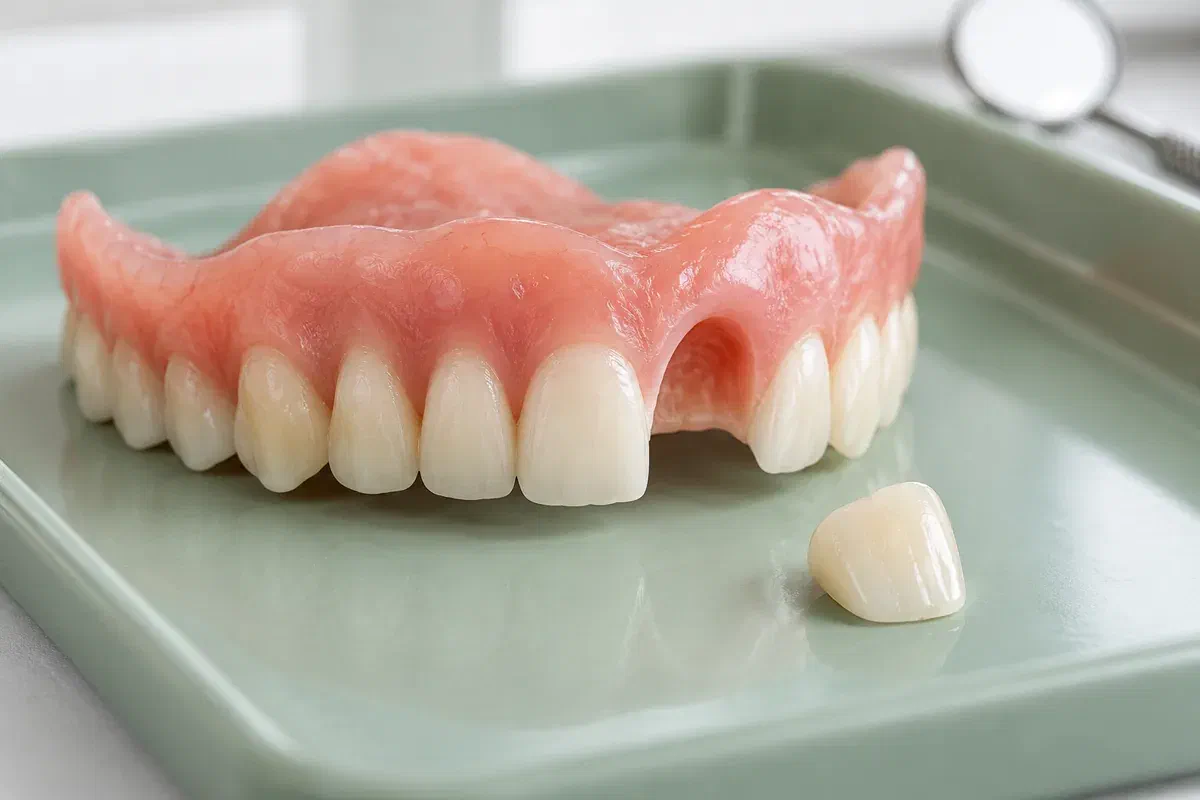
A single failure can be a one-off or part of a bigger picture. The attachment site, adjacent teeth and how evenly you bite all help show whether a replacement is reasonable on its own.
Keep the tooth in a closed box and avoid forcing it back in. Both it and the socket need assessment before anyone can say whether it can be used again.
Tell us what led to the break and whether the denture now feels sharp. A shattered tooth needs replacement, and the material nearby is checked before deciding how much work is needed.
Frequent fixes may reflect wear, material fatigue or a bite that has changed. Sharing that history helps the recommendation weigh another repair against broader options.
Call the clinic about a loose denture tooth before carrying on with everyday meals. Please don't pull at it or bite hard to check it.
A denture that still fits well and looks right can be worth keeping, and replacing one tooth may be all it needs. You hold on to the comfort, appearance and arrangement you know, without the adjustment period that comes with a new appliance.
On the other hand, a single tooth won't turn back the clock. It doesn't refresh worn teeth elsewhere, firm up a loose fit or rebalance a shifted bite. Ask the dentist directly whether the repair is expected to last, or whether it is better seen as a bridge while you plan for a replacement denture.
The acrylic around the tooth must be sturdy enough to hold a replacement. Its state helps explain whether a repair is worthwhile or whether further damage tips the balance.
Long-worn teeth may be flatter or discoloured. Ask how a new tooth is selected and what differences might remain visible.
A tooth that takes extra load may fail again. Mention whether that area felt high or sore before the break, so the repair can be planned accordingly.
Timing varies with the damage, the denture material and any laboratory involvement. Ask whether you'd be without the appliance for a while, so you can plan work and family commitments.
Explain when the tooth came off, how the denture has felt lately and how often it has been repaired. Bring any details about where and when it was made.
The dentist examines the gap, the base, the remaining teeth and your bite. That shows whether a single replacement addresses the concern or leaves important issues in place.
Discuss the proposed repair, how it will look, compatible materials, fees and timing. If a new denture is worth considering, ask how the two paths differ.
If you go ahead, comfort, contacts and function are checked once the tooth is in. Report pressure or movement later rather than assuming a whole-looking denture must fit.
Regular cleaning and periodic review still matter after the repair. Ask whether the repair or the denture's age changes any instructions, and when it would be wise to reassess.
Check when to return to your usual foods. If the new tooth feels like the first point of contact or the appliance rocks, call us rather than testing it repeatedly.
Clean it over water or a towel and store it in a case. Use recommended products and keep sharp tools away from the repaired area.
New cracks, increasing looseness or another tooth coming away are worth reporting. They may suggest it's time to revisit the repair-or-replace question.
Patient information: Canadian Dental Association — denture care
A broken tooth often prompts questions about value, durability and timing. These answers can help you weigh a repair against a longer-term plan.
Contact our Bronte Street practice about a broken, loose or missing artificial tooth. We will assess the appliance and help you decide whether a replacement tooth, or a longer-term plan, makes most sense.
Carry the appliance and every piece in a secure case, and please don't glue anything beforehand.
