The tooth fell out cleanly
Keep it in a closed container and resist pushing it back for a quick fix. The clinician can see whether the tooth and its socket are suitable to use again, which can sometimes help with matching.


A gap at the front of your denture is hard to ignore. From Georgetown, come in to discuss shade, shape and timing, and find out whether replacing that one tooth suits the rest of the appliance.
A missing back tooth can go unseen for days. A missing front one usually gets noticed the moment you smile, and it tends to happen just before a family gathering, a work presentation or a long-planned photo. The worry quickly becomes less about chewing and more about how the repair will look.
Replacing an artificial tooth is a repair to the appliance, and appearance is only one part of it. The dentist looks at the acrylic around the gap, the size, shape and shade of the neighbouring teeth, and how the new tooth will sit against your lower teeth when you bite. Keep any piece you recover and bring it along, because its colour and form can guide the choice.
When you call from Georgetown, mention any date you are working toward. Dr. Anjum can then explain whether the denture is suited to a focused repair, how timing might work, and what match is realistic, especially on an older appliance where the surrounding teeth may have worn or changed colour over the years.
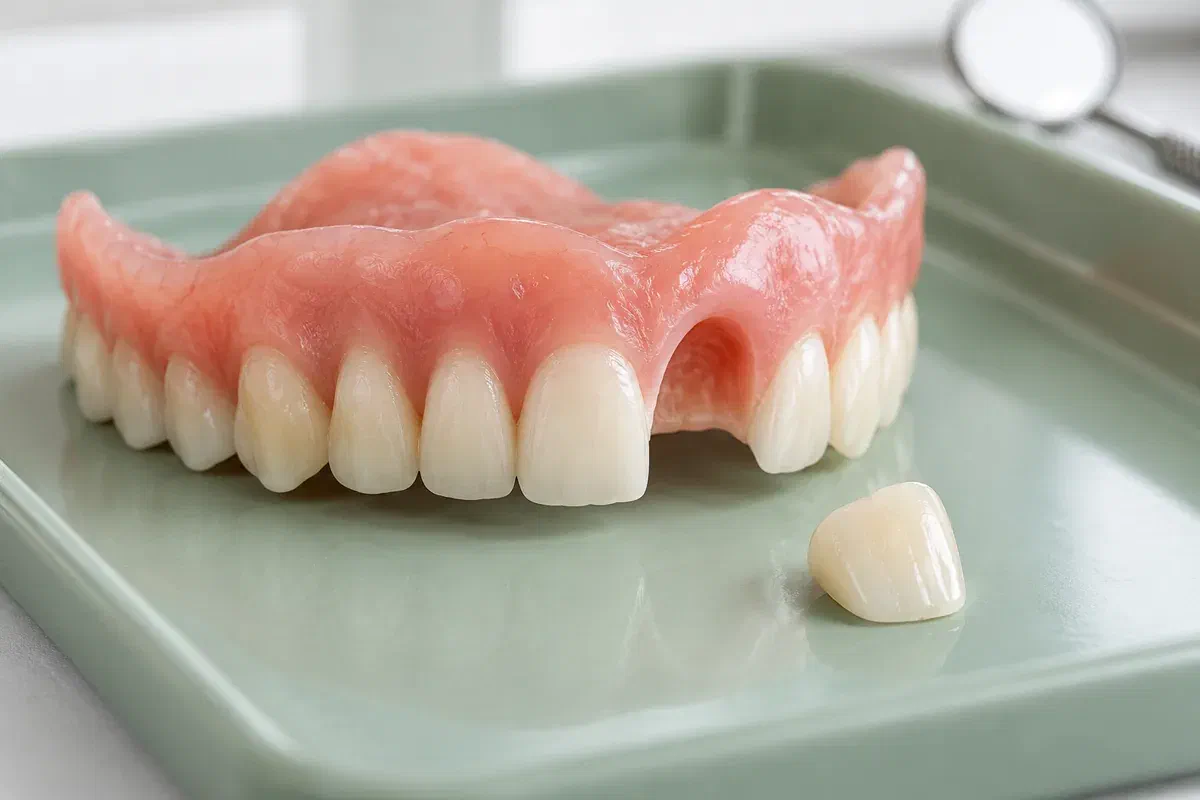
A visible gap draws attention, yet the decision depends on what lies around it. The socket, the teeth next to it and how your bite lands in that area all help determine whether a replacement makes sense.
Keep it in a closed container and resist pushing it back for a quick fix. The clinician can see whether the tooth and its socket are suitable to use again, which can sometimes help with matching.
Explain what happened and whether the edge now feels sharp. A damaged front tooth usually needs replacing, and the surrounding base is checked before the repair is scoped.
Front teeth can take unexpected force, for example when biting into firm foods. Tell us about previous repairs so the plan considers why this tooth keeps failing.
Call the clinic before using a loose denture tooth for meals. Please don't pull at it or bite into something firm to see if it stays.
If you are happy with how your denture looks and feels, replacing one damaged tooth may keep that familiar smile. When the base and remaining teeth are in reasonable shape, a focused repair can address the gap without changing the overall arrangement.
The repair has limits worth understanding. It will not freshen up other worn teeth, improve a denture that has loosened or correct a bite that has drifted. Ask about the state of the rest of the appliance, and whether the repair should last a good while or is a stopgap before a wider plan.
The acrylic around the gap must hold the new tooth securely. Checking it helps show whether the repair is straightforward or whether further damage changes the recommendation.
Older denture teeth may have darkened or worn at the edges. Ask how the new tooth is selected and how noticeable a small difference might be in daylight or photos.
A replacement needs to sit properly when you close and bite into food. Mention if that tooth felt prominent or took pressure before it came off.
Timing depends on the damage, the materials and whether a laboratory is involved. If there is a date you are aiming for, ask early how long the denture may be out of your hands.
Describe when the tooth came off, how the denture felt beforehand and any earlier repairs. Bring information about where the appliance was made, and mention an upcoming event if timing matters.
The dentist looks at the affected area and the denture overall. Your bite and mouth may be checked too, since some concerns would remain after the tooth is replaced.
Talk through reusing or replacing the tooth, how it should look, materials, fees and timing. Ask to see how the proposed shade compares with the teeth beside it.
Comfort, contacts and appearance are checked once the tooth is in place. If something feels off later, such as pressure or movement, report it instead of assuming the repair is fine because it looks right.
The new tooth is now part of an appliance that still needs routine cleaning and check-ups. Ask whether the repair or what caused the original damage changes any part of your care.
Ask when to bite into crusty bread or apples with the front teeth again. If the new tooth feels like the first contact, or the denture tips forward, call us rather than testing it repeatedly.
Work over a towel or a basin of water, and keep the denture in a case when it is out. Use recommended cleaners and never scrape the repair with sharp tools.
A fine line, looseness or different feel by the replacement should be checked. Let us know when you noticed it and whether the denture was dropped.
Patient information: Canadian Dental Association — denture care
When a visible tooth is missing, questions about colour, timing and the look of the repair come up quickly. These answers help you prepare for your assessment.
Reach our Bronte Street clinic about a missing, chipped or loose artificial tooth. We will assess the denture, discuss appearance and timing, and explain whether replacing that tooth is a suitable way to restore it.
Bring the denture and any recovered tooth in a case, and please avoid gluing anything in place first.
