The tooth came off in one piece
Store it in a lidded container and avoid pushing it back into the denture. The clinician can then check whether its base and the socket are in condition to use again.


A chipped denture tooth can leave a rough edge that rubs all day. If you're coming from Halton Hills, we can check the damage, the base around it and whether a replacement tooth is the right fix.
Not every damaged denture tooth falls out. Sometimes a corner breaks off and the rest stays put, leaving a sharp ridge that scrapes your tongue or the inside of your cheek. It is easy to put up with for a while, but a chipped tooth can weaken further, and constant rubbing can make the soft tissues sore.
Replacing that tooth is a repair to the appliance. The dentist considers the acrylic that holds it, the condition of the teeth on either side, and how a new tooth will meet the opposite jaw when you chew. If the broken fragment turned up, keep it in a small container. It can show how the tooth failed, even if it cannot be reused.
For households across Halton Hills, from Georgetown and Acton to the smaller hamlets, an organised appointment usually works best. Dr. Anjum will check whether the remaining denture is a good candidate for a focused repair, ask how it felt before the chip, and explain the realistic result, including any limits in matching older teeth.
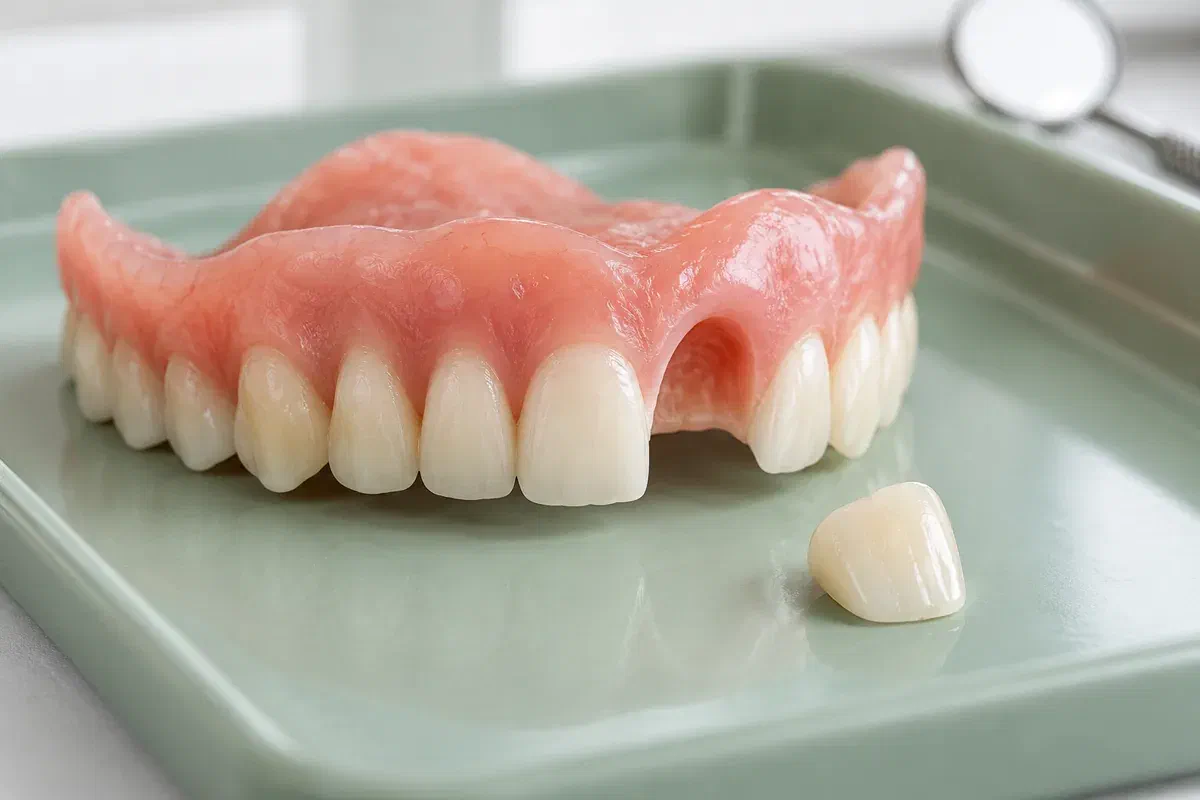
A chip can be the visible part of a bigger issue. We look at the attachment area, the neighbouring teeth and how your bite lands on that spot before recommending replacement.
Store it in a lidded container and avoid pushing it back into the denture. The clinician can then check whether its base and the socket are in condition to use again.
Tell us whether the chip followed a hard bite, a drop or nothing obvious, and whether the edge is irritating your mouth. A chipped tooth commonly needs replacing, and the base is examined before deciding on the extent of the work.
Repeated chipping in one spot may point to bite pressure, material wear or how the appliance is used. Let us know about earlier repairs so the plan responds to the cause.
Call the clinic if a denture tooth feels loose or sharp, rather than carrying on with regular meals. Please don't file it, pull at it or bite down hard to test it.
A rough or broken tooth can be distracting, but it doesn't always mean the appliance has reached the end of its life. If the base and remaining teeth are in reasonable condition, replacing the chipped tooth may restore a comfortable surface while keeping the fit and look you already rely on.
Be clear about what the repair will not do. It does not renew other teeth that have worn, correct a loose fit or rebalance a bite that has been uneven for some time. Ask the dentist about the state of the rest of the denture and whether this repair is expected to last or is a holding measure until a broader plan is ready.
The acrylic around the damaged tooth must be able to hold a replacement securely. Its condition helps explain whether the repair is straightforward or whether further damage alters the advice.
Older denture teeth often wear down or change shade. Ask how the new tooth will be chosen and whether a slight difference in colour or shape may remain.
A tooth that chips may have been taking extra force. Mention whether that area felt high or sore before the damage, since the replacement needs to share the load evenly.
The steps depend on the damage, the denture material and whether a laboratory is needed. Ask about timing and any period without your denture before arranging work, errands or family plans.
Describe when you noticed it and whether anything felt different beforehand. Mention earlier repairs and bring any records, especially if the appliance was made at another office.
The dentist examines the affected area and the overall condition of the denture. Your mouth may be checked for irritation from the sharp edge, along with your bite.
Discuss replacing the tooth, the expected appearance, compatible materials, costs, timing and whether the surrounding base needs work. Ask questions before agreeing to the plan.
With the repair complete, the denture is checked for fit, bite and function. If pressure, rubbing or rocking appears later, report it rather than assuming a finished denture must be fitting well.
Your repaired denture still needs daily cleaning and periodic review. Ask whether the repair material or the reason for the chip changes anything in your care routine.
Check when to resume your normal diet. If the new tooth seems to land first or the denture shifts, contact us instead of testing it repeatedly with firm bites.
Clean it over a towel or a sink with some water in it, and keep a case on hand. Use recommended products and avoid scraping near the repair with sharp tools.
If an area of your cheek or tongue stays sore, or you notice a crack or looseness near the new tooth, let us know. Tell us when it started and whether the denture was dropped.
Patient information: Canadian Dental Association — denture care
A broken edge raises questions about comfort, appearance and whether it is safe to keep wearing the denture. These answers can help you decide what to do before your visit.
Contact our Bronte Street practice about a chipped, loose or missing artificial tooth. We will examine the denture and let you know if a new tooth is the sensible way to make it smooth, comfortable and functional again.
Carry the denture and any fragments in a case, and please don't glue or file anything beforehand.
