The tooth came away in one piece
Tuck it into a lidded container and avoid trying to wedge it back in place. The dentist will see whether the tooth and the socket it left are still in good enough condition to be used again.


An older denture that has served you well can sometimes take a new tooth. For Old Milton households, we look at wear, shade and the supporting base before recommending a repair.
Some dentures have been part of daily life for a long time. They have been cleaned thousands of times, adjusted here and there, and worn through many meals. When one artificial tooth breaks free from an appliance like that, the question is less about the single tooth and more about how the whole denture has aged around it.
Replacing a denture tooth is a repair to the appliance rather than to a natural tooth. The work takes into account the acrylic the tooth sat in, the shade and shape of teeth that may have worn down over the years, and how a new tooth will meet the opposing ones. Keep any piece you recover and bring it with the denture, since its condition is part of the picture.
Milton's historic downtown is a short way from our Bronte Street practice, so a prompt visit is often easy to arrange. Dr. Anjum will ask about the denture's history and earlier repairs, then explain whether a focused fix fits, how closely a new tooth can blend with older ones, and what else may be worth considering for comfort or fit.
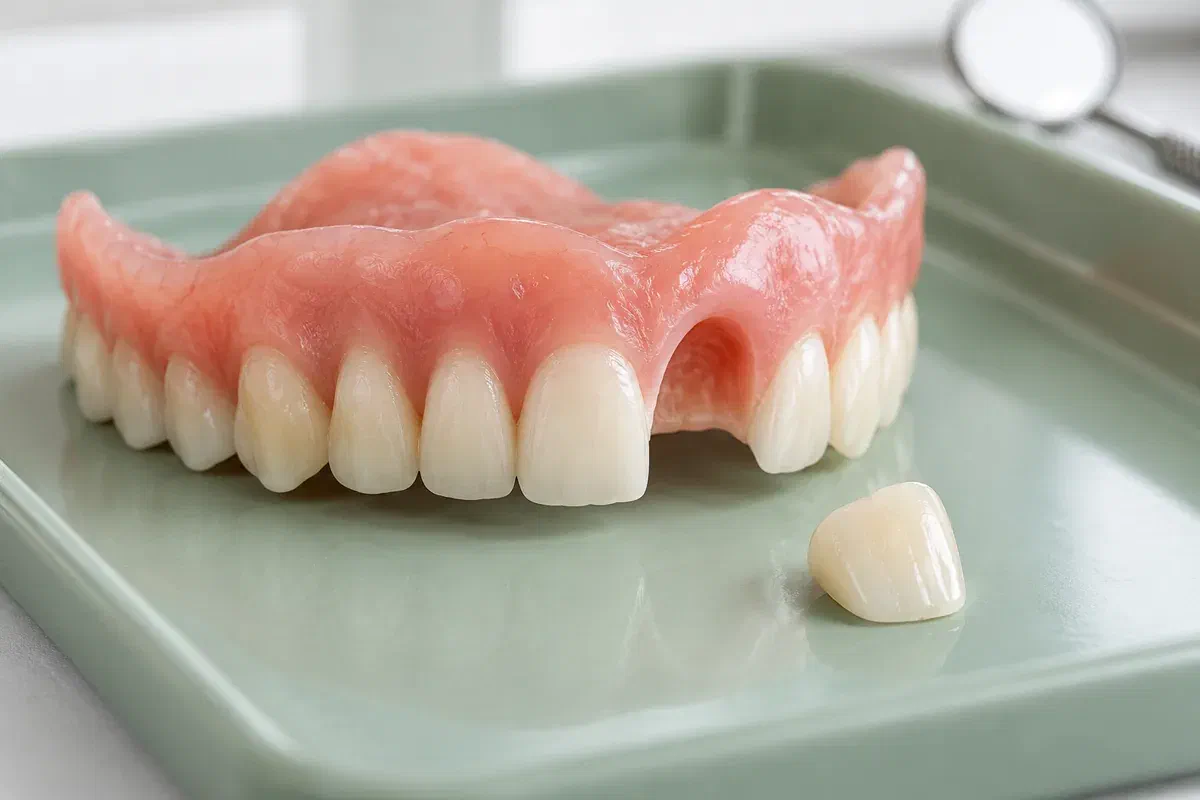
In an older denture, the missing tooth may be the most visible sign but rarely the only one. We look at the attachment site, the neighbouring teeth and how your bite lands before deciding on a repair.
Tuck it into a lidded container and avoid trying to wedge it back in place. The dentist will see whether the tooth and the socket it left are still in good enough condition to be used again.
Tell us whether the break followed a knock, a hard food or nothing obvious, and whether the surface now feels rough. A split tooth commonly needs replacing, though the surrounding material is checked before the work is agreed.
When an appliance needs fixing more frequently, wear, material fatigue or a shifting bite may be involved. Sharing the history helps the recommendation look at the trend, not just today's break.
If a tooth on your denture feels loose, phone us before you keep eating on it. Avoid tugging at it or clenching to check how firm it is.
Long-time wearers often know exactly how their denture should feel. If the base and remaining teeth are still serviceable, replacing the damaged tooth can keep that familiar fit, arrangement and look in place while addressing the one area that failed.
It is worth being clear about what this kind of repair leaves untouched. A new tooth does not restore teeth that have flattened over time, tighten a denture that has become loose, or reshape a bite that has drifted. Ask the dentist how the rest of the appliance is holding up and whether the repair is likely to be a lasting one or a stopgap.
Years of use can leave the base thinner or crazed in places. Its condition helps show whether a new tooth can be secured well or whether further damage alters the plan.
Older denture teeth may have yellowed or worn. Ask how a replacement is chosen and where a small difference in colour or shape may still show.
Any replacement must fit the way the denture already works. Mention any area that felt high or tender before the tooth came free, since that may have contributed.
How long the repair takes depends on the break, the material and whether a laboratory is involved. Ask early whether you might be without your denture for a time so you can plan around appointments and family plans.
Share when the tooth came off and how the appliance has felt lately. Mention when and where it was made and any previous repairs, and bring paperwork from another office if you have it.
The dentist inspects the damaged spot and the overall condition of the denture. Your gums and bite may be reviewed too, since some problems would carry on after a single tooth is replaced.
Together you consider reusing the old tooth or choosing a new one, how it will look, which materials suit, what it will cost, how long it may take and whether the base needs attention.
Comfort, tooth contacts and function are checked once the tooth is in place. Afterwards, report any pressure, rubbing or rocking rather than assuming the denture is fine because it looks whole.
Your denture still needs regular cleaning and occasional checks after the repair. Ask whether the material used, or what caused the original break, means anything in your routine should change.
Check with the team about when to go back to your normal meals. If the new tooth seems to land first or the denture moves differently, call us rather than chewing harder to see what happens.
Clean the denture over a sink lined with a cloth or partly filled with water, and carry it in a proper case. Use the cleaning products advised and never scratch at the repair with pins or knives.
A crack line, a hint of movement or a changed feel near the new tooth should be checked. Note when it began and whether the denture had been dropped or knocked.
Patient information: Canadian Dental Association — denture care
Losing a tooth from a denture you have worn for years raises its own questions about matching, longevity and fit. These answers can help you get ready for an assessment.
Call our Bronte Street office about a chipped, loose or missing artificial tooth. We will examine the appliance, talk through its history and tell you whether a single replacement tooth is a sound way to restore it.
Bring the denture and any recovered tooth in a case, and please don't attempt a glue repair first.
