An artificial tooth came off whole
Place it in a closed container and resist clicking it back yourself. Whether it can be reused depends on its condition and on the area of the base it detached from.


Partial or full, a denture that has lost an artificial tooth deserves a proper look. If you're coming from Rockwood, we can check the base, your bite and any natural teeth involved.
With a partial denture, the word “missing” can mean two quite different things. An artificial tooth may have broken away from the appliance, or a natural tooth that the partial fits around may have been lost. The first is a repair to the denture. The second changes what the partial has to do and needs its own planning.
This page is about the first situation. Replacing an artificial tooth means looking at the acrylic or framework it was attached to, the teeth on either side, and how the new piece will meet your opposing teeth. For a partial, the dentist will also want to see the natural teeth it rests against. Keep any tooth you recover and bring it along.
When you call from Rockwood, say which type of denture you wear and what exactly came away. Dr. Anjum can then review whether the appliance is suited to a focused repair, ask about its history and explain what to expect, including the limits of matching older teeth and any other work worth considering.
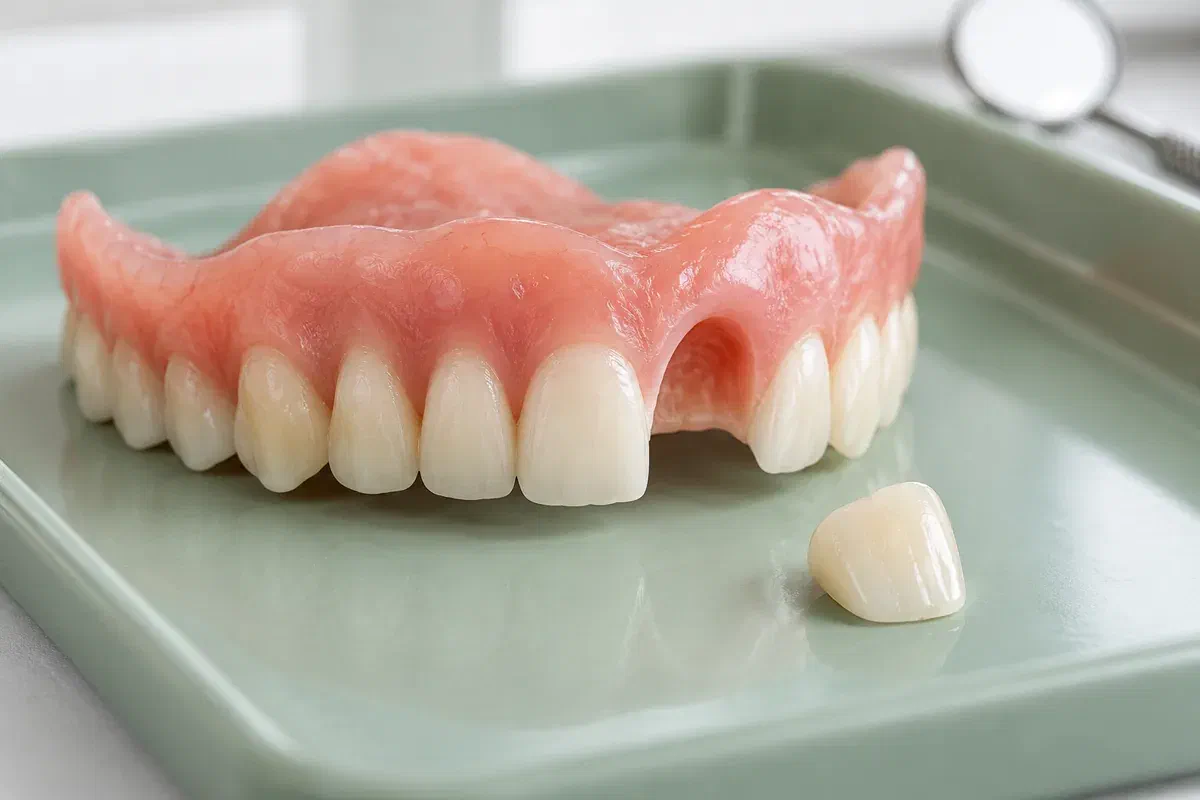
The gap is one clue among several. For both partial and full dentures, the attachment area, neighbouring teeth and your bite help show whether a replacement is the right step.
Place it in a closed container and resist clicking it back yourself. Whether it can be reused depends on its condition and on the area of the base it detached from.
Explain what you were doing and whether anything now feels sharp. Broken teeth usually need replacing, and the surrounding material is examined before the scope of work is set.
On a partial, repeated failure can relate to the bite, the design or changes in the natural teeth. Share earlier repairs so the plan responds to the pattern.
If any part of your denture feels loose, call before using it as usual. Please avoid pulling at it or bending a partial to see how firm it is.
A partial or full denture that sits well and suits your smile is worth preserving if possible. Replacing a single damaged tooth can maintain its fit and appearance while dealing with the one area that failed.
Know what the repair leaves alone. It will not renew worn teeth across the appliance, correct a fit that has changed or rebalance a bite that has drifted. For a partial, it also won't account for changes in your natural teeth. Ask what the dentist sees overall and whether the repair is likely to last or is a temporary step.
Whether the tooth sits in acrylic alone or near a framework, the supporting area must be sound. Its condition helps explain whether a replacement can be incorporated well.
Artificial teeth can wear and change shade over time, and on a partial they also sit beside natural teeth. Ask how the new one will be chosen and what may still show.
The replacement must work with both artificial and natural teeth in your bite. Mention any area that felt high or sore before the tooth came off.
Steps depend on the damage, the type of denture and whether a laboratory is needed. Before planning work or family commitments, ask whether you might be without the appliance for a time.
Say whether it's a partial or full denture, when the tooth came away and what you noticed beforehand. Mention past repairs and where it was made.
The dentist checks the gap, the overall condition of the denture and, for a partial, the natural teeth and gums it rests on. Your bite is reviewed too.
Discuss reusing or replacing the tooth, appearance, materials, fees and timing. Ask whether the framework, base or any natural teeth need attention as well.
Comfort, contacts and how the denture seats are confirmed once it's repaired. Report later pressure, rubbing or movement rather than assuming a complete-looking appliance must fit.
The repaired appliance still needs daily cleaning and regular checks, and for a partial, so do the natural teeth it touches. Ask whether the repair changes any of your routine.
Find out when to resume your usual foods. If the new tooth meets first or the denture lifts or rocks, contact us rather than repeatedly testing it.
Clean the appliance over water or a towel and store it in a case. Use advised products, and keep brushing and cleaning around natural teeth that a partial touches.
A crack, looseness or a changed feel near the tooth, or a partial that seats differently, should be reviewed. Tell us when you noticed it and whether it was dropped.
Patient information: Canadian Dental Association — denture care
Repairs on a partial raise their own questions about natural teeth, frameworks and what counts as a simple fix. These answers help you explain your situation when you call.
Reach our Bronte Street clinic about a loose, chipped or missing tooth on a partial or full denture. We will examine the appliance and your mouth, and explain whether a replacement tooth suits it.
Bring the appliance and any loose tooth in a case, and please don't glue or bend anything first.
