
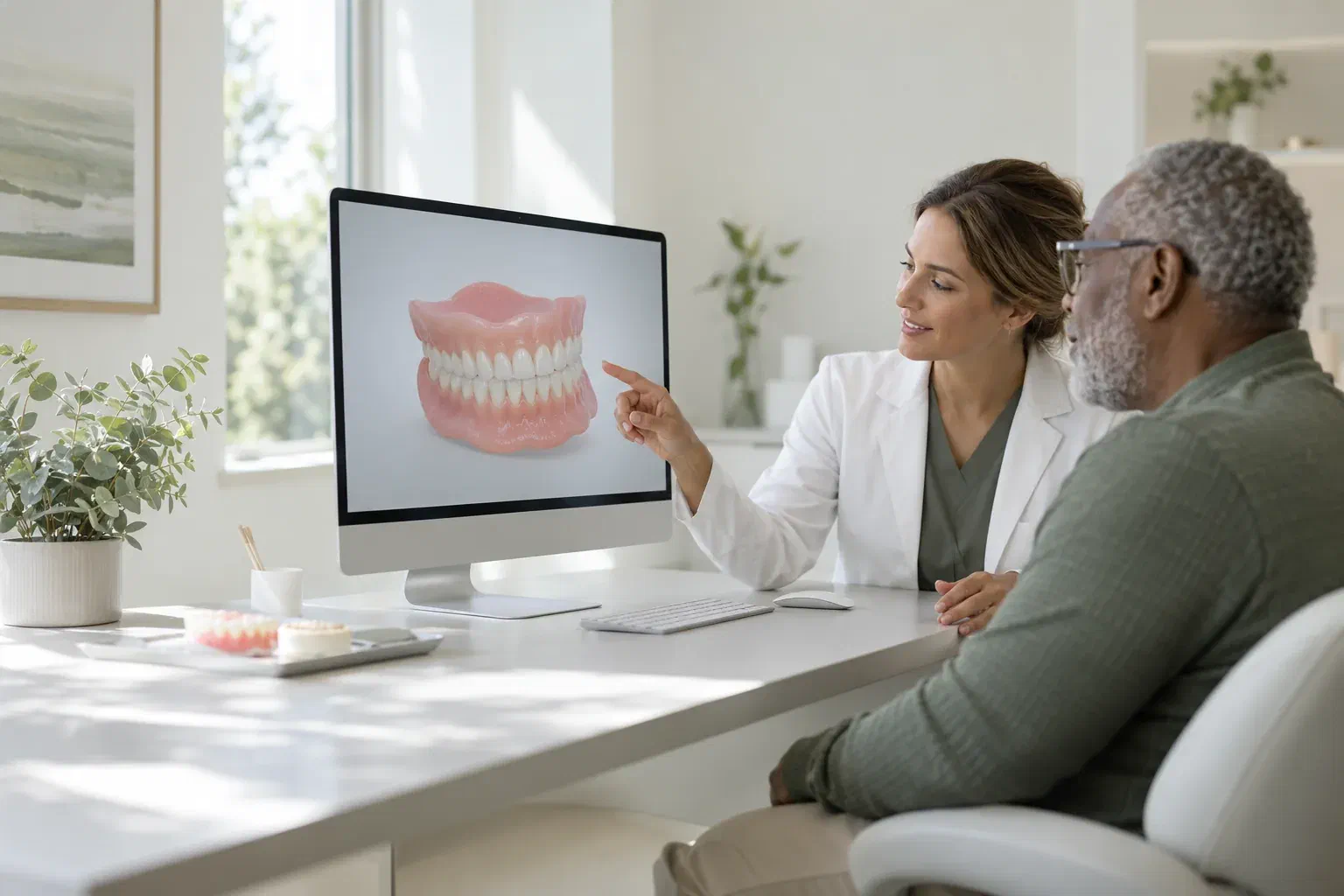
Illustrative patient and dentist reviewing a digital denture design
Restorative Dentistry

Digital Dentures in Acton

Getting a first denture brings plenty of questions, and the word digital can add a few more. For anyone in Acton new to dentures, here is how computer-based design fits into planning, records, fitting and the first weeks of wear.

A first denture, from Acton

New to dentures, and new to the terms.

If you have never worn a denture, the whole process can feel unfamiliar before the word digital even comes up. You may be losing teeth that have caused trouble for years, or adapting to a gap that has slowly grown. Knowing what each step is for can make the decisions feel far more manageable.

A digital denture is one where a computer helps design or manufacture the appliance, sometimes for the whole process and sometimes for a single stage. The goals are the same as for any first denture: a stable fit on the gums, an even bite, an appearance that feels like you, and an appliance you can learn to insert, remove and clean.

For someone in Acton considering a first denture, a consultation starts with your mouth and your questions rather than with equipment. We can explain whether any steps would be digital, what the denture would be made of and how its fit would be checked and refined as you get used to it.

Ask about a first denture
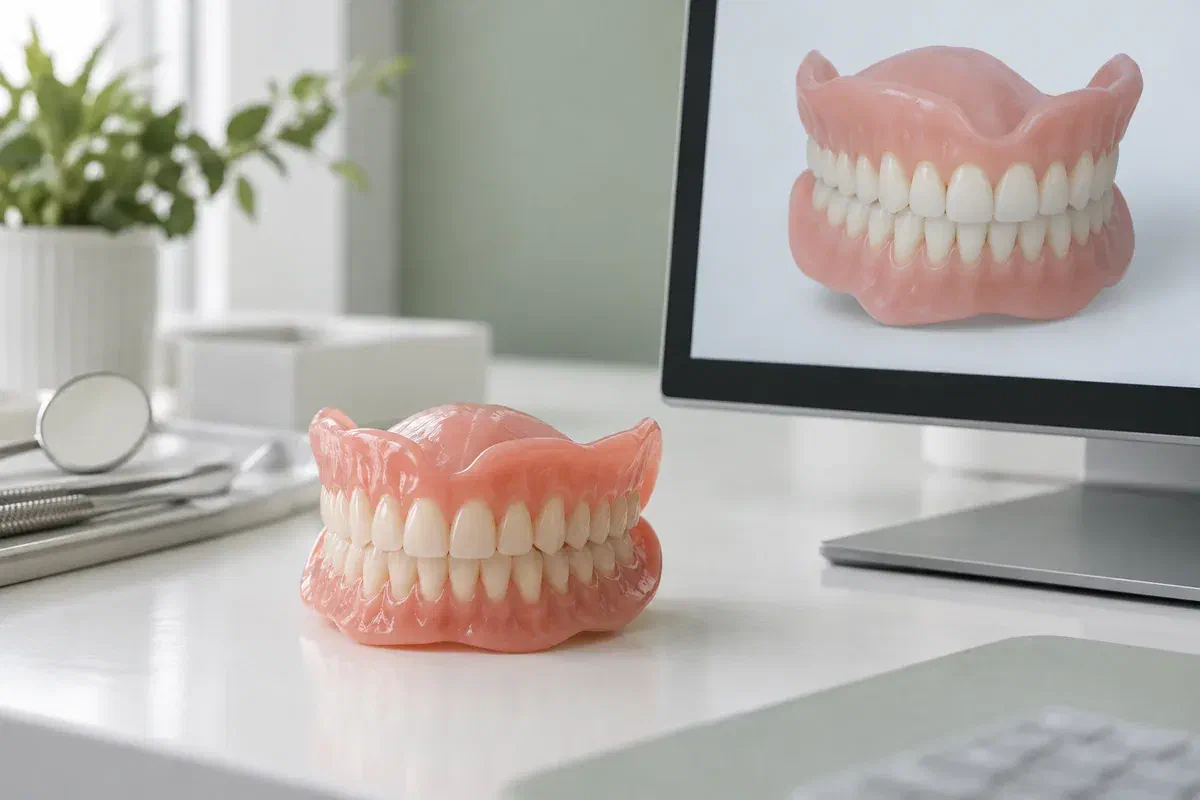
Removable denture beside an illustrative computer-based denture model
Starting points for first-time wearers

Every first denture begins with a few unknowns.

People getting their first denture tend to wonder what they will look like, how many visits are involved and how they will care for it. Digital methods touch on each of these, but they do not answer them alone.

You are moving from natural teeth to a denture

Describe what you like about your current smile and what has bothered you. Remaining teeth and photographs can guide the design, but the dentist will plan around how your mouth will be after any extractions.

You want to know what the appointments involve

Ask for a step-by-step outline of records, try-ins and reviews, and how any extractions fit in. No method sets a fixed visit count, and the finished denture still needs checking in your mouth.

The materials are unfamiliar

Digital and conventional methods may use different materials, which affect cleaning, relines and repairs. Ask about the specific appliance proposed, keeping in mind that your gums may change in the months after extractions.

A design on screen can help you picture your new smile, but it is not a promise of how the denture will feel. Fitting and review appointments are where comfort is confirmed and refined.

How computer design can help

A clearer picture for a big change.

Design software can arrange teeth, shape the base and set the bite in one plan that is easy to review and send to production. For a first-time wearer, seeing that plan can make the outcome feel less abstract. Some systems also keep the file.

These benefits matter when they lead to a denture suited to you. A digital appliance is not automatically better than a carefully made conventional one. A better question for a first-timer is whether this plan suits your gums, your hopes for your smile and your daily life, and what the dentist will look for at fitting and review.

Patient information: American College of Prosthodontists — clinical outcomes of digital dentures

Preview your new smile

A proposed tooth layout gives you something to react to about shape, size and position. Ask when it will be shown and how any changes are checked before the denture is made.

Understand the journey from records to appliance

Records taken at the clinic become the basis of the design. Seeing that connection helps you understand which choices the dentist makes and which steps are handled by equipment.

Keep information for later stages

After extractions, the gums may change and a reline or new denture may follow. Ask whether design files are kept and how they might help, recognizing that updated records may be needed.

What to expect along the way

From the first visit to your first weeks of wear.

Your sequence will depend on your mouth, any teeth to be removed and the chosen method. Ask the dentist to explain each stage, including impressions or scans, trial dentures, lab work and review visits.

  1. Exam, history and goals

    The dentist examines your teeth, gums and bite and reviews your medical history. Your hopes for eating, speaking and appearance help define what your first denture should achieve.

  2. Records and planning

    The dentist may take impressions or a scan, along with bite records and photographs. Ask what each is for and how the plan accounts for any teeth that need to be removed.

  3. Design review

    You look at tooth shape, shade and arrangement, often with a trial stage. You will also learn the manufacturing method and what daily care the chosen material needs.

  4. Fitting and early reviews

    The denture is placed and you learn how to insert, remove and clean it. Early reviews help address sore spots and bite concerns while you are learning to wear it.

Learning the routine

Daily care for a first denture.

New wearers benefit from clear, material-specific instructions. A digitally designed appliance needs the same daily cleaning and periodic checks as any denture, along with some patience while you adapt.

Learn the cleaning steps early

Ask which brush and cleanser to use, whether to soak it and how to store it overnight. Practising at the fitting appointment can help you feel confident at home.

Expect some adjustment

Sore spots, slipping or an uneven bite are common concerns early on. Report them at review, since a denture may need assessment and refinement however it was made.

Keep a simple record

Note the material and any design details the clinic recommends saving. If your gums change and you later need a reline or another dentist’s help, that information can be useful.

Ways a first denture can be made

Which route makes sense for you?

Either approach can be used on its own, or the two can be combined. Compare them by suitability for your mouth, materials, chances to review appearance, maintenance and the appointments required.

Established and widely used

Conventional fabrication

A conventional route can produce a carefully planned first denture. Ask how impressions and bite records are taken, how appearance is reviewed and how fitting and follow-up work.

Matching each stage to a method

Some steps digital, some traditional

Conventional impressions or try-ins may be combined with computer design and production. Clarify which parts of your plan would be digital and why that combination is suggested.

If the system and material fit

Computer-designed and machine-made

Some dentures are milled from solid material and others printed in layers. Because their materials differ, find out which one is planned and how relines and repairs would be managed as your mouth settles.

First-denture questions from Acton

Getting started with confidence.

These answers cover what new wearers often ask about: speaking and eating, healing after extractions, materials, appointments and how a digital design fits in.

(905) 876-4488
How long does it take to get used to a first denture?
It varies. Many people need some weeks to adapt to speaking and eating with a new denture. Start with softer foods, practise talking aloud and report sore spots at your review so the fit can be refined.
Can a digital denture be made if I still have teeth to remove?
That depends on your situation and the plan. Some approaches provide a denture at the time of extractions, others after a healing period. Ask the dentist which sequence suits you and how a digital design would fit into it.
Will my first denture need a reline?
It may, particularly after extractions, because gums and bone can change shape as they heal. Ask how relining would work for the proposed material and when the dentist would expect to review the fit.
Can I pick how my teeth look on a first denture?
Your preferences are an important part of planning. Discuss tooth shape, shade and arrangement, and bring photos if they help. The dentist will balance appearance with what the bite and fit require.
Is a scan the only way to take digital records?
No. A digital plan may use a direct scan, conventional impressions that are digitized afterwards, or both. Ask why a particular method is recommended for your mouth and what it will show.
Will a first digital denture mean fewer visits overall?
No number can be promised from the method alone. First dentures often involve planning, possible extractions, trial stages and several reviews. Ask for the expected sequence and what could add a visit.
Coming in from Acton

Start the conversation before the first denture.

Request a first-denture consultation at our Bronte Street practice. We will examine your mouth, review your medical history and talk about what you want from the new appliance, then explain the proposed steps, materials and fitting plan.

Bring a list of medications and any photos of your smile that you like; both can be useful during planning.

Visit Milton Dental Clinic
Unit 1, 342 Bronte St. S, Milton, ON L9T 5B7
Get directions Clinic hours
Monday–Thursday
11am–7pm
Friday–Sunday
By appointment only

Areas we serve

  • Milton
  • Oakville
  • Mississauga
  • Georgetown
  • Halton Hills
  • Acton
  • Campbellville
  • Brampton
  • Burlington
  • Puslinch
  • Rockwood
  • Erin
  • Caledon
  • Etobicoke
  • Old Milton
  • Bronte Meadows
  • Timberlea
  • Dorset Park
  • Dempsey
  • Clarke
  • Beaty
  • Coates
  • Harrison
  • Scott
  • Willmott
  • Ford
  • Bowes
  • Cobden
  • Walker
  • Mountain View
  • Milton Heights
  • Hawthorne Village
  • Valley View
  • Fallingbrook
  • Nassagaweya
  • Trafalgar
  • Esquesing
  • Nelson
  • Brookville
  • Moffat
  • Glen Williams
  • Norval
  • Limehouse
  • Stewarttown
  • Ashgrove
  • Hornby
  • Silver Creek
  • Speyside
  • Scotch Block
  • North Oakville
  • River Oaks
  • Glen Abbey
  • West Oak Trails
  • Palermo
  • Bronte Creek
  • College Park
  • Joshua Creek
  • Uptown Core
  • Preserve
  • Iroquois Ridge
  • Lisgar
  • Meadowvale
  • Meadowvale Village
  • Churchill Meadows
  • Erin Mills
  • Central Erin Mills
  • Streetsville
  • East Credit
  • Creditview
  • Heartland
  • Sheridan
  • Mount Pleasant
  • Credit Valley
  • Huttonville
  • Churchville
  • Springbrook
  • Northwest Brampton
  • Bram West
  • Fletcher's Meadow
  • Fletcher's Creek South
  • Alton Village
  • Orchard
  • Millcroft
  • Headon Forest
  • Tansley
  • Brant Hills
  • Tyandaga
  • Kilbride
  • Lowville
  • Aberfoyle
  • Morriston
  • Arkell
  • Hillsburgh
  • Freelton
  • Carlisle
  • Waterdown
  • Flamborough
  • Mountsberg

How can we help?

Milton Dental Clinic

Have a question about your smile? Choose the option that works best for you.

For urgent dental concerns, please call.
Messages are reviewed during clinic hours.