A parent’s long-worn denture
Let the wearer describe what feels right and what does not, and add what you have noticed at mealtimes. Their old appliance may guide the new design, once the dentist confirms it still suits the mouth.

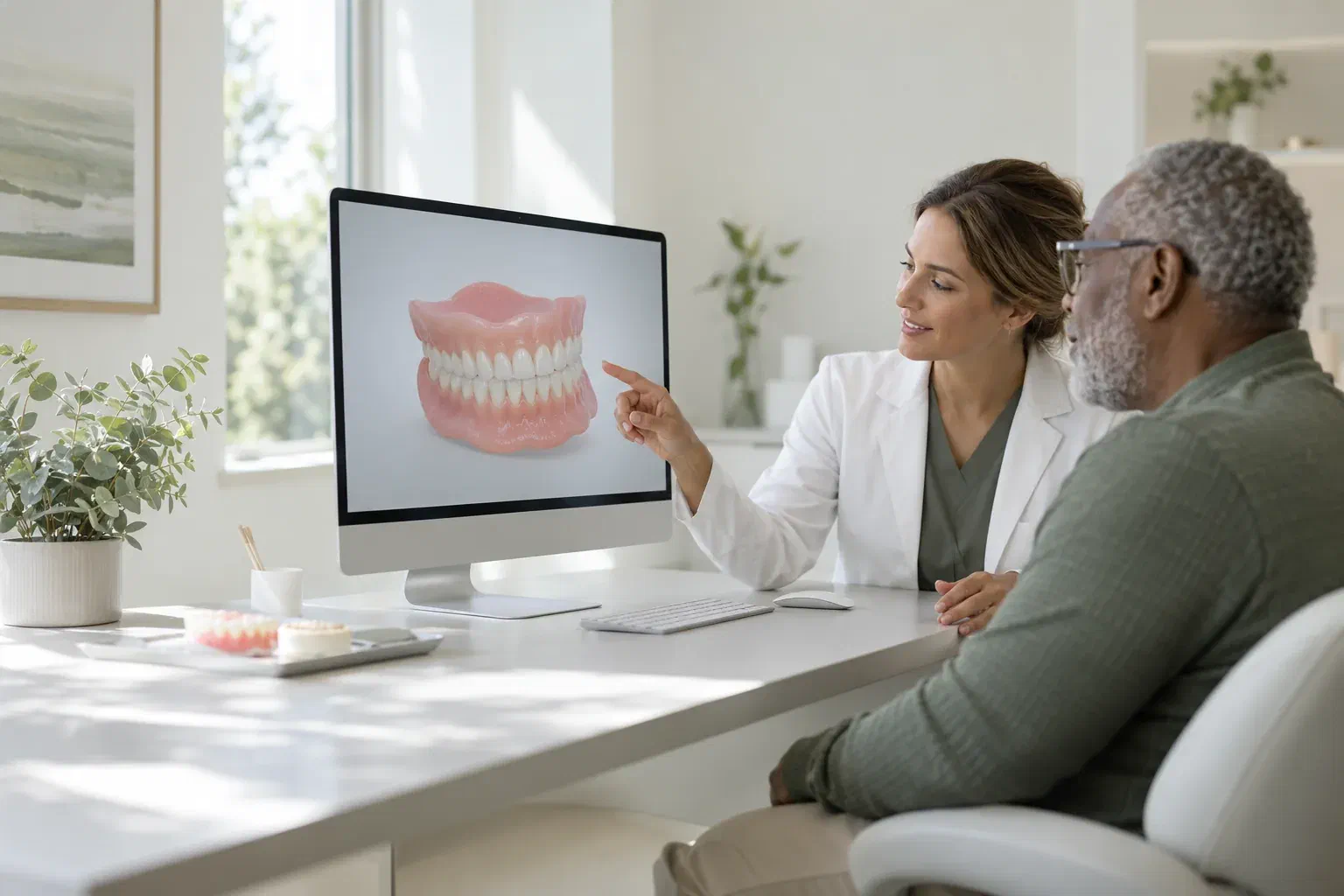
Replacing a denture is often a family project, with someone helping to book visits, drive or remember instructions. For Brampton households, here is how digital denture planning works and where a support person fits in.
It is common for an adult son or daughter, a spouse or a friend to come along when someone is getting a new denture. They help with dates, take notes and ask the questions the wearer forgets. When the plan involves digital design, it helps if everyone understands what that phrase does and does not mean.
In short, a computer handles part or all of designing or producing the appliance. The person wearing it still needs a denture that rests properly on the gums and ridges, closes evenly against the opposite teeth, looks right to them and can be handled and cleaned without frustration. Those needs come from the mouth, not the software.
When a family from Brampton books a consultation, the wearer stays at the centre of the conversation, and a companion is welcome to join with their consent. We explain which steps would be digital, what material is proposed and how the fit will be checked, so everyone leaves with the same understanding.
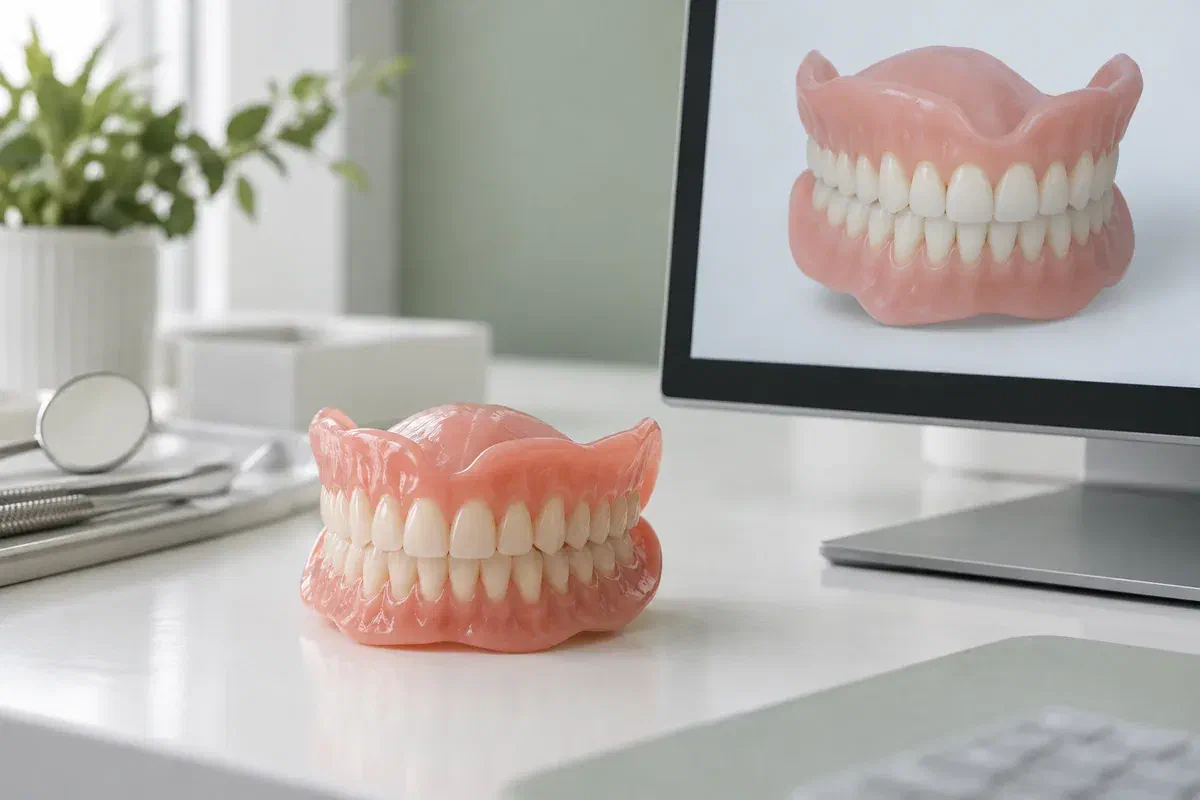
The wearer’s experience leads, but supporters often raise practical points too. Most conversations touch on replacing an existing set, understanding the schedule and planning for future care.
Let the wearer describe what feels right and what does not, and add what you have noticed at mealtimes. Their old appliance may guide the new design, once the dentist confirms it still suits the mouth.
Ask for a list of the expected record, try-in and review visits so drivers and calendars can be arranged. The number depends on the case, and digital production does not replace checking the appliance in the mouth.
Find out what the proposed material means if the denture chips, cracks or loosens later. Different manufacturing methods lead to different answers, so ask about this appliance specifically.
A digital preview helps everyone picture the plan, but it is not the finished result. How the denture actually feels and functions is confirmed by examining and fitting it.
Computer-based design can bring tooth arrangement, base form and bite into a single plan that is straightforward to review and send for production. In some systems, the design file is also kept on record.
That is useful when it leads to a denture that suits the person wearing it. It does not mean every digital appliance outperforms a conventionally made one. Ask how the plan will meet the wearer’s fit, appearance and everyday needs, and how its success will be judged after delivery.
Patient information: American College of Prosthodontists — clinical outcomes of digital dentures
A visual design makes it easier to discuss tooth position and appearance, especially with a family member present. Ask when it will be reviewed and how requested changes are checked before production.
The records taken at the clinic go into the design that guides manufacture. Understanding that step helps separate the dentist’s clinical choices from the machines that carry them out.
Check whether design files are kept and how they might support a repair or replacement. An updated examination may still be needed, since the mouth can change over time.
Workflows differ from one plan to the next. The dentist should explain the stages ahead, including any conventional impressions, try-ins, lab steps and the reviews that follow delivery, so the household can plan.
The dentist examines the gums, any remaining teeth and the present denture. The wearer’s experience with chewing, speaking, handling and appearance sets the goals for the new appliance.
Impressions, scans, bite records and photographs may all be used. Ask what each one is for and whether the existing denture can contribute useful information.
Tooth arrangement and appearance are discussed, with a trial stage where the workflow allows. The team describes how the denture will be manufactured and what its material means for care.
The finished denture is fitted and cleaning instructions are given, with a supporter present if that helps. Later reviews deal with pressure, movement or uneven contact once it has been worn at home.
A digitally designed denture still needs daily cleaning and periodic examinations. Ask for written guidance specific to the finished material so that anyone helping with care uses the right products.
Confirm the brush, cleanser and soaking routine recommended, and where the denture should be kept overnight. Products from an older appliance may not suit the new material.
Reluctance to eat certain foods, sore spots or a denture that seems to move are worth reporting. Adjustment is a normal part of settling in, whatever method was used to make it.
Note the material and any design information the clinic suggests saving. If care is ever needed elsewhere, those records help a dentist understand repair options.
These answers cover the practical points supporters and wearers ask about: attending together, health history, materials, schedules and the weeks after fitting.
Arrange a denture consultation at our Bronte Street practice, and bring a support person if that helps. After examining the wearer’s mouth and any current denture, we will set out the proposed steps, the likely material and when each fitting would happen.
Bring the current denture, a medication list and a note of anything you have noticed at meals or during conversation.
