
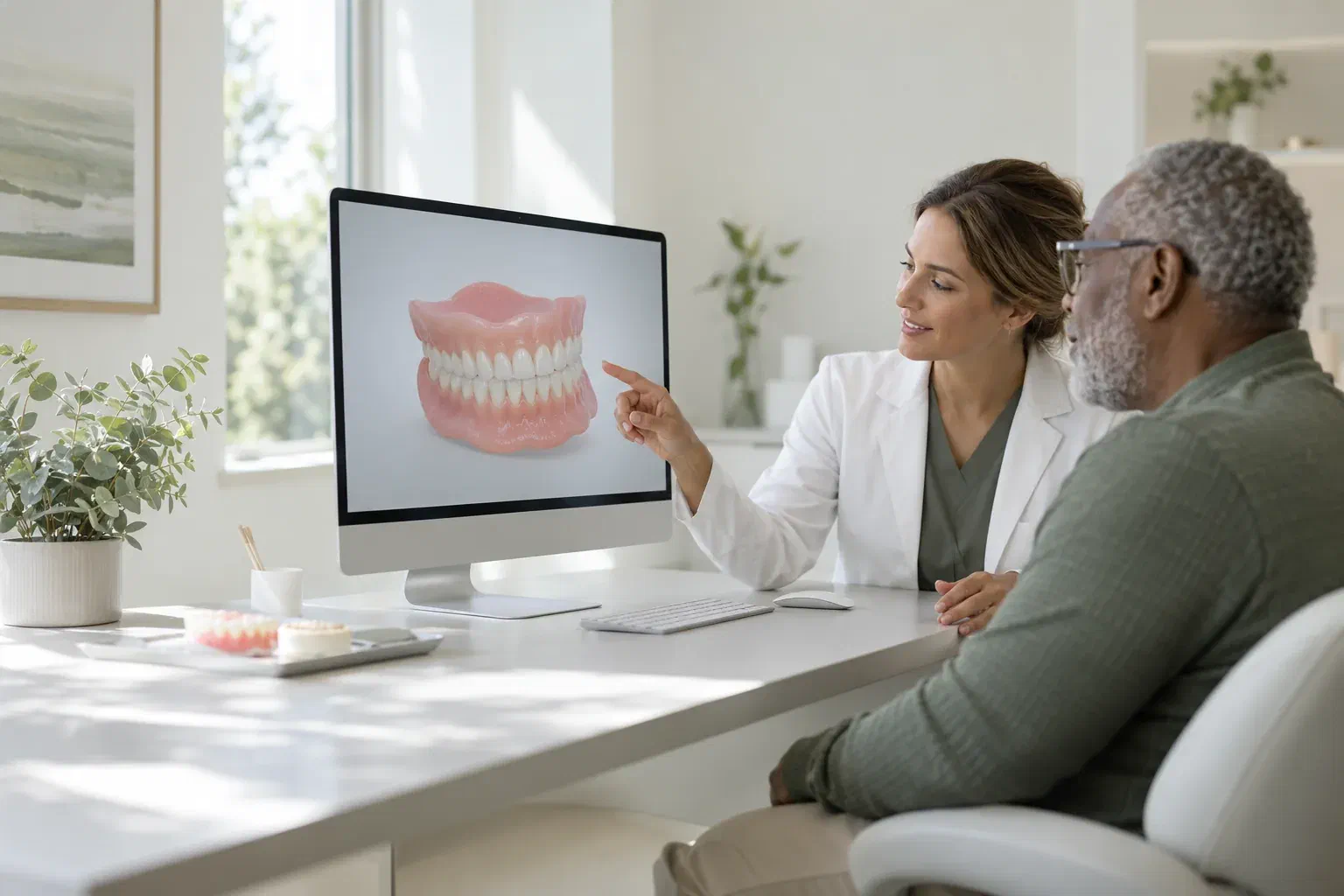
Illustrative patient and dentist reviewing a digital denture design
Restorative Dentistry

Digital Dentures in Burlington

How denture teeth look in photos, in conversation and at the table matters. For Burlington wearers, digital design can support a clear discussion of tooth shape, shade and arrangement while the fit is confirmed clinically.

Burlington smiles, planned with care

Seeing the smile before it is made.

Often the push to replace a denture comes from a photograph. The teeth look too uniform, too short, or not quite like you any more. A digital approach can help here, because a proposed tooth arrangement can be designed on a computer and discussed before the final appliance is produced.

Appearance is only part of the brief, though. The same denture has to stay stable on the gums and ridges beneath it, let the upper and lower teeth meet in balance, and be comfortable enough to wear, remove and clean every day. A design that looks right but sits poorly has not done its job.

Travelling in from Burlington, you can use a consultation to tell us what you want to see in the mirror and to hear which parts of the process would be digital. We can describe the planned material, the chances to preview the teeth and how the fit will be verified.

Discuss the look of a new denture
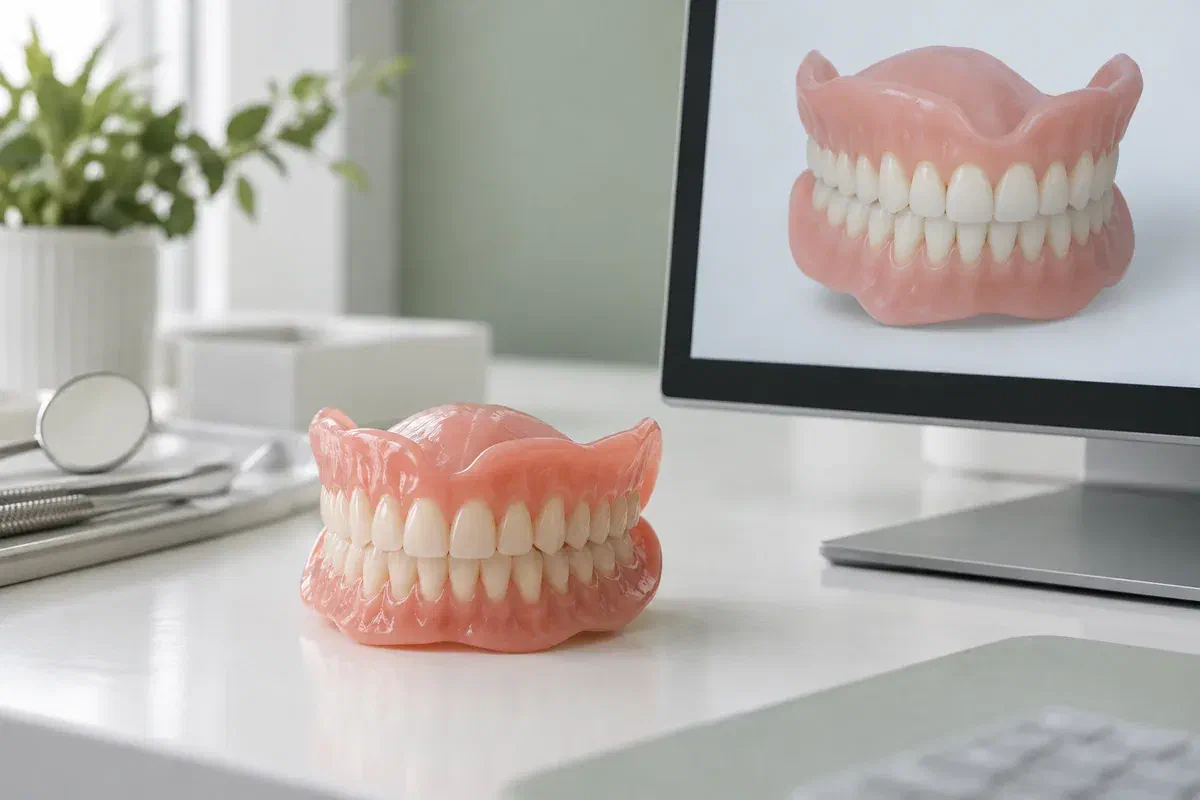
Removable denture beside an illustrative computer-based denture model
What people notice first

Appearance, process, materials: which matters most to you?

Some wearers are focused on how their teeth look. Others care more about the number of visits or how the denture will be maintained. Most have a mix, and naming your priorities helps shape the plan.

Your current teeth no longer look right

Bring photos of your natural teeth if you have them, and say what you dislike about the present set. Earlier designs can be informative, but they should not be repeated without checking how well they suit your face and mouth now.

You would like to know what each appointment covers

Ask for an outline of the records, trial arrangements and reviews in your plan. Digital design does not fix the number of visits, and the appliance still has to be judged in your mouth.

You care about how it will be maintained

Materials vary between manufacturing methods, which influences future repairs and relines. Ask about the specific denture proposed rather than assuming all digitally produced appliances are alike.

A rendered smile on a monitor is a planning aid. It cannot promise how the finished teeth will look in natural light or feel when you speak, which is why trial and fitting stages remain.

Why a visual plan helps

A design you can actually look at.

Computer design can lay out tooth positions, the gum-coloured base and the bite relationship in a form that is easy to review and to pass on for production. In some systems, the finished design is saved for reference.

Those strengths count when they help produce a denture that suits you. They do not mean a digital appliance is better than every conventionally made one. Ask how the plan addresses your fit, appearance and daily routine, and how the result will be assessed once it is in your mouth.

Patient information: American College of Prosthodontists — clinical outcomes of digital dentures

A clearer conversation about appearance

With a proposed layout in front of you, it becomes easier to talk about tooth length, width and spacing. Ask when you will see it, and how any change you request is evaluated before the denture is finalized.

Your records reach the lab as one plan

The information captured at the clinic about your mouth and bite becomes the basis for production. Understanding that connection shows which choices were clinical and which were simply the equipment at work.

A saved starting point

Find out whether the design will be stored and how it might help with a future repair or remake. If your mouth changes in the meantime, new records and an updated examination may still be required.

Your path through treatment

Records, review, fit and follow-up.

Each plan follows its own sequence. The dentist should explain the stages for you, such as conventional impressions, a trial arrangement, lab or digital production, and the reviews that come after delivery.

  1. Talk about goals, then examine

    We start with what you want from the new denture, including how you would like it to look. Then the supporting tissues, remaining teeth and any current appliance are examined to set the clinical requirements.

  2. Capture the mouth and bite

    Impressions, scans, bite records and photographs may each play a part. Ask what each one tells the dentist and whether your existing denture can supply useful information.

  3. Preview the tooth arrangement

    You review shape, shade and position, often with a trial stage if the workflow allows. The team describes how the denture will be produced and what its material means for care and repair.

  4. Fit the finished denture and review

    The completed appliance is placed, checked and explained. Follow-up visits allow the dentist to address pressure, contacts or appearance concerns once you have worn it for a while.

Keeping it looking and feeling right

Care that suits the finished material.

Regular cleaning and examinations remain important however a denture is made. Ask for advice tailored to your new appliance, especially if it is a different material from the one you replaced.

Use the right cleaners

Some products can dull or scratch certain denture materials. Confirm the brush, cleanser and soaking method recommended for yours, along with how to store it when it is out of your mouth.

Speak up about comfort

Sore spots, movement or an uneven bite are all worth reporting. Even a carefully designed denture may need assessment and adjustment after it has been through ordinary days of eating and talking.

File away the details

Ask which material and design information belongs with your dental records. That history can help a future clinician understand your appliance and how it may be repaired.

Routes to the finished teeth

One plan, several possible methods.

Traditional and digital techniques can be combined in different proportions. Compare them by clinical suitability, material, how you will preview the result, ongoing care and the number of visits.

Time-tested denture construction

Conventional fabrication

A conventionally made denture can be carefully planned and finished. Ask how impressions and bite records are taken, when you see the tooth arrangement and how fitting and follow-up work.

A mix chosen for each stage

Clinical steps combined with digital design

Traditional impressions or try-ins may lead into computer design and manufacture. Clarify which steps of your plan are digital and why the dentist suggests that mix for your mouth.

Milling or printing, where appropriate

Fully digital production

Some dentures are milled from solid material and others are printed layer by layer. Each method has its own material considerations, so ask which is proposed and how relines and repairs would be handled.

Burlington questions on looks and fit

Getting the details right.

These questions cover appearance choices, the practical steps involved, and what to expect once you start wearing a digitally planned denture.

(905) 876-4488
Can I choose the shade of my denture teeth?
Shade is normally part of the discussion. The dentist can help you weigh a brighter or more natural-looking shade against your complexion and any remaining teeth. Ask when you will see shade options and how they look in your mouth rather than on a chart.
What if I don’t like the look at the try-in?
Say so. A trial stage exists so that concerns about shape, length or arrangement can be raised before the denture is finished. The dentist will explain what can be changed and what has to stay for the bite and fit to work.
Can photos of my natural teeth help with the design?
They can be useful. Older photos may show how your teeth once looked, which can guide discussions about shape and position. The final design still has to meet the clinical requirements of your mouth today.
Will a new denture change how I speak at first?
Any new denture can feel unfamiliar, and some people notice small changes in speech for a short while. Reading aloud at home often helps. Tell the dentist if something persists so the fit and tooth position can be reviewed.
Does a computer design mean the denture will fit perfectly?
No method can promise that. The denture is checked in your mouth at delivery, and some pressure points or contact issues only show up with everyday use. Plan to attend the review and report anything that feels wrong.
Are milled and printed dentures equally suitable for everyone?
Not necessarily. The two methods use different materials and processes, and suitability depends on your case and the system involved. Ask which is proposed for you and what that means for cleaning, repairs and relining later.
Planning a visit from Burlington

Show us the smile you have in mind.

Reserve time at our Bronte Street clinic to talk about appearance, comfort and how digital design might help. Once we have examined your mouth, we can outline the records, the material choices and the try-in and fitting appointments that suit your options.

Bring your current denture and, if you have them, a few older photos showing your natural smile.

Visit Milton Dental Clinic
Unit 1, 342 Bronte St. S, Milton, ON L9T 5B7
Get directions Clinic hours
Monday–Thursday
11am–7pm
Friday–Sunday
By appointment only

Areas we serve

  • Milton
  • Oakville
  • Mississauga
  • Georgetown
  • Halton Hills
  • Acton
  • Campbellville
  • Brampton
  • Burlington
  • Puslinch
  • Rockwood
  • Erin
  • Caledon
  • Etobicoke
  • Old Milton
  • Bronte Meadows
  • Timberlea
  • Dorset Park
  • Dempsey
  • Clarke
  • Beaty
  • Coates
  • Harrison
  • Scott
  • Willmott
  • Ford
  • Bowes
  • Cobden
  • Walker
  • Mountain View
  • Milton Heights
  • Hawthorne Village
  • Valley View
  • Fallingbrook
  • Nassagaweya
  • Trafalgar
  • Esquesing
  • Nelson
  • Brookville
  • Moffat
  • Glen Williams
  • Norval
  • Limehouse
  • Stewarttown
  • Ashgrove
  • Hornby
  • Silver Creek
  • Speyside
  • Scotch Block
  • North Oakville
  • River Oaks
  • Glen Abbey
  • West Oak Trails
  • Palermo
  • Bronte Creek
  • College Park
  • Joshua Creek
  • Uptown Core
  • Preserve
  • Iroquois Ridge
  • Lisgar
  • Meadowvale
  • Meadowvale Village
  • Churchill Meadows
  • Erin Mills
  • Central Erin Mills
  • Streetsville
  • East Credit
  • Creditview
  • Heartland
  • Sheridan
  • Mount Pleasant
  • Credit Valley
  • Huttonville
  • Churchville
  • Springbrook
  • Northwest Brampton
  • Bram West
  • Fletcher's Meadow
  • Fletcher's Creek South
  • Alton Village
  • Orchard
  • Millcroft
  • Headon Forest
  • Tansley
  • Brant Hills
  • Tyandaga
  • Kilbride
  • Lowville
  • Aberfoyle
  • Morriston
  • Arkell
  • Hillsburgh
  • Freelton
  • Carlisle
  • Waterdown
  • Flamborough
  • Mountsberg

How can we help?

Milton Dental Clinic

Have a question about your smile? Choose the option that works best for you.

For urgent dental concerns, please call.
Messages are reviewed during clinic hours.