
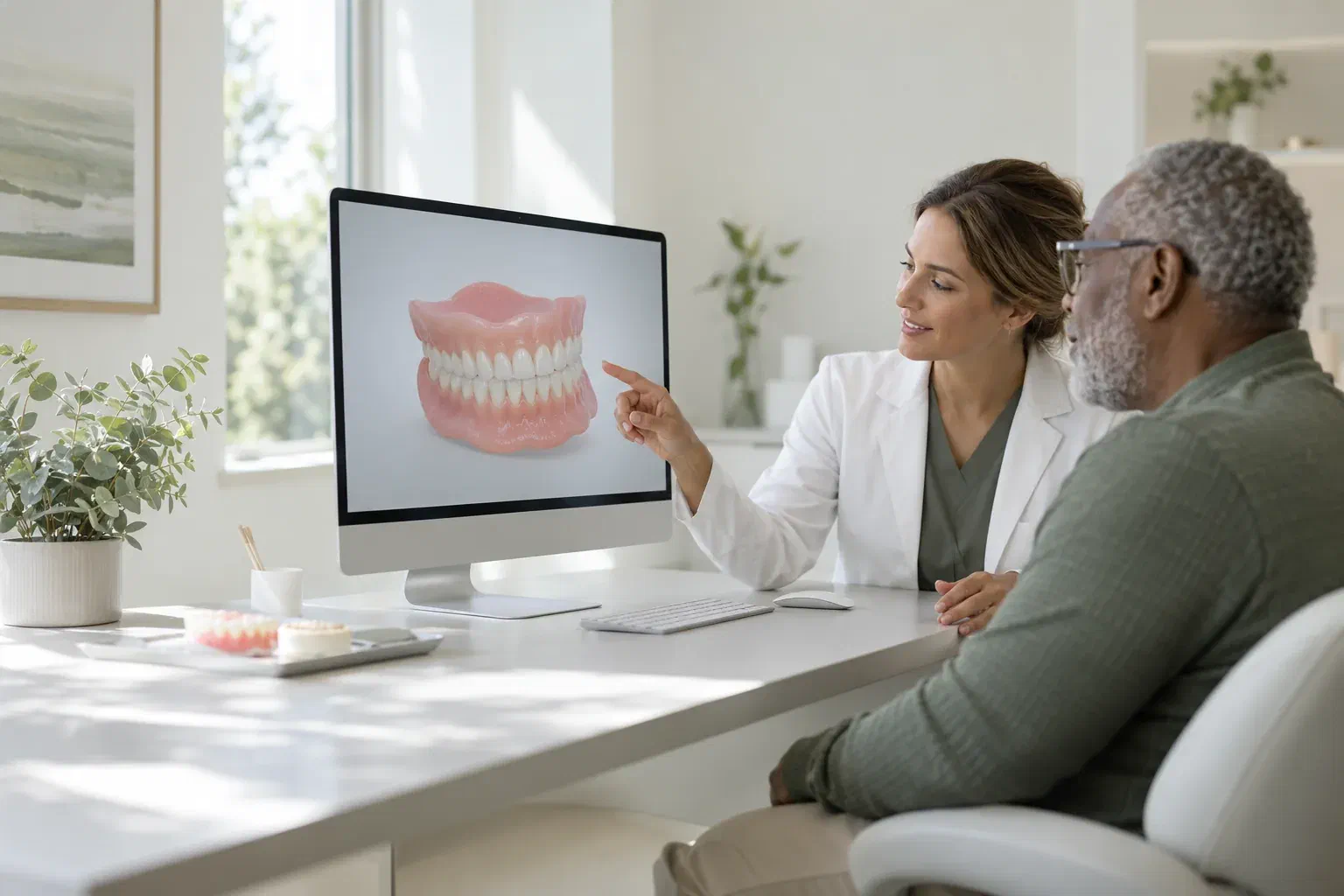
Illustrative patient and dentist reviewing a digital denture design
Restorative Dentistry

Digital Dentures in Georgetown

A chipped denture tooth or a crack across the base raises a practical question: how will this be fixed? For Georgetown wearers considering digital dentures, material and repair options deserve as much attention as the design.

Georgetown, and the long view on materials

What happens the first time it needs fixing?

Few people think about repairs when they choose a denture, yet the day a tooth chips on a crust of bread is when it matters most. Digital dentures can be made from materials that differ from conventional ones, and that affects how a crack is mended, how a loose fit is relined and how the appliance is cleaned.

The term digital covers any denture where a computer helps design or produce it, from a single step to the entire process. The finished appliance still has to rest comfortably on your gums, meet evenly with the opposite teeth, look appropriate and be practical to handle. Material choice supports those goals; it does not replace them.

When you visit from Georgetown, you can ask what the proposed denture would be made of, which steps would be digital and how the fit would be confirmed. We can also explain, before anything is made, what repair and relining would look like for that particular material.

Ask about materials and repairs
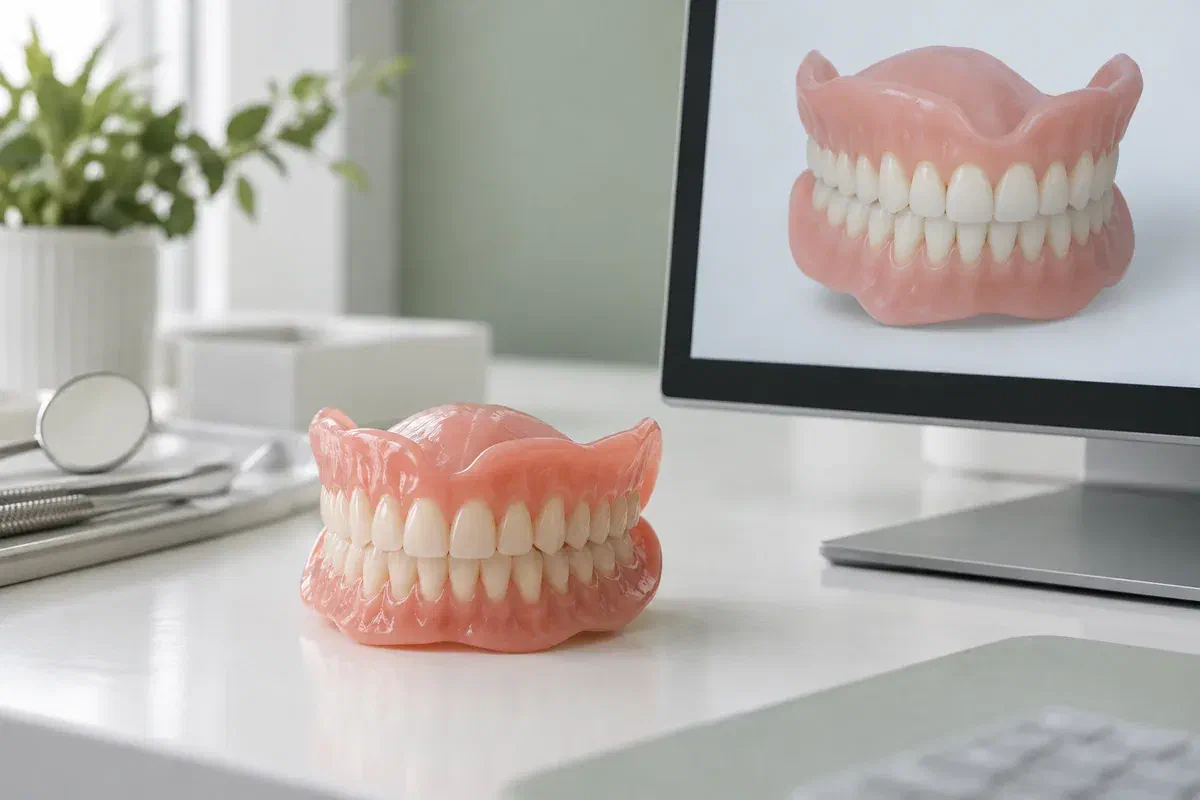
Removable denture beside an illustrative computer-based denture model
Three practical concerns

Think past delivery day.

A new denture is a long-term appliance. People considering a digital approach usually want to understand how it compares with their current set, how the appointments unfold and what future upkeep involves.

You have a set that has been repaired before

Tell the dentist about past breakages or relines and what caused them. That history can inform the new design and material choice, though earlier features should not be repeated without checking your mouth today.

You want to understand the visits involved

Request an outline of records, try-ins and reviews. Digital design does not fix the number of appointments, and the denture still needs clinical assessment once it is in place.

Repairs are already on your mind

Different manufacturing methods use different materials, and repair or reline options vary with them. Ask about the actual appliance proposed rather than assuming all digital dentures are treated alike.

An on-screen model is helpful for planning but cannot predict exactly how a denture will feel or wear. Clinical examination and fitting appointments remain part of the process.

Design and material, working together

Where precise planning helps.

Software can organize tooth placement, base form and bite into one design and communicate it clearly to production, whether that means milling, printing or another method. Some systems keep that design for later.

That organization is valuable when it helps produce a denture suited to your mouth. It does not make a digital denture stronger or better than every conventional one. What deserves scrutiny is whether this particular plan meets your needs for fit, looks and long-term repair, and what evidence the dentist will use to judge the finished denture.

Patient information: American College of Prosthodontists — clinical outcomes of digital dentures

Reviewing the proposed teeth

The design offers a basis for discussing tooth position, size and appearance. Ask when it will be reviewed and how any changes are checked before the denture is finalized.

Seeing how records drive production

Your clinical records shape the design that the manufacturing process follows. Understanding that link helps separate the dentist’s decisions from the tools used to carry them out.

Retaining information for future repairs

Find out whether the design and material details will be kept, and how they might help with a repair, reline or remake. New records may still be needed if your mouth has changed.

The steps toward a new denture

Where material decisions fit in.

Each workflow differs. Ask the dentist to explain your stages, including any conventional impressions, trial dentures, lab or digital production, and follow-up after delivery.

  1. Assessment and history

    The dentist examines the supporting tissues, remaining teeth and your current denture, and asks about past breakages. Your experiences with eating, speaking, handling and appearance help set the requirements.

  2. Records for the design

    Your plan could rely on a scan, conventional impressions, a bite registration, photographs, or several of these. Ask what each record shows and whether your existing denture can contribute.

  3. Choosing the design and material

    You review the tooth arrangement and appearance, ideally at a trial stage. The team explains the production method and what the material means for cleaning, repair and relining.

  4. Fitting and follow-up

    The completed denture is placed, checked and explained. Review visits address pressure, contacts or other concerns once you have worn it through ordinary days.

Protecting the material

Care instructions written for this denture.

Daily cleaning and periodic examinations remain essential for any denture. Ask for product and handling guidance specific to the finished appliance, especially if its material differs from your last one.

Choose compatible cleaners

Ask which brush, cleanser, soak and storage method suit the material. Abrasive products, or ones intended for a different kind of denture, may not be appropriate.

Report chips, rubbing and bite changes

Handle the denture over a folded towel or a basin of water in case it slips. Report chips, rough edges, pressure or an uneven bite rather than adjusting it yourself, since assessment may be needed whatever method made it.

Keep material details on record

Note what the denture is made from and any design information the clinic suggests saving. That helps any dentist you see later understand repair and reline options.

Construction methods compared

Each method brings its own material.

Traditional and digital approaches can be combined. A useful comparison covers clinical suitability, materials, review opportunities, repair and maintenance, and the appointments required.

A familiar material and process

Conventional fabrication

Conventionally made dentures remain a sound option for many people. Ask how this method captures your mouth and bite, previews appearance and supports fitting, repair and follow-up.

Mixed methods across the stages

A blended clinical and digital approach

Traditional impressions or a try-in may be paired with digital design and production. Ask which parts of your plan are digital, which material results and why that combination is advised.

Where the material suits the case

Milled and printed options

Milling and printing are different processes and can use different materials. Ask which is proposed for you and how relining, repairs and maintenance would be handled for that specific appliance.

Georgetown questions on materials

Durability, repair and care.

These answers cover how digital denture materials compare, what happens when something breaks, and how to look after the appliance between visits.

(905) 876-4488
Are digital dentures stronger than conventional ones?
Not as a rule. Strength depends on the specific material, the design and how the denture is used and cared for. Ask what the proposed material is and what the dentist would expect in terms of repairs over time.
Can a chipped tooth on a digital denture be repaired?
Often a repair is possible, but the approach depends on the material and manufacturing method. Ask before treatment how chips or cracks would be handled for the specific denture proposed, and whether a design file would help.
Can a milled or printed denture be relined later?
Relining options vary with the material and the system used. Ask the dentist how a reline would be done for the proposed appliance and when one might be considered as your gums change over time.
Can I use my usual denture cleaner on a new material?
Check first. Some cleaners suit one material but not another, and abrasive products can scratch certain surfaces. Ask the dentist which products to use and which to avoid for the denture you receive.
Will a digitally designed denture still need adjusting once I wear it?
It may. An accurate design still has to be tested during everyday use, and contacts or pressure points sometimes need refining. Attend the review and mention anything uncomfortable rather than putting up with it.
What if the old design no longer fits when I need a remake?
Then new records are likely to be needed. A stored file reflects your mouth when it was taken, and changes in the gums or bite can make it unsuitable. The dentist will examine you and recommend the appropriate starting point.
Booking from Georgetown

Ask about the material before it is made.

Plan an initial visit to our Bronte Street clinic and bring your current denture, along with any history of repairs. We can examine your mouth and talk through the proposed material, which steps would be digital and how the fit will be checked.

If your present denture has broken before, tell us how it happened; it helps when choosing a material and design.

Visit Milton Dental Clinic
Unit 1, 342 Bronte St. S, Milton, ON L9T 5B7
Get directions Clinic hours
Monday–Thursday
11am–7pm
Friday–Sunday
By appointment only

Areas we serve

  • Milton
  • Oakville
  • Mississauga
  • Georgetown
  • Halton Hills
  • Acton
  • Campbellville
  • Brampton
  • Burlington
  • Puslinch
  • Rockwood
  • Erin
  • Caledon
  • Etobicoke
  • Old Milton
  • Bronte Meadows
  • Timberlea
  • Dorset Park
  • Dempsey
  • Clarke
  • Beaty
  • Coates
  • Harrison
  • Scott
  • Willmott
  • Ford
  • Bowes
  • Cobden
  • Walker
  • Mountain View
  • Milton Heights
  • Hawthorne Village
  • Valley View
  • Fallingbrook
  • Nassagaweya
  • Trafalgar
  • Esquesing
  • Nelson
  • Brookville
  • Moffat
  • Glen Williams
  • Norval
  • Limehouse
  • Stewarttown
  • Ashgrove
  • Hornby
  • Silver Creek
  • Speyside
  • Scotch Block
  • North Oakville
  • River Oaks
  • Glen Abbey
  • West Oak Trails
  • Palermo
  • Bronte Creek
  • College Park
  • Joshua Creek
  • Uptown Core
  • Preserve
  • Iroquois Ridge
  • Lisgar
  • Meadowvale
  • Meadowvale Village
  • Churchill Meadows
  • Erin Mills
  • Central Erin Mills
  • Streetsville
  • East Credit
  • Creditview
  • Heartland
  • Sheridan
  • Mount Pleasant
  • Credit Valley
  • Huttonville
  • Churchville
  • Springbrook
  • Northwest Brampton
  • Bram West
  • Fletcher's Meadow
  • Fletcher's Creek South
  • Alton Village
  • Orchard
  • Millcroft
  • Headon Forest
  • Tansley
  • Brant Hills
  • Tyandaga
  • Kilbride
  • Lowville
  • Aberfoyle
  • Morriston
  • Arkell
  • Hillsburgh
  • Freelton
  • Carlisle
  • Waterdown
  • Flamborough
  • Mountsberg

How can we help?

Milton Dental Clinic

Have a question about your smile? Choose the option that works best for you.

For urgent dental concerns, please call.
Messages are reviewed during clinic hours.