
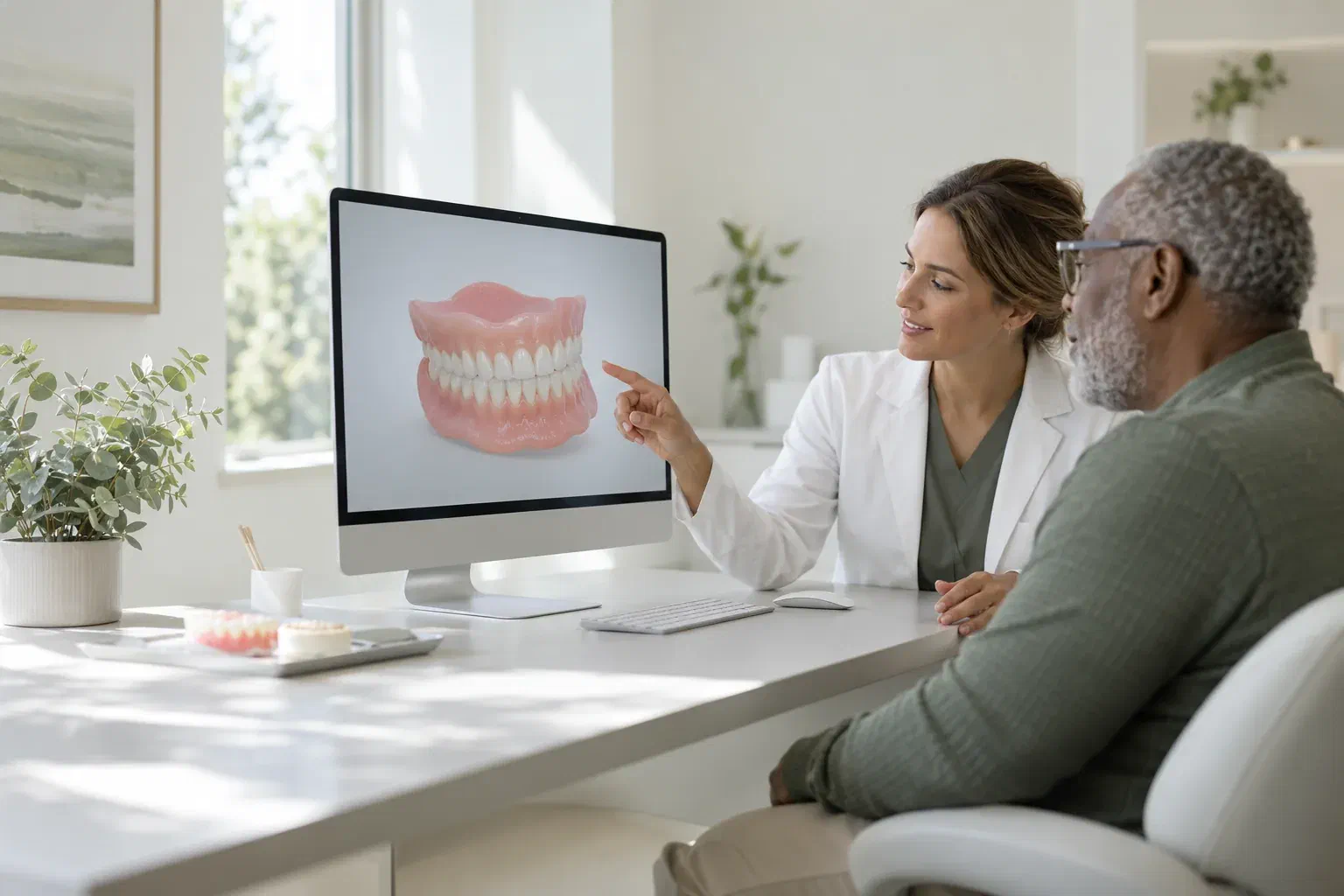
Illustrative patient and dentist reviewing a digital denture design
Restorative Dentistry

Digital Dentures in Halton Hills

A denture wrapped in a napkin and lost after a meal is a common worry. For Halton Hills wearers, this page explains what digital design records can and cannot do for a future replacement, and how a new denture is planned.

Halton Hills, thinking a step ahead

If the denture goes missing, what then?

Ask a long-time denture wearer about their biggest worry and losing it often comes near the top: tucked into a napkin at a restaurant, dropped on a walk, left behind on a trip. One reason people find digital dentures appealing is the idea that a saved design could make replacement simpler. That can be partly true, with important limits.

A digital denture is one designed or manufactured with computer help, in whole or in part. Whatever the method, the appliance has to suit the tissues that support it, the way your jaws close together, the look you want and your ability to clean and handle it. A file captures those requirements at one point in time, not forever.

From Georgetown, Acton, Glen Williams or anywhere else in Halton Hills, you can ask at a consultation what records would be kept, what the planned material is and how the fit will be checked. We can also talk honestly about what a stored design could and could not do if you ever needed a replacement.

Ask what records would be kept
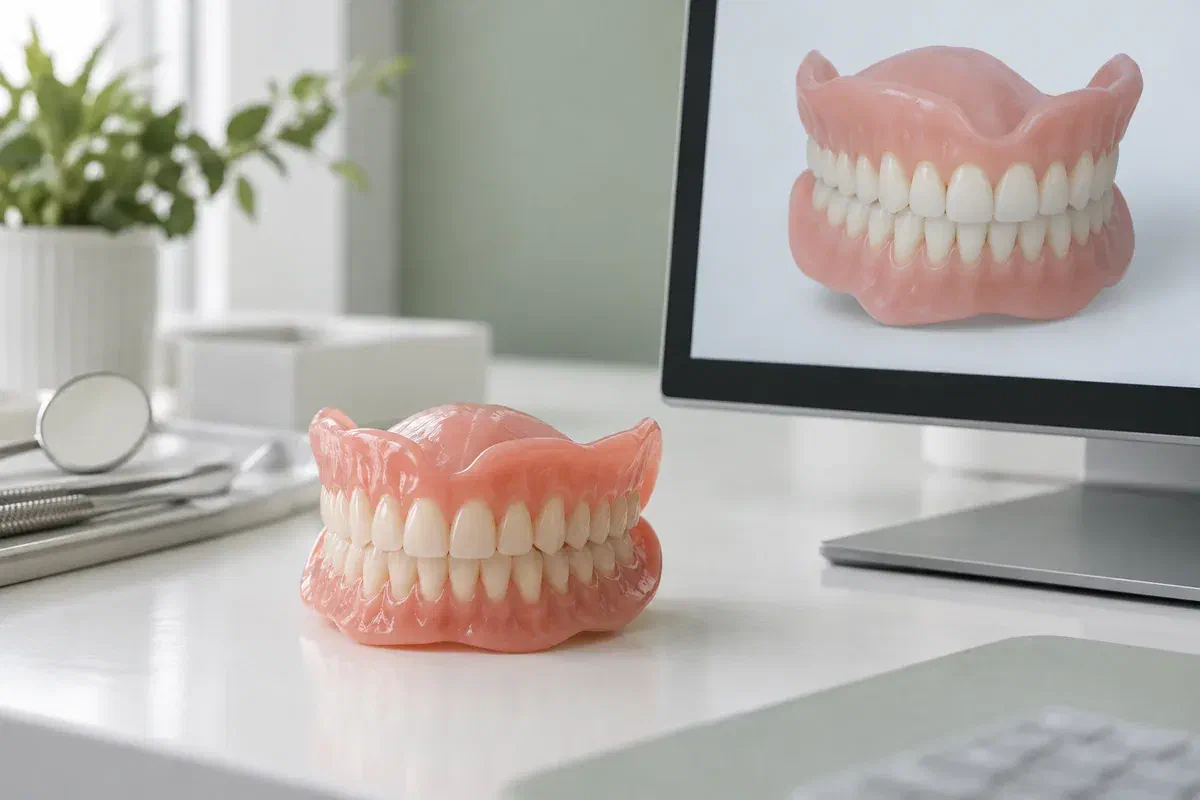
Removable denture beside an illustrative computer-based denture model
What brings people in

Today’s denture, and tomorrow’s.

Interest in digital dentures often starts with one concern and leads to others. The three below each change the conversation: an existing set, the appointment plan, and future repairs or replacements.

Your existing set is due for replacement

Share what you value about it and what has become a problem. Details from your current appliance can be informative, but the dentist should confirm they still match your mouth before any of them are carried forward.

You would like to know the visit plan

Ask for the expected records, trial stages and reviews, and how they fit together. Digital production does not set the number of appointments, and every appliance needs to be checked in the mouth.

You are thinking about repair and backup

The material and manufacturing method shape what happens if a denture breaks or needs relining. Ask about the specific appliance proposed, and what a replacement would involve if it were ever lost.

A design on screen is a plan rather than a promise. How a finished denture sits, feels and functions is only known after clinical assessment and fitting.

The value of a digital record

Planning now, reference later.

With computer design, the arrangement of teeth, the shape of the base and the bite relationship are captured in one file and passed on for production. Some systems retain that file after the denture is delivered.

That record can be useful, but it is not a guarantee. A digital appliance is not automatically better than a conventionally made one, and a stored file does not replace an examination. Ask how the plan addresses your fit, appearance and everyday needs, and how it will be checked.

Patient information: American College of Prosthodontists — clinical outcomes of digital dentures

Talk about tooth position with a model in view

A visual design makes it easier to discuss where teeth sit and how they look. Find out when you can review it and how requested changes are checked before the denture is complete.

See how records become a denture

The information gathered at the clinic flows into the design that guides production. That makes it easier to tell which decisions are clinical and which belong to the equipment.

Understand what is stored and why

Ask what files are kept, for how long, and how they might help with a repair or replacement. If your mouth or treatment needs change, new records and a fresh examination may be required.

How a plan comes together

Assessment, records, design, delivery.

Workflows vary by appliance and method. Expect an explanation of your stages, including any traditional impressions, a trial arrangement, laboratory steps and reviews after the denture is delivered.

  1. Understanding your mouth and goals

    The dentist examines the tissues that will support the denture, any remaining teeth and your current appliance. Your experience of chewing, speaking, appearance and handling shapes the requirements.

  2. Collecting the right information

    Records may include impressions, scans, bite registration and photographs. Ask what each one contributes, whether your existing denture can be recorded, and which records would be stored.

  3. Reviewing the plan before production

    Tooth arrangement and appearance are discussed, with a trial stage where possible. The team explains the production method and how the material affects future care, repair and any remake.

  4. Delivering and checking the denture

    The finished appliance is fitted and you are shown how to wear and clean it. Reviews give the dentist a chance to address pressure or contact issues after real-world use.

Keeping it safe and comfortable

Good habits protect the appliance.

However it was made, a denture needs daily cleaning, safe storage and regular check-ups. Ask for guidance specific to its material, especially if it differs from your previous denture.

Store it in the same place every time

A consistent case and spot at home reduces the risk of loss, and the right storage method protects the material. Confirm which brush, cleanser and soaking routine the dentist recommends.

Raise comfort concerns at review

Report pressure, movement or a bite that feels lopsided. Adjustment after delivery is common and does not mean the process went wrong.

Write down the essentials

Keep a note of the denture’s material and any design details the clinic suggests. If you ever see another dentist, that information can help explain your appliance and its repair options.

Different ways to make a denture

Which process suits the plan?

Methods can be mixed or used alone. Compare them on clinical suitability, materials, the chances to review, future maintenance, record keeping and how many appointments are involved.

The long-standing method

Conventional fabrication

A conventionally made denture can be well planned and fitted. Ask how the mouth and bite are recorded, how appearance is previewed and how fitting and follow-up are managed.

When stages call for different methods

Conventional and digital, combined

A plan may use traditional impressions or try-ins together with digital design and production. Check which steps are digital for you and why the dentist suggests that blend.

When a suitable system and material are available

Digital design with milling or printing

Milled dentures are cut from a solid block; printed ones are built layer by layer. Their materials differ, so ask which is proposed and how repairs, relines and maintenance would be handled.

Halton Hills denture questions

What a saved design can and cannot do.

These answers look at stored records, spares, materials, and the routine care that keeps a denture working well over time.

(905) 876-4488
How long are digital denture files usually kept?
That depends on the system and the clinic’s record practices. Ask at the start what will be stored and for how long. Even with a file on record, a future replacement would still begin with a fresh examination.
Can a second denture be made from the same design as a backup?
In some cases a spare may be possible, depending on the system, the material and your clinical needs. Ask whether it makes sense for you, and remember that any spare should be checked for fit before you rely on it.
What should I do if I lose my denture?
Contact us to arrange an assessment. If design records exist, they may help, but the dentist will need to check your mouth first. In the meantime, avoid wearing an old, poorly fitting denture if it causes soreness.
Is an intraoral scan part of every digital denture plan?
Not always. Some plans scan the mouth directly, while others digitize conventional impressions. The choice depends on what your mouth requires and what the system needs. Ask which approach is planned and why.
How do milling and printing differ for denture materials?
Milling removes material from a solid block, while printing adds it in layers. The resulting materials can behave differently, so care, repair and relining questions should be answered for the specific denture you receive.
How often should a digitally made denture be checked?
Your dentist will suggest a schedule based on your mouth and appliance. Periodic examinations let the dentist check the fit, the tissues beneath the denture and the condition of the material, whether or not it was made digitally.
From Halton Hills to our practice

Plan the denture, and the backup plan.

A consultation at our Bronte Street practice is a chance to examine your mouth, look at your current denture and discuss what records would be kept. We will go over the proposed stages, the material and how the fit would be confirmed.

Bring any spare or older dentures you still have, as they can be useful to look at during the assessment.

Visit Milton Dental Clinic
Unit 1, 342 Bronte St. S, Milton, ON L9T 5B7
Get directions Clinic hours
Monday–Thursday
11am–7pm
Friday–Sunday
By appointment only

Areas we serve

  • Milton
  • Oakville
  • Mississauga
  • Georgetown
  • Halton Hills
  • Acton
  • Campbellville
  • Brampton
  • Burlington
  • Puslinch
  • Rockwood
  • Erin
  • Caledon
  • Etobicoke
  • Old Milton
  • Bronte Meadows
  • Timberlea
  • Dorset Park
  • Dempsey
  • Clarke
  • Beaty
  • Coates
  • Harrison
  • Scott
  • Willmott
  • Ford
  • Bowes
  • Cobden
  • Walker
  • Mountain View
  • Milton Heights
  • Hawthorne Village
  • Valley View
  • Fallingbrook
  • Nassagaweya
  • Trafalgar
  • Esquesing
  • Nelson
  • Brookville
  • Moffat
  • Glen Williams
  • Norval
  • Limehouse
  • Stewarttown
  • Ashgrove
  • Hornby
  • Silver Creek
  • Speyside
  • Scotch Block
  • North Oakville
  • River Oaks
  • Glen Abbey
  • West Oak Trails
  • Palermo
  • Bronte Creek
  • College Park
  • Joshua Creek
  • Uptown Core
  • Preserve
  • Iroquois Ridge
  • Lisgar
  • Meadowvale
  • Meadowvale Village
  • Churchill Meadows
  • Erin Mills
  • Central Erin Mills
  • Streetsville
  • East Credit
  • Creditview
  • Heartland
  • Sheridan
  • Mount Pleasant
  • Credit Valley
  • Huttonville
  • Churchville
  • Springbrook
  • Northwest Brampton
  • Bram West
  • Fletcher's Meadow
  • Fletcher's Creek South
  • Alton Village
  • Orchard
  • Millcroft
  • Headon Forest
  • Tansley
  • Brant Hills
  • Tyandaga
  • Kilbride
  • Lowville
  • Aberfoyle
  • Morriston
  • Arkell
  • Hillsburgh
  • Freelton
  • Carlisle
  • Waterdown
  • Flamborough
  • Mountsberg

How can we help?

Milton Dental Clinic

Have a question about your smile? Choose the option that works best for you.

For urgent dental concerns, please call.
Messages are reviewed during clinic hours.