Your old denture needs replacing
Explain what has and has not worked with it. The dentist may use your existing appliance as a reference, while checking whether its shape still corresponds to the gums and bite you have today.

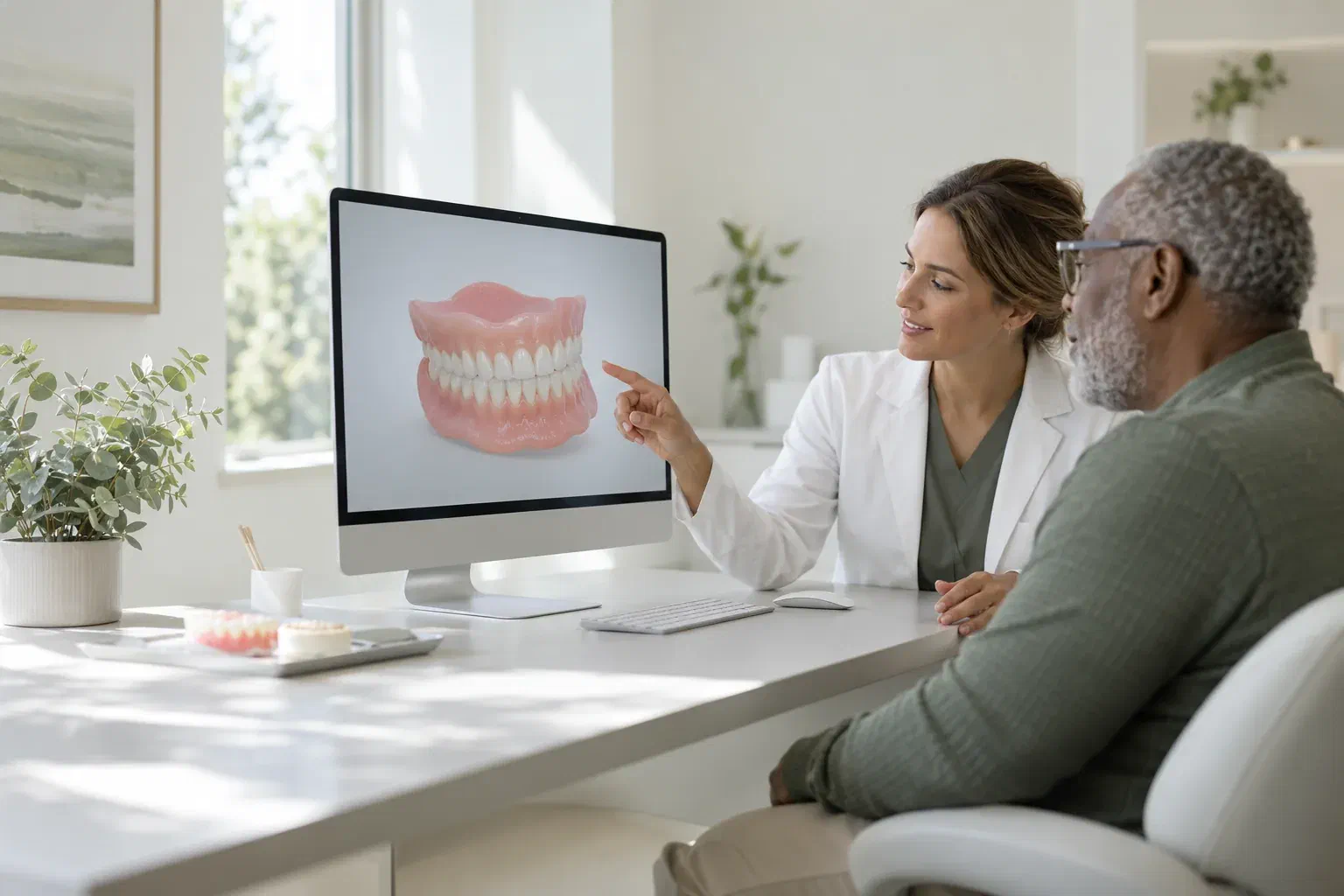
For many people the least favourite part of getting a denture is the impression tray. This Mississauga page explains how scans, conventional impressions and bite records can each contribute, and why the choice depends on your mouth.
Ask people what they remember about their last denture and many mention the impression: a tray of material held in place while it set. It is natural to wonder whether a digital denture means skipping that step. Sometimes a scanner can take its place, but not in every mouth or every plan.
A digital denture is simply one where a computer is used for some part of the design or production. The records feeding that computer still have to capture the shape of the supporting tissues, how your jaws relate when you close, and the details that will let the finished teeth look and work well.
From Mississauga, you can raise any worries about records at a first consultation, including a strong gag reflex. We can explain which records your case calls for, what material the denture would use and how its fit would be checked, so you know what each step involves before it begins.
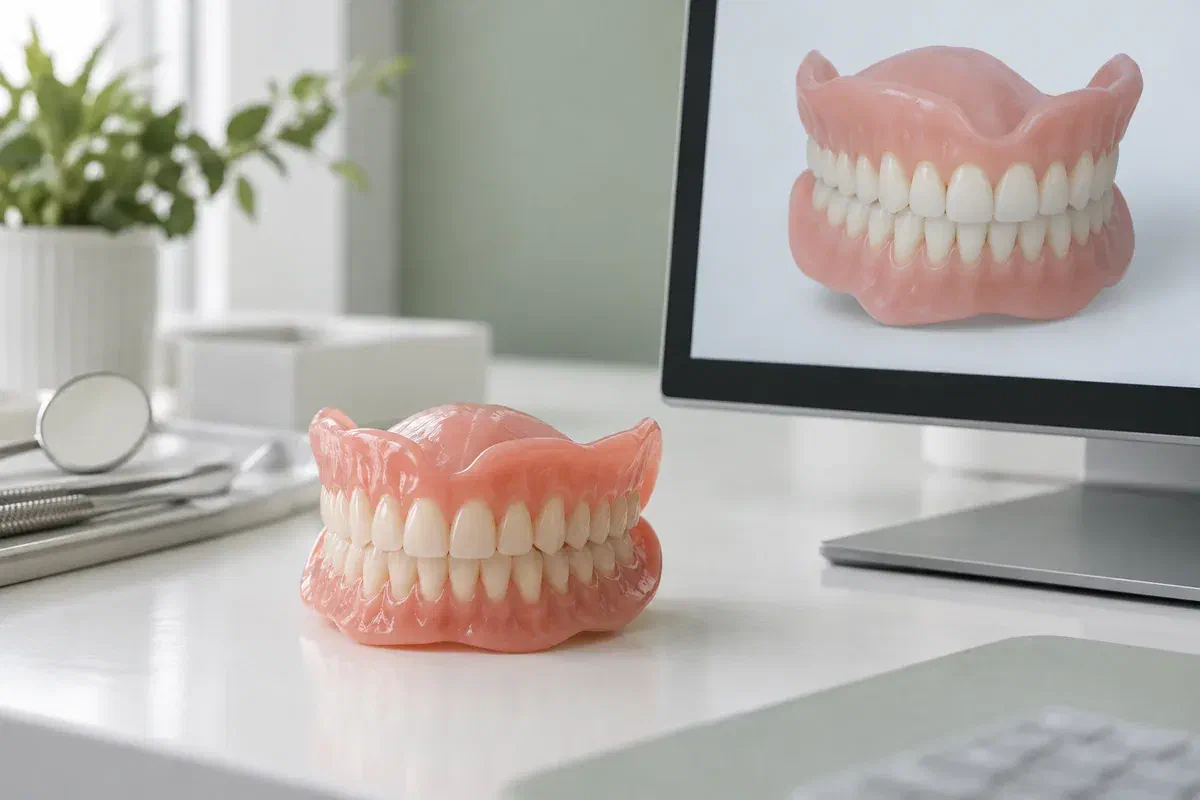
Records are one reason to look into a digital approach. Replacing a worn set, understanding appointments and comparing materials are others, and each deserves its own conversation.
Explain what has and has not worked with it. The dentist may use your existing appliance as a reference, while checking whether its shape still corresponds to the gums and bite you have today.
Tell the team before records are taken. They can explain which steps are planned, how long each might take and what alternatives exist, though no method removes the need for clinical assessment at the chair.
Each production method has material implications for future fixes and relines. Ask what would happen if this specific denture cracked or loosened, instead of assuming every digital appliance is handled the same way.
A design on screen is only as good as the records behind it, and even then it remains a plan. Clinical assessment and fitting appointments are how the result is confirmed.
Once records are digitized, software can be used to plan tooth positions, the base and the bite together, and to transmit that plan accurately for milling, printing or other production. Some systems keep the design for later.
That is helpful only when it supports an appropriate result for you. A digital process does not make an appliance automatically superior to a conventionally made one. It is worth asking how the plan will meet your particular fit, appearance and practical needs, and what will be checked to confirm it.
Patient information: American College of Prosthodontists — clinical outcomes of digital dentures
The design can give you and the dentist a reference point for talking about how the teeth are placed. Ask at what point you review it and how any change is checked before completion.
Your records become the foundation of the design used to make the denture. Seeing that link helps separate the clinical decisions in your plan from the equipment that carries them out.
Find out whether your design files are kept and how they might support future work. An updated exam and new records may still be required if your mouth or needs have changed.
The steps depend on your mouth and the chosen method. Ask for an outline that covers any traditional impressions or scans, trial dentures, lab work and appointments after delivery.
The dentist looks at the supporting tissues, any natural teeth and your present denture. What you say about chewing, speech, appearance and handling becomes part of the requirements.
Your plan may involve a scan, impressions, bite registration, photographs or a combination. You can ask what each will show and whether information from your existing denture could be used.
You review tooth arrangement and appearance, and an intermediate try-in may be offered. The team explains how the denture will be made and how the material relates to upkeep and repair.
The denture is delivered with guidance on wearing and cleaning. Review visits make it possible to address sore areas or uneven contacts after you have worn it through your daily routine.
Digital production does not change the basics: clean it daily and have it examined periodically. Ask for instructions specific to the finished appliance, since its material may not match your previous one.
Check which brush and cleaning product to use and whether overnight soaking is advised. Products you relied on with an older denture may not be suited to a newer material.
Pressure, slipping and a bite that feels uneven should be reported. Adjustments after delivery are normal and are not a sign that the digital process failed.
Note which material and design details to keep. If you ever need care at another clinic, that information can help a dentist understand the appliance and how to repair it.
These answers deal with records, comfort during appointments, materials, and what happens after you take the new denture home.
When you call to arrange a visit to our Bronte Street practice, tell us about any past difficulty with impressions. We will examine your mouth, look at your current denture and describe how records would be taken, what the denture could be made of and how fitting would proceed.
Mention a sensitive gag reflex or any medical conditions when booking so the appointment can be planned around them.
