
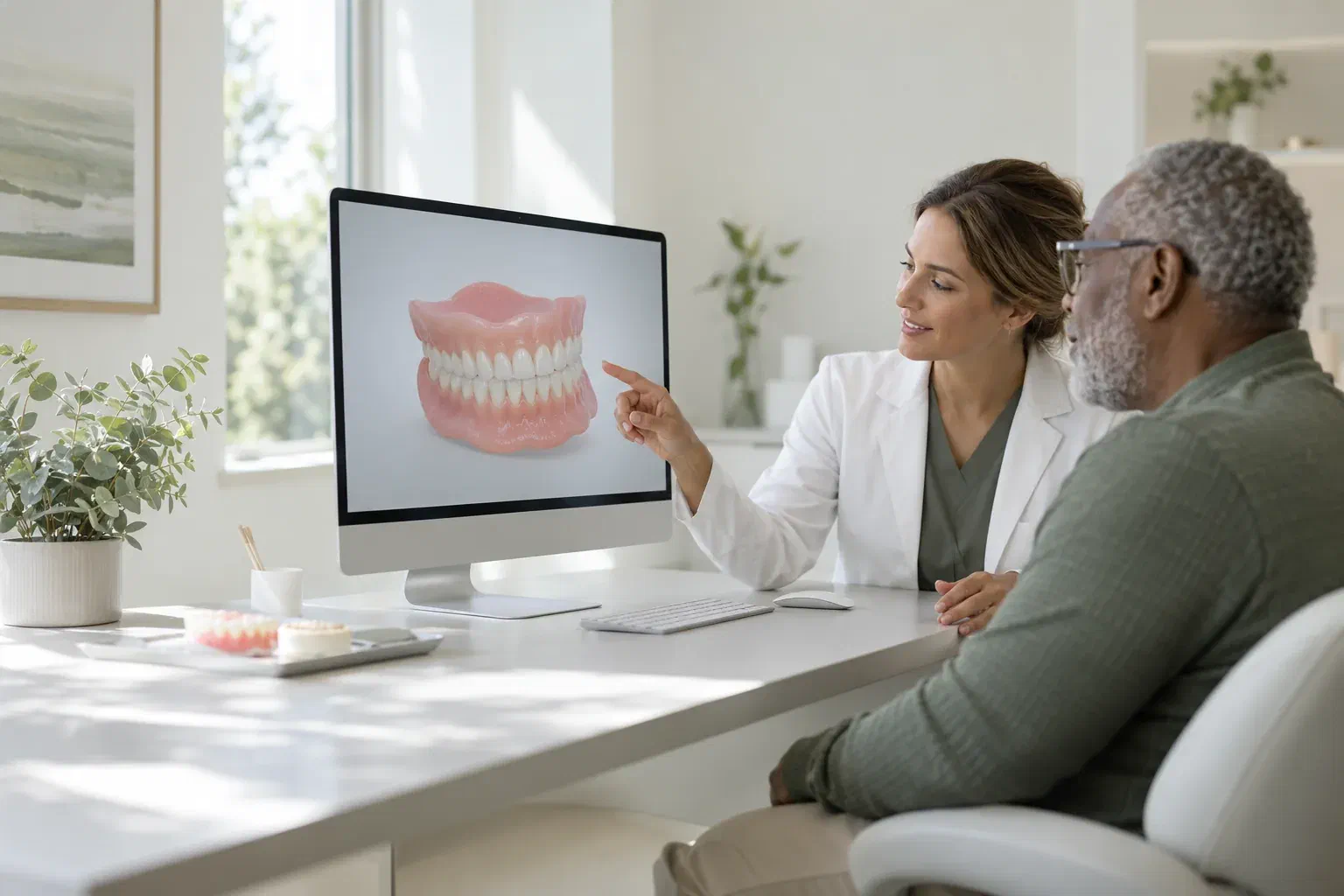
Illustrative patient and dentist reviewing a digital denture design
Restorative Dentistry

Digital Dentures in Old Milton

A long-worn denture often carries habits you would like to keep. For Old Milton households weighing a replacement, digital design is one way to plan it, alongside the impressions, bite records and try-ins that confirm the fit.

Old Milton, and an old favourite denture

The set you know, reconsidered.

Plenty of people around Milton’s historic downtown have worn the same denture for a decade or more. It may click a little at supper or need more adhesive than it used to, yet it still feels like yours. Digital planning is one way to design its successor, with a computer handling some or all of the design and production.

None of that replaces an examination. The gums and bone under a denture change gradually, so the task is never simply to copy the old appliance. It is to work out how a new one will rest on today’s tissues, meet evenly when you bite, look natural to you and stay manageable to clean.

For anyone in Old Milton, a first visit to our Bronte Street practice is mostly conversation. Ask which stages in your case would be digital, what the base and teeth would be made from, and how we would check the result. If the technology helps, the plan itself should show you how.

Plan a replacement with digital design
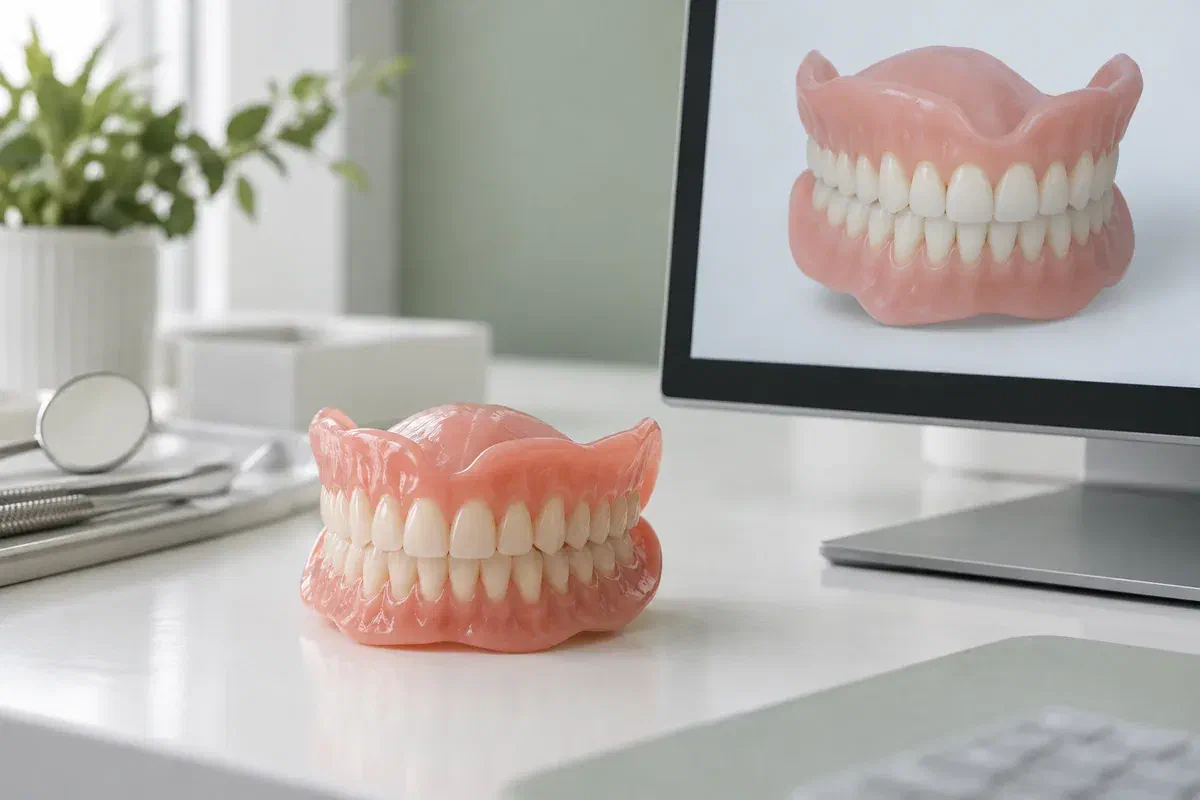
Removable denture beside an illustrative computer-based denture model
Before anything is designed

Name what you want to keep, and what has to go.

Long-time denture wearers tend to know their appliance well. That knowledge is valuable, whether your concern is the old set itself, the number of visits ahead, or how a different material would be looked after.

The old denture still feels familiar

Describe the parts you would miss, such as the way the front teeth look, and the parts you would not, such as a lower that lifts when you talk. The dentist can judge which features still suit your mouth and which reflect tissues that have since changed.

You are unsure how many trips it takes

Visits for records, a try-in and later reviews vary from person to person. Using digital tools does not set the number in advance, and the finished denture must still be assessed while you wear it.

A new material sounds unfamiliar

Your current denture may be made from something different to what a digital system would produce. Before deciding, learn how the proposed appliance is repaired or relined, rather than assuming it behaves like the one you have now.

Seeing a design on a screen is reassuring, but it is still a plan. How the denture actually sits, bites and looks is confirmed at the chair, through examination and fitting.

What the computer contributes

Precision in the planning, judgement in the chair.

Software lets the team arrange teeth, shape the base and set the bite relationship in one organized design, then send that design on for milling, printing or another production method. Some systems store the file afterwards.

That organization helps only if it produces a denture suited to you. A digital label does not make an appliance superior to one built by conventional methods. Ask how this approach would deal with your fit, your appearance and your routines, and what checks will show whether it has succeeded.

Patient information: American College of Prosthodontists — clinical outcomes of digital dentures

Something to react to

A proposed layout gives you a way to comment on tooth position and smile line before production. Ask at what stage you can review it and how your feedback will be weighed against clinical needs.

Fewer gaps between clinic and lab

Your records travel from the examination room to fabrication as part of one design. Understanding that path makes it clearer which choices are clinical decisions and which are simply how the equipment works.

A reference for later

Find out whether the design will be retained and what use it could be for repairs or a remake. Because mouths change, any future appliance may still require an updated examination and records.

Step by step

From first conversation to a denture that has been tested.

Every plan is built a little differently. The dentist should map out which stages you will go through, including any traditional impressions, try-ins, laboratory steps and reviews after delivery.

  1. Look at the mouth and listen first

    We examine the tissues that will carry the denture, any remaining teeth and the appliance you wear now. Your experiences with chewing, speech, appearance and handling set the brief for the replacement.

  2. Take records suited to your case

    These may include impressions, a scan, bite measurements, photos or a mix. You can ask what each record is for and whether your familiar denture offers information worth using.

  3. Approve the layout and the material

    Tooth arrangement and appearance are reviewed, ideally with a trial stage you can see in your mouth. We explain how the denture will be produced and how that material is maintained and repaired.

  4. Fit, then fine-tune

    The completed denture is placed, checked and explained, including how to wear and clean it. Review appointments give room to ease pressure points or correct contacts after a few days of normal use.

Week one and beyond

New material, new care routine.

Daily cleaning and periodic examinations matter just as much for a computer-designed appliance. Ask for instructions that match the finished denture, particularly if your old routine was built around a different material.

Check your cleaning products

The cleanser or soak you have used for years may not suit the new denture. Confirm which brush, solution and storage conditions the dentist recommends for this specific appliance.

Report what you notice

Rubbing, slipping or a bite that seems to land on one side first are worth mentioning early. Adjustments are a normal part of settling in, whatever method was used to make the denture.

Keep the details together

Note the material and any design information the clinic suggests keeping. That record can help any dentist you see in future understand what you wear and how it can be repaired.

How a denture can be made

Conventional, combined or fully digital?

There is no single digital process. Weigh each route by how well it suits your mouth, the material, the chances to review, long-term care and the appointments involved.

The traditional craft of denture making

Conventional fabrication

Hand-recorded impressions and conventional lab work remain a sound path to a well-planned appliance. Ask how the method captures your bite, lets you preview appearance and supports fitting.

Traditional records, digital production

A combined clinical and digital process

Some plans begin with conventional impressions or try-ins and finish with computer design and manufacture. Clarify where your plan switches methods and why that blend was recommended for you.

Milled or printed, where suitable

Digital design and manufacturing

A denture can be carved by a milling machine from a solid block or produced layer by layer through printing. Each has its own material points to discuss, including relines, repairs and maintenance.

Asked in Old Milton

What long-time wearers want to know.

Questions from people replacing a familiar denture tend to focus on keeping what works, the steps in between, and what happens after the new appliance arrives.

(905) 876-4488
Can a new denture look like my old one?
Often your current denture can act as a guide for tooth shape or arrangement, if those features still suit you. Your gums and bite may have changed, though, so the new design is checked against your mouth as it is now.
Why does my old denture feel looser than it used to?
The ridges that support a denture can gradually change shape, and a set that once fit snugly may begin to move. An examination can show whether a reline, a repair or a replacement makes the most sense for you.
Will a new material feel different in my mouth?
It may. Different materials and thicknesses can feel unlike what you are used to, and there is usually a settling-in period with any new denture. Mention anything that bothers you at your review so it can be assessed.
Does every digital workflow begin with a mouth scanner?
No. Some start with conventional impressions that are converted into digital form, and others use a scanner. What matters is collecting records that suit your mouth, so ask which method is proposed and the reason for it.
If my denture is designed on a computer, can I skip the follow-up?
It is best not to. A careful design still needs testing in real life, and small pressure points or uneven contacts often appear only after regular meals. The review appointment is where those are found and corrected.
Can I keep my old denture as a spare?
Raise that with the dentist. An older appliance may no longer fit well, and wearing a poorly fitting spare can lead to sore spots. Ask whether yours is suitable for occasional use and how it should be stored.
Visiting from Old Milton

Start with the denture you already wear.

Book a consultation at our Bronte Street clinic and bring the appliance you use now. We will examine your mouth, talk through what you would like to keep, and explain the records, materials and fitting stages a digital approach would involve.

Jot down any moments when your current denture lets you down, such as certain foods or long conversations.

Visit Milton Dental Clinic
Unit 1, 342 Bronte St. S, Milton, ON L9T 5B7
Get directions Clinic hours
Monday–Thursday
11am–7pm
Friday–Sunday
By appointment only

Areas we serve

  • Milton
  • Oakville
  • Mississauga
  • Georgetown
  • Halton Hills
  • Acton
  • Campbellville
  • Brampton
  • Burlington
  • Puslinch
  • Rockwood
  • Erin
  • Caledon
  • Etobicoke
  • Old Milton
  • Bronte Meadows
  • Timberlea
  • Dorset Park
  • Dempsey
  • Clarke
  • Beaty
  • Coates
  • Harrison
  • Scott
  • Willmott
  • Ford
  • Bowes
  • Cobden
  • Walker
  • Mountain View
  • Milton Heights
  • Hawthorne Village
  • Valley View
  • Fallingbrook
  • Nassagaweya
  • Trafalgar
  • Esquesing
  • Nelson
  • Brookville
  • Moffat
  • Glen Williams
  • Norval
  • Limehouse
  • Stewarttown
  • Ashgrove
  • Hornby
  • Silver Creek
  • Speyside
  • Scotch Block
  • North Oakville
  • River Oaks
  • Glen Abbey
  • West Oak Trails
  • Palermo
  • Bronte Creek
  • College Park
  • Joshua Creek
  • Uptown Core
  • Preserve
  • Iroquois Ridge
  • Lisgar
  • Meadowvale
  • Meadowvale Village
  • Churchill Meadows
  • Erin Mills
  • Central Erin Mills
  • Streetsville
  • East Credit
  • Creditview
  • Heartland
  • Sheridan
  • Mount Pleasant
  • Credit Valley
  • Huttonville
  • Churchville
  • Springbrook
  • Northwest Brampton
  • Bram West
  • Fletcher's Meadow
  • Fletcher's Creek South
  • Alton Village
  • Orchard
  • Millcroft
  • Headon Forest
  • Tansley
  • Brant Hills
  • Tyandaga
  • Kilbride
  • Lowville
  • Aberfoyle
  • Morriston
  • Arkell
  • Hillsburgh
  • Freelton
  • Carlisle
  • Waterdown
  • Flamborough
  • Mountsberg

How can we help?

Milton Dental Clinic

Have a question about your smile? Choose the option that works best for you.

For urgent dental concerns, please call.
Messages are reviewed during clinic hours.