
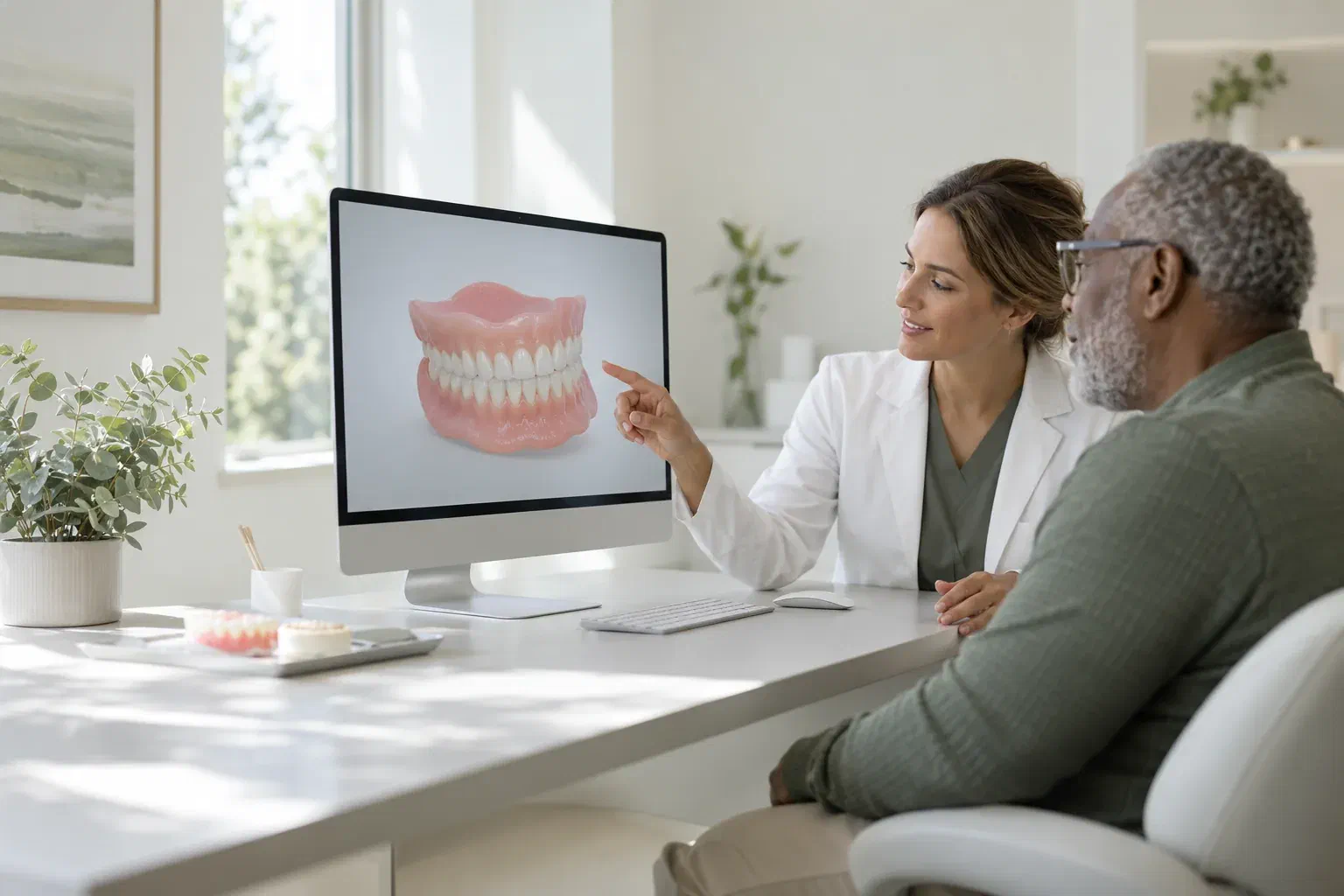
Illustrative patient and dentist reviewing a digital denture design
Restorative Dentistry

Digital Dentures in Puslinch

Gums and bone keep changing under a denture, slowly enough that you may not notice for years. For Puslinch households deciding between a reline and a new appliance, here is where digital design fits and where it does not.

Puslinch, and a mouth that changes

Slow change, sudden looseness.

A denture that fit well years ago can begin to rock, rub or need adhesive without any single moment where things went wrong. The ridges beneath it gradually reshape, and the appliance stays the same. That is often when people start reading about digital dentures and wondering whether a new design, or simply a reline, is the better step.

Digital here means that some or all of the denture’s design or manufacture is handled with computer help. It does not decide whether you need a new appliance. That depends on how your tissues, bite and current denture look on examination, and on what you need from the next one in comfort, chewing, appearance and handling.

From Puslinch, it makes sense to settle the bigger question in one well-planned conversation. At a consultation, we can examine your mouth, explain whether a reline, repair or new denture seems appropriate, and, if a new one is suggested, outline which steps would be digital and how the fit would be confirmed.

Ask whether a reline or new denture fits
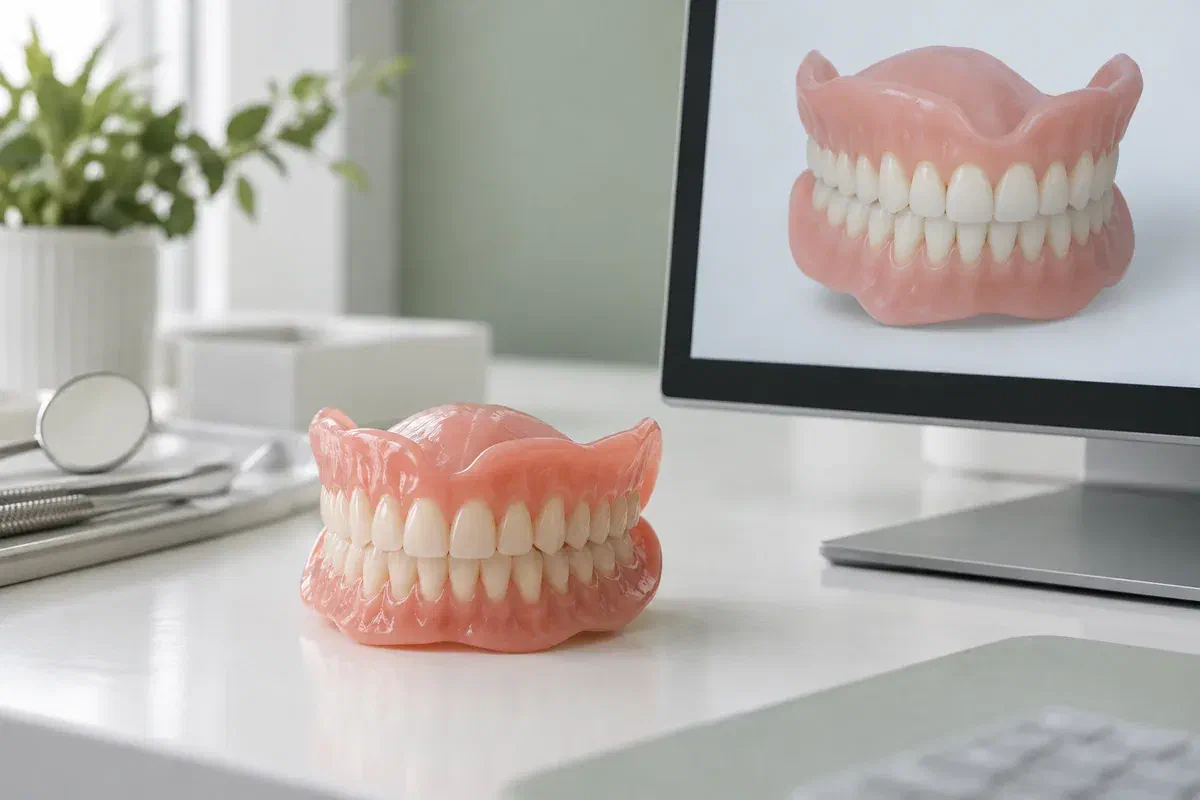
Removable denture beside an illustrative computer-based denture model
Deciding what comes next

Reline, repair or replace?

Before talking about technology, it helps to know what problem you are solving. These three situations lead to different conversations about digital and conventional options.

Your denture fits more loosely each year

Describe when it moves and what you have been doing to compensate. The dentist can tell whether the existing denture can be adapted or whether a new design is needed, and which details of the old one are still worth keeping.

You are not sure how involved a new denture is

A reline and a new appliance involve different appointments. Request an outline of each, including records, try-ins and reviews, keeping in mind that digital production does not fix the count.

You want to know how each option is maintained

Materials vary between conventional and digital methods, and this affects relining and repair later. Clarify those points for the specific appliance proposed rather than assuming one answer covers every denture.

A digital model shows a plan, not the result. Whether a new denture fits and functions well is confirmed only through examination, fitting and review.

Where digital design fits the decision

Useful tools, if a new denture is the answer.

When a new appliance is the right step, computer design can bring the tooth positions, base and bite into one plan that is straightforward to review and send for manufacture. Some systems keep that design for future reference.

None of that makes a digital denture better than every conventional one, and it does not replace the decision about whether a new denture is needed at all. The question to put to the dentist is how the plan meets your fit, appearance and everyday needs, and how the outcome will be judged.

Patient information: American College of Prosthodontists — clinical outcomes of digital dentures

A layout to discuss before production

Seeing a proposed arrangement lets you talk about tooth position and appearance with something concrete in view. Clarify the stage at which you review it and how changes are evaluated.

A clear link between clinic and lab

Records from your examination flow into the design that guides manufacturing. Knowing this helps you see which choices rest on clinical judgement and which are handled by equipment.

Records that age with you

A stored design may help later, but because your mouth will keep changing, a future repair or remake may still call for a new examination and fresh records.

If a new denture is planned

A sequence that begins with the question of need.

Your plan depends on whether a reline, repair or new appliance is appropriate. For a new denture, ask about each stage, including any traditional impressions, trial dentures, lab steps and reviews.

  1. Examination of tissues and the current denture

    The dentist checks the ridges, any remaining teeth and how your existing appliance fits and bites. Your experience with eating, speaking, appearance and handling shapes the recommendation.

  2. Records for the new design

    Should a new denture be chosen, records may come from impressions, scans, bite registrations or photographs. Your current denture may also provide useful information about what to keep.

  3. Design and material decisions

    You review tooth arrangement and appearance, ideally through a trial stage. You also hear how the denture will be produced and how its material can be relined or repaired later.

  4. Fitting and follow-up

    The new denture is fitted and you receive care instructions. Review visits allow the dentist to relieve pressure or refine contacts after you have worn it at home.

Living with the change

Keep an eye on fit, not just cleanliness.

Daily cleaning and periodic examinations matter for any denture. Ask for care instructions specific to the new material, and plan regular check-ups, since the tissues beneath will continue to change.

Clean with products suited to the material

Confirm the brush, cleanser and storage method recommended for this appliance. Products used on an earlier denture may not be compatible with a newer material.

Notice early signs of looseness

Rocking, rubbing or a bite that seems uneven are worth reporting at review or sooner. Adjustment may be needed as the denture settles and as your mouth changes over time.

Keep track of the appliance’s history

Note the material, the date it was made and any design details the clinic suggests keeping. That record helps any dentist understand when a reline or replacement might be due.

Approaches to a new denture

Matching the method to the mouth.

Digital and conventional methods can be used separately or together. Compare them by clinical suitability, materials, review opportunities, long-term relining and repair, and the visits involved.

The traditional way of making dentures

Conventional fabrication

Conventional methods remain a sound route to a well-planned denture. Ask how impressions, bite records, appearance review and fitting are handled with this approach.

A combined route

Traditional records, digital finishing

A plan may start with conventional impressions or try-ins and move to digital design and manufacture. Clarify which steps are digital in your case and why that pairing has been suggested.

When the system and material fit your needs

End-to-end digital production

Some dentures are milled from solid blocks, while others are printed. Each method uses its own materials, which affects relining, repairs and care, so ask which is planned for you.

Puslinch questions about changing fit

When a denture stops fitting the way it did.

These answers look at relines, replacements, stored designs and trial fittings, the topics that come up when your mouth has changed since your last denture.

(905) 876-4488
How do I know whether I need a reline or a new denture?
An examination is the way to tell. The dentist looks at the fit, the bite, the condition of the denture and the tissues beneath it. A reline may suit a denture that is otherwise in good shape, while a worn or damaged one may need replacing.
Why do dentures loosen over time?
The bone and gum that support a denture gradually change shape, especially after teeth are lost. The denture itself does not change, so gaps can form. Regular check-ups help catch this before it causes sore spots.
Can a digitally designed denture be relined?
Relining may be possible, but the method depends on the material and the system used to make it. Ask about relining before the denture is made so you understand the options from the start.
Is a stored design enough to make a replacement years later?
Not usually on its own. Because the mouth keeps changing, the dentist will typically need to examine you and may take new records. The old design can still be a helpful reference for tooth arrangement and appearance.
Is a new digital denture worth it if my old one only needs a reline?
Not necessarily. If your denture is in good condition and a reline would restore the fit, a new appliance may not be needed. Discuss the condition of your current denture and what you would gain from replacing it.
Does a new denture need a trial fitting, even if it is designed digitally?
A trial stage is often part of the plan, depending on the workflow. It lets you and the dentist assess appearance, bite and fit before the final denture is produced. Ask whether your plan includes one and what can be changed at that point.
Visiting from Puslinch

Find out what your denture needs first.

Bring your current denture when you come to our Bronte Street clinic. After examining it and your mouth, we can tell you whether a reline, repair or new appliance seems appropriate, and what digital steps, materials and fittings a new one would involve.

Notice when the denture moves or rubs during the week before your visit; those details help the assessment.

Visit Milton Dental Clinic
Unit 1, 342 Bronte St. S, Milton, ON L9T 5B7
Get directions Clinic hours
Monday–Thursday
11am–7pm
Friday–Sunday
By appointment only

Areas we serve

  • Milton
  • Oakville
  • Mississauga
  • Georgetown
  • Halton Hills
  • Acton
  • Campbellville
  • Brampton
  • Burlington
  • Puslinch
  • Rockwood
  • Erin
  • Caledon
  • Etobicoke
  • Old Milton
  • Bronte Meadows
  • Timberlea
  • Dorset Park
  • Dempsey
  • Clarke
  • Beaty
  • Coates
  • Harrison
  • Scott
  • Willmott
  • Ford
  • Bowes
  • Cobden
  • Walker
  • Mountain View
  • Milton Heights
  • Hawthorne Village
  • Valley View
  • Fallingbrook
  • Nassagaweya
  • Trafalgar
  • Esquesing
  • Nelson
  • Brookville
  • Moffat
  • Glen Williams
  • Norval
  • Limehouse
  • Stewarttown
  • Ashgrove
  • Hornby
  • Silver Creek
  • Speyside
  • Scotch Block
  • North Oakville
  • River Oaks
  • Glen Abbey
  • West Oak Trails
  • Palermo
  • Bronte Creek
  • College Park
  • Joshua Creek
  • Uptown Core
  • Preserve
  • Iroquois Ridge
  • Lisgar
  • Meadowvale
  • Meadowvale Village
  • Churchill Meadows
  • Erin Mills
  • Central Erin Mills
  • Streetsville
  • East Credit
  • Creditview
  • Heartland
  • Sheridan
  • Mount Pleasant
  • Credit Valley
  • Huttonville
  • Churchville
  • Springbrook
  • Northwest Brampton
  • Bram West
  • Fletcher's Meadow
  • Fletcher's Creek South
  • Alton Village
  • Orchard
  • Millcroft
  • Headon Forest
  • Tansley
  • Brant Hills
  • Tyandaga
  • Kilbride
  • Lowville
  • Aberfoyle
  • Morriston
  • Arkell
  • Hillsburgh
  • Freelton
  • Carlisle
  • Waterdown
  • Flamborough
  • Mountsberg

How can we help?

Milton Dental Clinic

Have a question about your smile? Choose the option that works best for you.

For urgent dental concerns, please call.
Messages are reviewed during clinic hours.