

Illustrative consultation about tooth extraction and implant timing
Restorative Dentistry

Extraction and Immediate Implant Placement

In selected circumstances, an implant can be placed during the same procedure as tooth removal. Discuss extraction and immediate implant placement in Milton, with careful attention to the tooth site, healing, temporary teeth, and alternative timing.

A closer look at immediate implant placement

Plan the replacement before deciding on the timing.

Immediate implant placement means placing an implant into a tooth's extraction site during the same procedure as removal. It describes when the implant enters the bone. It does not automatically mean that a final crown is fitted that day or that the new tooth can immediately take normal chewing forces.

Suitability depends on the site and the wider treatment plan. The remaining bone, gum tissues, tooth position, and ability to place a stable implant in an appropriate position all matter. Some findings are clearer only after the tooth has been removed, so an alternative plan should be discussed beforehand.

At Milton Dental Clinic, an assessment can help you understand whether this timing deserves consideration and whether specialist involvement is appropriate. The first question remains whether the tooth needs removal and what replacement options are suitable. Convenience should be considered alongside those clinical decisions, not used to bypass them.

Discuss extraction and implant timing
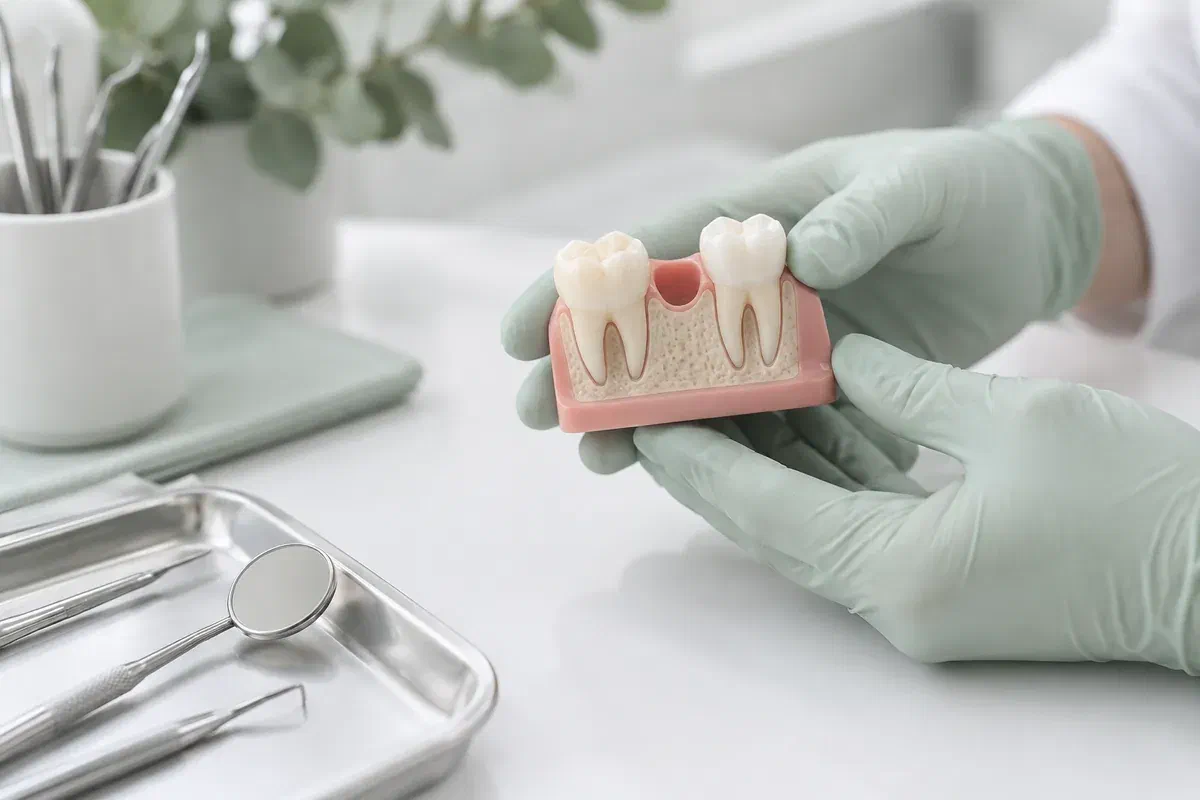
Dental teaching model showing a single tooth space and surrounding structures
Questions before a tooth is removed

The extraction and replacement decisions belong in one conversation.

If an implant is being considered, planning before removal can clarify the options. Tell the team about your priorities for appearance, appointments, and temporary teeth so they can be considered with the examination findings.

A tooth has been described as difficult to retain

Ask what the diagnosis means and whether a reasonable tooth-preserving option remains. Implant timing becomes relevant after the need for removal and the replacement choices have been properly discussed.

You are concerned about a visible gap

The temporary tooth plan needs its own discussion. Immediate implant placement and immediate restoration are different decisions, and a temporary alternative may be needed even when the implant can be placed at extraction.

You want to reduce separate treatment stages

Combining procedures may be possible in suitable circumstances, but fewer stages should not be assumed. Ask what could change the plan and how healing, grafting, or restoration requirements affect the overall schedule.

A planned immediate implant may need to become a staged approach if the extraction site does not provide the required conditions. Knowing that possibility in advance is part of informed planning.

Considering the timing in context

Coordinate the care while respecting what the site allows.

For a suitable site, placing the implant at extraction can combine parts of the surgical sequence. The potential practical benefit needs to be weighed against the demands of positioning the implant appropriately and managing the surrounding tissues.

The discussion should also cover risks, including infection, implant failure, tissue changes, and an appearance that differs from expectations. Ask how your individual risk factors affect the recommendation and what the alternatives offer. Immediate timing is an option to assess, not a promise of a better result.

Patient information: International Team for Implantology — immediate placement and restoration selection

Plan the tooth space before treatment begins

Considering extraction and restoration together helps clarify the desired tooth position, temporary arrangements, and records needed. It also gives you time to understand the sequence before an irreversible step.

Compare combined and staged approaches

Ask what would be gained by immediate placement in your case and what might favour waiting. The answer should relate to the site and restorative plan rather than a preference for speed alone.

Prepare for a change in the surgical plan

An agreed alternative can explain what happens if immediate placement is unsuitable on the day. Discuss the temporary tooth, possible site management, later reassessment, and any change to cost or timing.

Planning extraction with possible immediate placement

Establish the options before the procedure.

The assessment, surgical care, and restorative stages may involve more than one clinician. Ask who is responsible for each part of the plan and how information and follow-up will be coordinated.

  1. Assess the tooth, mouth, and health history

    The clinician reviews the diagnosis, medical factors, and suitability for tooth replacement. Appropriate imaging and other records help assess the site and the relationship with nearby structures before timing is proposed.

  2. Agree on the preferred and alternative plans

    Discuss immediate placement, other implant timing, and non-implant options where relevant. Clarify possible grafting, the temporary tooth arrangement, risks, costs, and what would happen if conditions differ during the procedure.

  3. Remove the tooth and reassess the site

    The treating clinician evaluates whether the required conditions for the planned implant are present. Placement proceeds only if appropriate; otherwise, the agreed alternative guides site management and later treatment.

  4. Review healing before progressing the restoration

    Follow-up assesses the site and readiness for subsequent steps. The timing of a temporary or final tooth depends on the clinical plan and healing, rather than being determined solely by the date of implant placement.

After extraction and implant care

Protect the site according to the instructions you receive.

Postoperative advice depends on the extraction, implant, any grafting, and the temporary restoration. Obtain written instructions and a contact route for concerns, and follow the treating clinician's guidance for your procedure.

Follow the eating and cleaning restrictions

Ask how to clean around the area and what pressure must be avoided. A temporary tooth may have specific limitations, and feeling comfortable does not establish that the site is ready for ordinary chewing.

Use medicines only as instructed

Discuss allergies, current medicines, and any uncertainty about the prescribed plan before leaving. Do not change regular medication or add treatments on your own because the extraction and implant occurred together.

Attend the scheduled healing reviews

Report worsening symptoms, unexpected movement, or other changes identified in your postoperative instructions. Reviews help determine when the site is ready for the next restorative stage and whether the original timetable needs adjustment.

Choosing when and how to replace the tooth

Timing should support the treatment, not define it.

The best approach depends on whether the tooth can be retained, the condition of the site, and your suitability for the proposed restoration. Ask how each relevant option compares in your circumstances.

When the extraction site is suitable

Immediate implant placement

An implant may be placed during removal if the clinical conditions support the plan. Temporary and final tooth timing remain separate decisions, and additional tissue management may still be needed.

When a staged approach is more appropriate

Implant placement after a healing interval

Waiting may allow the site to heal or receive other care before implant placement. Ask what needs to change during that interval and how the space will be managed while treatment progresses.

When another option suits the diagnosis

A tooth-preserving or non-implant approach

Depending on the findings, retaining the tooth or using a bridge or removable appliance may deserve discussion. The recommendation should explain the benefits and limitations of the options relevant to you.

Questions about immediate implant placement

Separate the implant date from the tooth-replacement plan.

The word immediate can refer to different parts of implant treatment. These questions help clarify what is being proposed, what depends on the findings, and what alternatives should be understood.

(905) 876-4488
Does immediate placement mean I receive my final crown at the extraction visit?
No. Immediate placement refers to putting the implant into the extraction site during the same procedure. Whether a temporary or final restoration is fitted, and when it can take biting forces, depends on separate clinical decisions and the agreed plan.
Can the immediate implant plan change after the tooth is removed?
Yes. The site may not provide the conditions needed for appropriate positioning or stability. Discuss an alternative before treatment, including site management, temporary tooth arrangements, later reassessment, and any effect on the expected schedule or cost.
Is a bone graft unnecessary when an implant is placed immediately?
Not necessarily. The site’s shape and tissue requirements may still lead to discussion of grafting or other management. Ask what is anticipated, what would determine the need, and whether any additional procedure changes healing or the restorative sequence.
Should I ask about implant timing before booking an extraction elsewhere?
If an implant is among the options you want to consider, discussing the replacement plan before removal can be useful. Share relevant records and explain any booked treatment so the clinicians can clarify the diagnosis, options, and coordination needed.
Can an infected tooth always receive an immediate implant?
No blanket answer is appropriate. The type and extent of infection, the site, and the ability to manage it need clinical assessment. Do not assume that infection either guarantees or rules out a particular timing; ask how the findings affect your plan.
How should I compare immediate placement with waiting for healing?
Ask what each approach offers for your site, including surgical stages, tissue management, temporary teeth, risks, and maintenance. The recommendation should explain why the selected timing supports the planned restoration rather than focusing only on completing treatment sooner.
Extraction and immediate implant placement in Milton

Let’s plan the next tooth before removing the current one.

Arrange an assessment at our Bronte Street clinic to discuss extraction and replacement options. We can review the starting point, explain timing considerations, and identify any further records or specialist assessment needed.

Bring relevant imaging or referral information if available, and tell us about any extraction already scheduled.

Visit Milton Dental Clinic
Unit 1, 342 Bronte St. S, Milton, ON L9T 5B7
Get directions Clinic hours
Monday–Thursday
11am–7pm
Friday–Sunday
By appointment only

How can we help?

Milton Dental Clinic

Have a question about your smile? Choose the option that works best for you.

For urgent dental concerns, please call.
Messages are reviewed during clinic hours.