You are not fully sure the tooth must go
Ask what the diagnosis is based on and whether keeping the tooth is still a reasonable choice. Only once removal is clear do the implant timing plans need to be made.


Immediate implant plans are made in advance but confirmed in the chair, once the tooth is out. For people travelling in from Acton, we explain Plan A, Plan B and how each one affects your temporary tooth, your healing and your next visits.
Imaging and examination can tell a clinician a great deal before surgery, but not everything. When the plan is to place an implant at extraction, the final check happens once the tooth has been lifted out and the socket can be seen and felt directly.
If the bone walls, the gum and the space allow a stable implant in the right position, the implant can go in during that same appointment. If not, the clinician moves to the alternative you agreed on beforehand, which might mean grafting, letting the site heal and placing the implant later. Either way, immediate placement never meant a final crown that day or chewing on the new tooth right away.
Our Bronte Street team can help you work out whether same-visit placement is worth considering and whether a specialist should be involved. The first questions stay the same: does this tooth really need to go, and what are the sensible ways to replace it? Saving a step is welcome, but only alongside those answers.
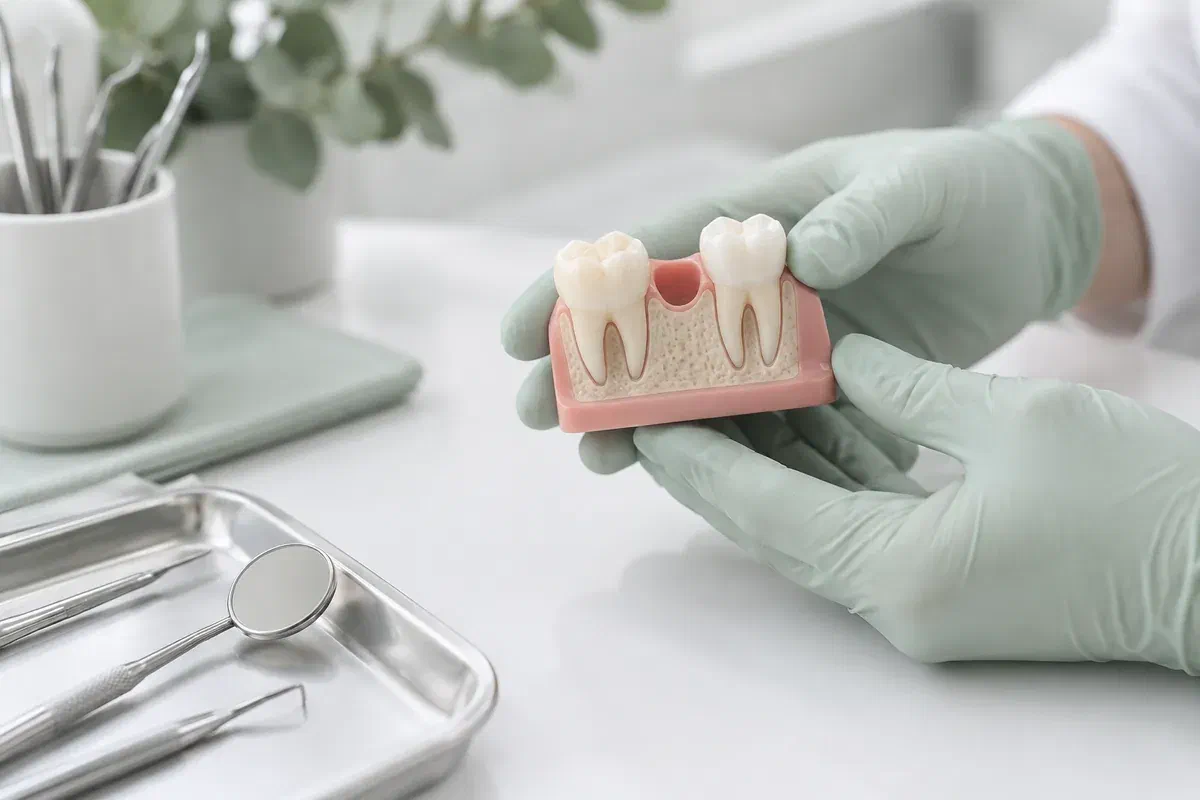
Telling the team what you care about most, such as appearance, the number of trips or the type of temporary, helps them set out a main plan and a backup that both respect those priorities.
Ask what the diagnosis is based on and whether keeping the tooth is still a reasonable choice. Only once removal is clear do the implant timing plans need to be made.
Both Plan A and Plan B need a temporary. An implant placed at extraction may not carry a tooth that day, and a staged plan relies on a temporary for longer, so ask which would be used.
Switching plans in the chair can affect the number of visits, the fees and the timeline. Ask how grafting, healing and the final restoration would fit into each version.
A move from same-visit placement to a staged approach is not a failure; it is the plan working as intended when the socket is not ready. Hearing that before surgery helps you consent with confidence.
When the site is suitable, placing the implant during removal can combine parts of the surgical treatment. The convenience is balanced against the precision needed to seat the implant well and look after the surrounding gum and bone in one sitting.
Talk openly about the risks as well: infection, an implant that does not take, tissue changes and an appearance that differs from what you hoped for. Ask how your own health affects the recommendation and what a delayed or non-implant route would offer. Same-visit timing is worth evaluating, not a promise of a better tooth.
Patient information: International Team for Implantology — immediate placement and restoration selection
Find out which features the clinician will look for once the tooth is out, such as the bone walls, the space and the stability of the implant. Understanding this makes a change of plan easier to accept.
Find out what same-visit placement would add in your case and what would favour staging. The reasoning should rest on your site and the restoration.
Agree in advance on the temporary, any grafting, when the site would be reviewed and how fees or timing might change. That way, nothing new has to be decided in the chair.
Assessment, surgery and restoration may each be led by a different clinician. Ask who will make the call on surgery day and how the information will be shared afterwards.
The clinician reviews the diagnosis, your medical history and whether an implant suits you. Imaging and records help assess the site and the structures nearby before a timing is suggested.
Go through same-visit placement, later placement and options without an implant. Make sure the temporary, possible grafting, risks, costs and the switch-over plan are clear to you.
With the tooth out, the treating clinician checks whether the socket meets the needs of the planned implant. If it does, placement goes ahead; if not, Plan B begins.
Healing appointments show whether the area is ready for the next step. The temporary or final tooth follows that progress and the plan, whichever version was used.
Because the plan can change in the chair, your aftercare may differ from what you expected. Ask for written instructions that reflect the procedure performed, and keep a contact route for questions.
If the plan changed, the restrictions may have too. Ask what to avoid and how to clean the area, and remember that comfort alone does not mean the site is ready for chewing.
Make sure you understand what to take, how and for how long, and mention allergies. Do not adjust regular medication on your own.
Report worsening symptoms, unexpected movement or other changes listed in your instructions. Reviews confirm when the next stage can start and whether the timeline needs to shift.
Knowing how a change of plan works can take much of the worry out of surgery day. These answers cover what people most often ask.
Book a consultation at our Bronte Street practice to plan removal and replacement together. We can review where you stand, set out the main and backup routes and identify any records or specialist input that may help.
Bring any imaging or referral notes, and let us know if an extraction is already on the calendar.
