You were told the tooth should come out soon
Ask why, and whether a tooth-saving treatment is still reasonable. Once removal is confirmed, you can look at replacement choices and timing with a clearer head.


Work shifts, school runs and family commitments make every appointment count. For households in Brampton, we explain when an implant can be placed as a tooth is removed, what recovery may ask of your week, and why a staged plan is sometimes wiser.
When time off is hard to arrange, combining the extraction and the implant into one procedure is an appealing idea. It can be done when conditions are right. The implant goes into the socket straight after the tooth is lifted out, which can spare you a separate surgery later.
That single visit does not finish the job, however. The crown, and the point at which you can chew on the new tooth normally, come after healing and further appointments. Whether the combined approach suits you depends on the remaining bone, the gum, the position of the tooth and whether the implant can be held steadily where it needs to be. Some of this is confirmed only after removal.
At our Bronte Street practice, an assessment can show whether this timing is worth weighing and whether specialist care makes sense. We still begin with the basics: does the tooth need to come out, and what are the sensible ways to replace it? Fitting treatment around your schedule matters, but it is considered alongside those answers.
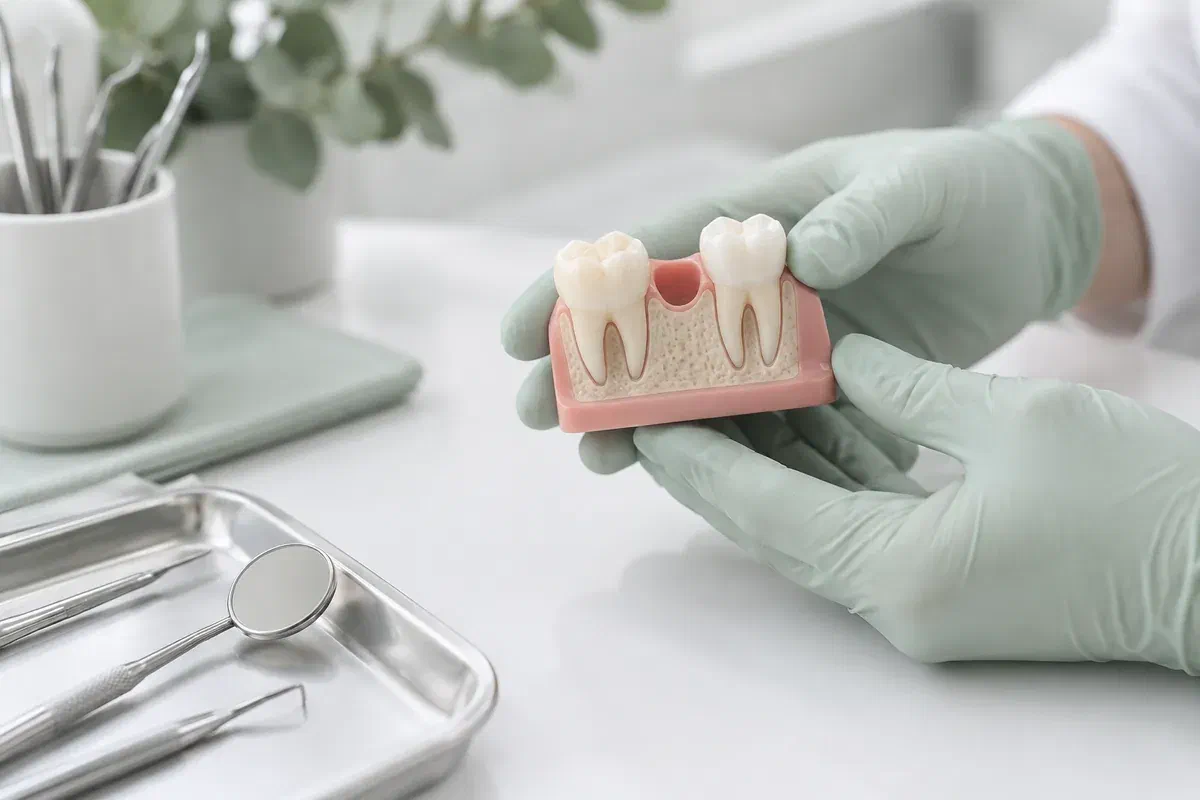
Let the team know about your work pattern, caregiving and any dates you cannot move. Those details, together with the examination findings, help shape a plan that is realistic for you.
Ask why, and whether a tooth-saving treatment is still reasonable. Once removal is confirmed, you can look at replacement choices and timing with a clearer head.
Plan the temporary tooth as carefully as the implant. Placement at extraction does not always mean a tooth is attached that day, so ask what would cover the space.
Combining procedures may reduce the number of surgeries, but there is no guarantee of fewer visits overall. Ask what could add steps, such as grafting or a longer healing period.
A combined plan can still become a staged one if the socket is not suitable once the tooth is out. Knowing that in advance makes it easier to plan time off and childcare without surprises.
For a suitable site, the combined procedure can merge parts of the surgical treatment. That practical gain is weighed against how exacting it is to seat the implant in the best position and handle the gum and bone around it at the same sitting.
Any plan carries risk, including infection, an implant that does not integrate, changes in the tissue and an appearance that differs from what you imagined. Ask how your health and habits shape the advice and what a delayed approach or a non-implant option would mean for your calendar and your mouth. The timing is something to evaluate, not a promise of a better outcome.
Patient information: International Team for Implantology — immediate placement and restoration selection
Seeing every stage laid out, from removal to final crown, makes it easier to book time off and arrange help at home. It also lets you understand the steps before one that cannot be reversed.
Find out what same-visit placement would actually change in your case, and what might argue for waiting. The answer should come from the site and the restoration, not just the calendar.
If placement is not suitable on the day, an agreed alternative explains what follows. Cover the temporary tooth, care for the site, reassessment and any change to fees or timing.
Different clinicians may handle the assessment, the surgery and the final tooth. Ask who is in charge of each part and how information will be shared so you are not repeating yourself.
Your diagnosis, medical history and suitability for an implant are reviewed. Imaging and records help the clinician see the site and the structures around it before timing is discussed.
Discuss same-visit placement, later placement and non-implant options. Agree on grafting if needed, the temporary tooth, risks, fees and what would happen if the site looks different during surgery.
Once the tooth is out, the treating clinician checks whether the socket provides what the implant needs. If it does, the implant is placed; if not, the agreed alternative guides the next steps.
Follow-up visits check how the area is settling. When the temporary or final tooth can go on depends on healing and the plan, so it is best to book those stages once reviews confirm readiness.
Recovery advice is shaped by the procedure you had and the temporary tooth you leave with. Get it in writing, keep the contact details handy and follow the guidance of the clinician who treated you.
Ask what to eat, what to avoid and how to clean near the site. A temporary may carry its own limits, and feeling fine at lunch does not mean the area can take normal chewing.
Share allergies and current medicines before leaving, and ask about anything that is unclear. Do not change regular medication or add remedies without advice.
Rescheduling is sometimes unavoidable, but reviews matter. Report worsening symptoms, unexpected movement or other changes your instructions mention, so the next step and timeline can be judged properly.
Practical questions deserve clear answers. These cover recovery, time away and support, along with what depends on your individual plan.
Arrange a visit at our Bronte Street practice to go over extraction and replacement together. We can review where you are starting from, explain how timing affects your schedule and suggest any additional records or specialist input.
Bring any X-rays, referral notes or dates you need to plan around, and tell us about any extraction already booked.
