You are not sure the tooth must come out
That is the first decision, and it deserves a full explanation. Ask whether treatment could keep the tooth and how that compares with removing it.


An implant placed as a tooth comes out is one answer to a missing tooth, but not the only one. From Bolton and the other Caledon villages, you can weigh same-visit placement against a later implant, a bridge, a removable tooth or keeping the tooth.
Much of the talk about immediate implants is about speed. A more useful starting point is the question underneath: is an implant the right replacement for this tooth at all? For some people it is. For others, keeping the tooth with further treatment, a fixed bridge or a removable tooth fits their mouth, health or preferences better.
Where an implant does make sense, immediate placement is one timing option. The implant enters the socket in the same procedure that removes the tooth. That is separate from fitting a crown, and from the point at which the new tooth can take normal chewing. Suitability rests on the remaining bone, the gum, the position of the tooth and how firmly the implant can be held, and some of that only becomes clear once the tooth is out.
Our Bronte Street team can lay out the options side by side, explain whether same-visit timing deserves a look and suggest when a specialist should be involved. The aim is a replacement that suits you, with convenience considered as one factor among several.
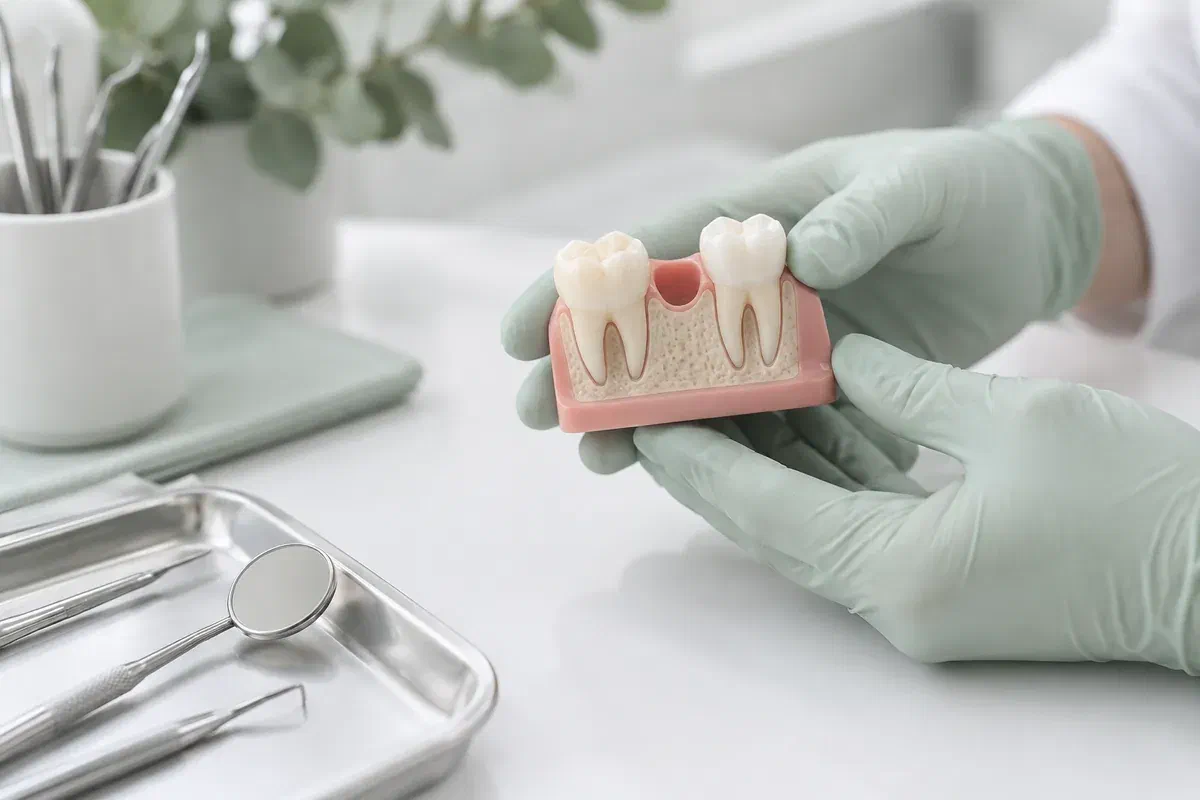
Your priorities help narrow the options. Tell the team what matters most, whether that is a fixed tooth, appearance, cost, the number of visits or avoiding surgery, so it can be weighed with the examination findings.
That is the first decision, and it deserves a full explanation. Ask whether treatment could keep the tooth and how that compares with removing it.
Each route covers the space in its own way, and they differ. Ask how a temporary would work with a same-visit implant, a later implant, a bridge or a removable tooth.
Placing an implant at extraction can sometimes combine procedures, but it is not always possible, and non-implant options avoid implant surgery altogether. Ask how each choice affects the number of procedures.
Choosing a same-visit implant does not guarantee one. If the socket is unsuitable once the tooth is out, the plan may switch to a later implant, so understanding all the options helps you prepare.
For someone well suited to an implant, with a favourable socket, placing it during removal can bring parts of the surgery together. The demands are real: the implant must sit where the future crown needs it, while the gum and bone around it are carefully managed.
Every option has its own risks. For implants these include infection, failure to integrate, gum or bone changes and an appearance that differs from expectations; bridges and removable teeth have their own trade-offs. Ask how your health and habits affect each one. Same-visit timing is one option to weigh, not a promise of the best result.
Patient information: International Team for Implantology — immediate placement and restoration selection
Ask for each choice to be explained by stages, maintenance, appearance, risks and cost. A side-by-side view makes it easier to decide before anything is removed.
An implant stands on its own, while a bridge relies on the teeth beside the gap and a removable tooth rests on the gums and nearby teeth. Ask how each would affect your mouth over time.
Should the socket rule out a same-visit implant, the agreed alternative explains the next steps. Cover the temporary, site care, reassessment and any change in cost or timing.
Depending on your choice, different clinicians may be involved. Ask who will lead each stage and how records and follow-up will be shared.
The clinician reviews the diagnosis, your medical history and which replacements are suitable. Imaging and other records show the site and nearby structures before any option or timing is recommended.
Compare keeping the tooth, a same-visit implant, a later implant, a bridge and a removable tooth where relevant. For an implant, agree on grafting, the temporary, risks, fees and the plan if the site differs.
If an immediate implant is planned, the treating clinician checks whether the socket meets its needs. It is placed only if appropriate; otherwise, the agreed alternative guides site care.
Follow-up reviews check healing before the next stage. The timing of the temporary or final tooth, whichever option you chose, depends on healing and the plan.
Instructions differ for an extraction alone, an extraction with an implant and a site prepared for a later replacement. Ask for written guidance that matches what was done, with a contact for questions.
Ask which foods to avoid and how to clean nearby. A temporary may have its own limits, and an absence of pain does not mean the area is ready for normal chewing.
Raise allergies and current medicines before leaving, and ask about anything unclear. Do not stop regular medication or add treatments on your own.
Report worsening symptoms, unexpected movement or other changes listed in your instructions. Reviews show when the next stage can start and whether the timeline should be adjusted.
Choosing how to replace a tooth involves more than timing. These answers compare the main options in general terms.
Arrange a consultation at our Bronte Street practice to compare your options for removing and replacing the tooth. We will set out the choices that apply, explain the timing for each and point out any records or specialist input that may help.
Bring any imaging or referral letters you have, and let us know about any extraction already planned.
