The tooth is said to be failing
Ask why, and whether a reasonable way to save it still exists. Healing timelines only become relevant once removal is confirmed and the replacement plan is understood.


The surgery is one day; the healing takes longer. For households in Campbellville, we explain what the months between extraction and a finished tooth can look like, when an implant may be placed straight away and when it is wiser to let the site rest.
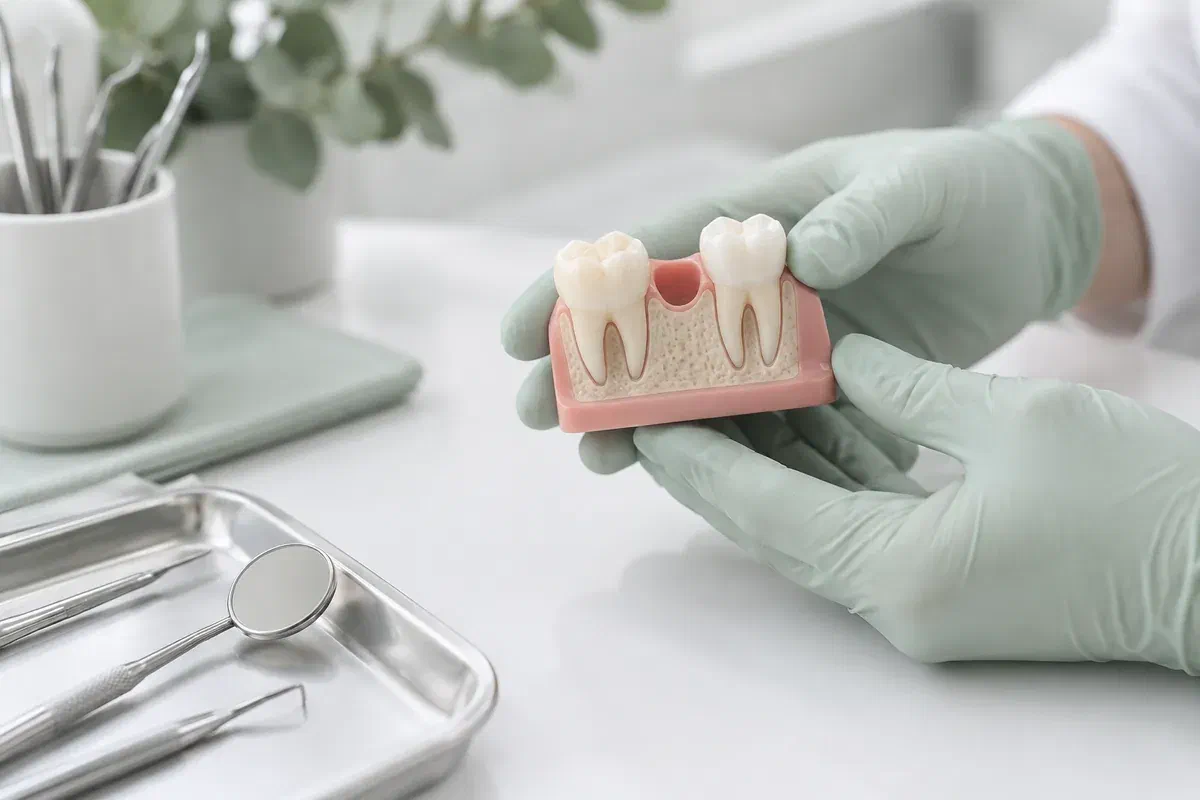
People often focus on the extraction appointment and forget what follows. With immediate placement, the implant is set into the socket while the tooth is being removed. Then comes a period of healing, when the bone grows around the implant and the gum settles, before a permanent crown is made.
During that time you will usually have some form of temporary tooth, eating limits and review visits. How long it lasts, and whether same-visit placement is right in the first place, depends on the bone left around the tooth, the gum, the tooth’s position and how firmly an implant can be held. Some of that is only known once the tooth is out, so a staged plan is prepared too.
Our Bronte Street team can assess whether this timing is worth considering for you and whether a specialist should help. We begin with the question that matters most: is removal truly the right call, and if so, what would replace this tooth well? Reducing surgeries is a fair goal, weighed with those clinical answers rather than ahead of them.
Mention your working day, how you like to eat and anything physically demanding in your routine. Those details help shape a temporary and a timeline you can live with, alongside the examination findings.
Ask why, and whether a reasonable way to save it still exists. Healing timelines only become relevant once removal is confirmed and the replacement plan is understood.
The temporary is your tooth for the in-between period, so plan it carefully. An implant placed at extraction may not carry a tooth immediately, and some temporaries are removable.
Placing the implant at removal may shorten some plans, but healing still takes time. Ask what could extend the schedule, including grafting and the needs of the final crown.
Even when same-visit placement is planned, the socket may not be suitable once the tooth is out. A staged plan would then add a healing interval before the implant, and knowing that ahead of time helps with planning.
Where the site is suitable, placing the implant during the extraction can bring parts of the surgical work together. The trade-off is technical: the implant has to be positioned carefully while the gum and bone around it are managed in the same session.
No route is free of risk. The site could become infected, the implant might not bond with the bone, the gum or bone may shift, and the finished tooth might not look quite as you pictured. Ask how your own health, habits and bite affect the recommendation, and what delayed or non-implant treatment would offer. Same-visit timing earns a place in the discussion; it does not guarantee a better result.
Patient information: International Team for Implantology — immediate placement and restoration selection
Seeing the sequence from removal to final crown helps you plan around work and family. It also gives you time to understand the steps before an irreversible one.
Have the clinician spell out what an implant at extraction would change for your mouth, and which findings would make a pause sensible. Good reasons point back to your socket and the tooth being planned.
Should the combined plan prove unsuitable during surgery, the backup you agreed sets out what follows. Cover the temporary, care of the socket, when you would be reassessed and any change in cost or timing.
Different clinicians may handle the planning, surgery and restoration. Ask who you will see at each milestone and how your notes will move between them.
The clinician checks the diagnosis, your general health and suitability for an implant. Imaging and records show the site and nearby structures before any timing is put forward.
Talk over the three broad routes: an implant at removal, an implant after healing, or no implant. Then settle which temporary you would wear, whether grafting is likely, the risks and fees, and the fallback if the socket surprises anyone.
With the root gone, your clinician can see and feel the socket directly and judge whether the planned implant will sit properly. If it will, it goes in; if not, the agreed alternative shapes the next stage.
Reviews track how the bone and gum are settling. The permanent tooth is made when healing and the plan allow, rather than on a date fixed at the start.
The advice you receive will match what was done and the temporary you have. Ask for it in writing, keep a contact for questions and follow the treating clinician’s guidance.
Ask which foods are best avoided and how to clean around the site. Temporaries are often not designed for heavy biting, and feeling fine is not a sign the area can handle normal chewing.
Mention allergies and your current medications before you leave. Do not change regular medicines or add new ones without advice.
Tell the team about worsening symptoms, a temporary that moves or other changes in your instructions. These visits decide when the next stage can begin and whether the timeline should change.
Much of implant treatment happens between appointments. These answers cover what everyday life may look like, and what depends on your plan.
Arrange a consultation at our Bronte Street practice to talk through extraction, replacement and what the healing period may involve. We can review your starting point, explain the timing options and note any further records or specialist advice.
Bring any X-rays or referral notes you have, and tell us about busy periods you are planning around or any extraction already booked.
