The tooth has been called unrestorable
Ask what that conclusion rests on and whether any reasonable repair is left. Recovery planning becomes relevant once removal and replacement have been talked through properly.


After an extraction with a same-visit implant, most of the healing happens at home. For households in Erin and Hillsburgh, we explain how the timing is chosen, what recovery usually feels like, and which signs mean you should phone before making the drive.
Some tenderness, mild swelling and a little oozing are common after oral surgery. Swelling that keeps growing, bleeding that will not settle or a fever are different and need a call. When you live further out, being able to tell the two apart saves worry and, sometimes, an unnecessary trip.
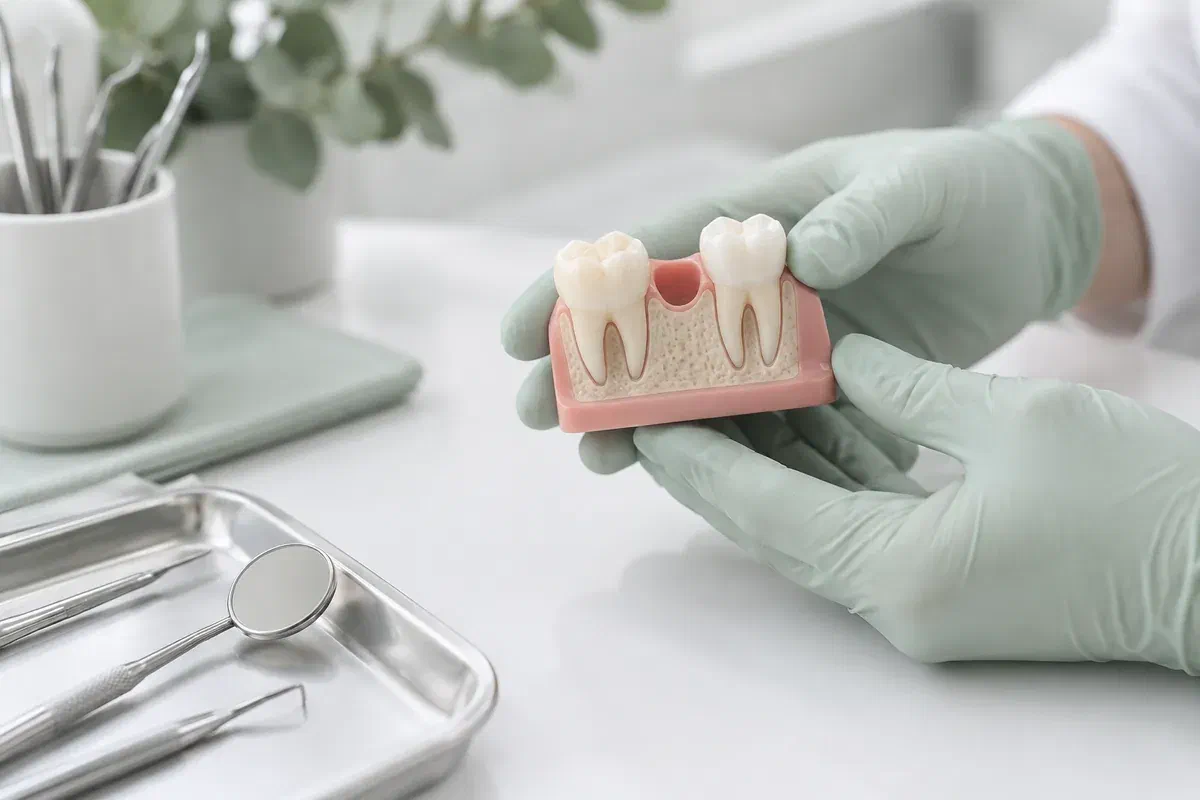
With immediate placement, the implant is fitted into the socket during the same procedure that removes the tooth, so recovery covers both at once. A permanent crown comes later, and the area is not usually ready for ordinary chewing for some time. Its suitability for you hinges on the bone, the gum, the angle of the tooth and how firmly an implant can be anchored, and a few of those answers wait until the tooth is out.
Our Bronte Street team can tell you if same-visit timing is a realistic option, whether a specialist ought to take part and what recovery may ask of you. The opening questions remain: is removal truly needed, and what would be a sensible replacement? Fewer surgeries are a reasonable hope, but they sit beside those answers.
Tell the team about your household, how far you are from help and what matters to you about appearance and visits. Combined with what the examination shows, that context lets the team suggest a plan that works for life at home.
Ask what that conclusion rests on and whether any reasonable repair is left. Recovery planning becomes relevant once removal and replacement have been talked through properly.
Arrange the temporary before surgery. A freshly placed implant is not always ready to hold a tooth, so ask what will fill the space and how to look after it at home.
Combining the extraction and implant can mean one surgical recovery instead of two, but that is not guaranteed. Ask what might lead to further procedures, such as grafting.
If the socket is unsuitable after the tooth is out, the implant may be postponed and placed after healing. Your recovery instructions would then reflect the extraction and any site care rather than an implant.
In a favourable site, setting the implant during removal can fold two surgical steps together, which may mean healing from one procedure rather than two. That gain is weighed against how precisely the implant must be positioned and how the gum and bone around it are managed.
Some risks are worth naming before you agree: the site can become infected, an implant occasionally fails to fuse with the bone, the gum line may recede, and the final tooth may not look exactly as imagined. Your clinician can explain how health, habits and the care you give the area at home influence those risks, and what waiting or skipping the implant would involve. Same-day timing deserves careful thought, not an assumption that it leads somewhere better.
Patient information: International Team for Implantology — immediate placement and restoration selection
Stock soft foods, sort out medicines and line up help with chores or driving if needed. Walking through the sequence beforehand also means nothing permanent happens before you understand it.
Ask your clinician to name the concrete gain of setting the implant during removal, and the signs that would make waiting smarter. Reasons tied to your socket and the crown it will hold are the ones to trust.
If the plan switches on the day, your aftercare will change too. Discuss the temporary, site care, reassessment and any effect on fees or timing in advance.
More than one clinician may be involved across the planning, surgery and restoration. Ask who is responsible for each stage and who you should phone during recovery.
Your clinician confirms why the tooth is failing, goes over your medical background and considers whether an implant is a good fit. X-rays or a scan reveal the bone and neighbouring structures before any timing is put to you.
Weigh an implant now, an implant later and a replacement without one. Then pin down grafting, the temporary, risks and fees, the switch if the socket disappoints, and what each version of recovery will ask of you.
With the tooth removed, the clinician inspects the socket walls and space directly. A suitable site receives the implant then and there; an unsuitable one is cared for under the backup you agreed.
Follow-up visits check healing before the next stage. The temporary or final tooth is fitted when the site and the plan allow, not on a date set at the outset.
Your instructions will be tailored to what was done and the temporary you have. Keep them somewhere visible, along with a contact number, and follow your treating clinician’s advice.
Ask which foods to avoid and how to keep the area clean without disturbing it. Temporaries can have limits, and feeling comfortable is not a sign the site is ready for chewing.
Before heading home, go over any allergies, the medicines you already take and the directions for anything new. Leave long-term prescriptions as they are unless you are told otherwise, and skip home remedies that were not suggested.
Let the team know about swelling or pain that worsens, a temporary that moves or anything else your sheet flags. Each review checks progress and decides whether the plan can move on as scheduled.
Most questions after surgery are about what is normal. These answers give general guidance; your written instructions always come first.
Come in to our Bronte Street practice to talk through removal, replacement and recovery. We will explain the timing choices, what healing at home may involve and whether any further records or specialist input would help.
Bring any X-rays or referral letters you have, and mention a removal date if one is already set.
