Keeping the tooth versus replacing it
Before timing comes into it, ask whether the tooth can reasonably be saved. Comparing implant schedules only makes sense once removal is clearly the better choice.


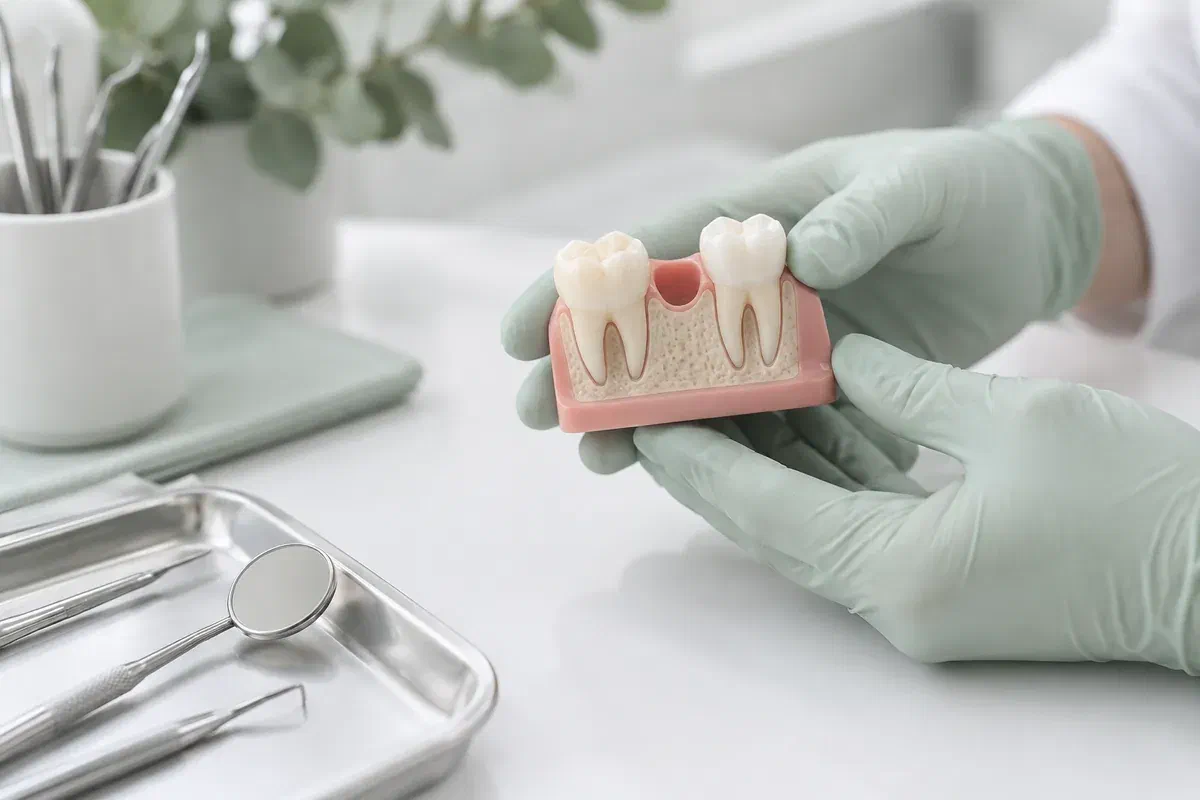
Two plans can look similar on paper: implant now, or implant later. For people coming from Mississauga, we explain how same-visit placement compares with waiting, what the socket has to offer, and how temporary teeth and healing fit into each route.
It is a fair question. If the tooth is coming out anyway, putting the implant in at the same sitting seems efficient. Sometimes it is. Other times, the socket left behind is not ready to hold an implant in a good position, and giving it time to heal produces a sounder foundation.
What clinicians weigh is quite specific: how much bone is left around the tooth, the thickness and health of the gum, the angle the tooth sat at and whether an implant can be anchored firmly where the future crown needs it. A few of these can only be judged after removal, so the staged route is planned in advance too.
Keep in mind that immediate placement refers only to the implant entering the bone at extraction. It does not mean a final crown that day or full chewing straight away. An assessment at our Bronte Street practice can help you decide whether this timing is worth considering and whether a specialist should take part, starting from whether the tooth must go at all.
Every route involves give and take. Tell the team which matters most to you, such as the look of your smile, the number of visits or the kind of temporary tooth you could live with, so it can be balanced against what the examination finds.
Before timing comes into it, ask whether the tooth can reasonably be saved. Comparing implant schedules only makes sense once removal is clearly the better choice.
Both routes need a plan for the gap. An implant placed at extraction may not have a tooth on it right away, and a staged plan uses a temporary for longer, so ask what each would look like.
A combined visit can shorten some timelines, but not always. Ask what could extend each plan, including grafting, healing and the needs of the final restoration.
Choosing the immediate route does not lock it in. If the socket is not suitable once the tooth is out, the plan may switch to staged placement, and it helps to have agreed on that beforehand.
In a favourable socket, same-visit placement can fold two surgical steps into one. The price of that convenience is precision: the implant has to be angled and seated correctly while the surrounding gum and bone are managed at the same time.
Waiting adds a healing interval but can give the clinician a clearer, more settled site to work with. Either way, ask about infection, implant failure, tissue changes and the chance that the final look differs from your expectations. How your own health and habits affect those risks should shape the recommendation, because neither timing guarantees a better result.
Patient information: International Team for Implantology — immediate placement and restoration selection
Ask for each route to be explained in the same terms: stages, temporary tooth, grafting, risks and follow-up. A like-for-like comparison makes the trade-offs much easier to see.
Thinking about where the finished crown needs to sit helps decide which timing suits it. It also gives you time to understand each step before the tooth is removed.
Whichever route you prefer, ask what happens if the site surprises anyone during surgery. That covers the temporary, site care, reassessment and any change in fees or schedule.
Assessment and planning look much the same whichever timing you choose. Ask who manages the surgical and restorative stages, and how notes and follow-up are passed along.
The clinician reviews the diagnosis, your medical history and your suitability for an implant. Imaging and other records show the bone and nearby structures before either timing is put forward.
Weigh same-visit placement against delayed placement, and non-implant options where they apply. Settle grafting, the temporary, risks, costs and what happens if the socket is different from what was expected.
At removal, the treating clinician checks whether the site meets the needs of the planned implant. If it does, placement proceeds; if not, the agreed alternative takes over.
Reviews show how the area is recovering. Fitting a temporary or permanent tooth depends on that progress and on the plan, rather than on the implant date alone.
What you are told to do will reflect exactly what was done: the removal itself, whether an implant and graft went in, and what is covering the gap. Ask for the instructions in writing with a contact for questions.
Ask which foods and pressures to avoid and how to clean nearby. A temporary tooth may need extra care, and being comfortable does not mean the site can handle normal biting.
Check allergies, your regular medicines and any uncertainty about prescriptions before going home. Avoid changing long-term medication or adding products on your own.
Report worsening symptoms, movement you did not expect or other changes listed in your instructions. These checks help decide whether the next stage can start and if the timeline needs to change.
When two plans are on the table, the questions tend to be about trade-offs. These answers show what usually depends on your site.
Book an assessment at our Bronte Street practice to compare removal and replacement plans. We can review your starting point, explain the timing options side by side and identify any extra records or specialist opinion that might help.
Bring any treatment proposals, imaging or referral letters you have, and mention any extraction already scheduled.
