

Illustrative consultation about tooth extraction and implant timing
Restorative Dentistry

Extraction and Immediate Implant Placement in Old Milton

A tooth that has carried old crowns and fillings for decades may eventually need to come out. In Old Milton, we can talk through whether an implant could be placed at that same visit, how the site might heal and what a staged plan would look like.

When a long-serving tooth wears out

Is this the tooth’s last chapter, or just a hard one?

Many teeth arrive at this point slowly. A filling becomes a bigger filling, then a root canal and a crown, and one day a crack or a recurring problem raises the question of removal. Before thinking about implants at all, it is worth hearing clearly why the tooth is no longer considered reliable and whether any reasonable repair remains.

If removal is the right call, immediate placement is one way to approach the replacement. It means setting the implant into the empty socket during the extraction appointment. It does not mean a final crown that day, nor that you can bite on the new tooth straight away. Those come later, on their own schedule.

Teeth that have been heavily restored can leave unpredictable sites behind. Bone and gum may have changed over years, and the full picture sometimes appears only once the tooth is out. That is why an assessment near Milton’s historic downtown covers both the hoped-for plan and the backup, and considers whether a specialist should take part.

Talk about an older tooth’s next step
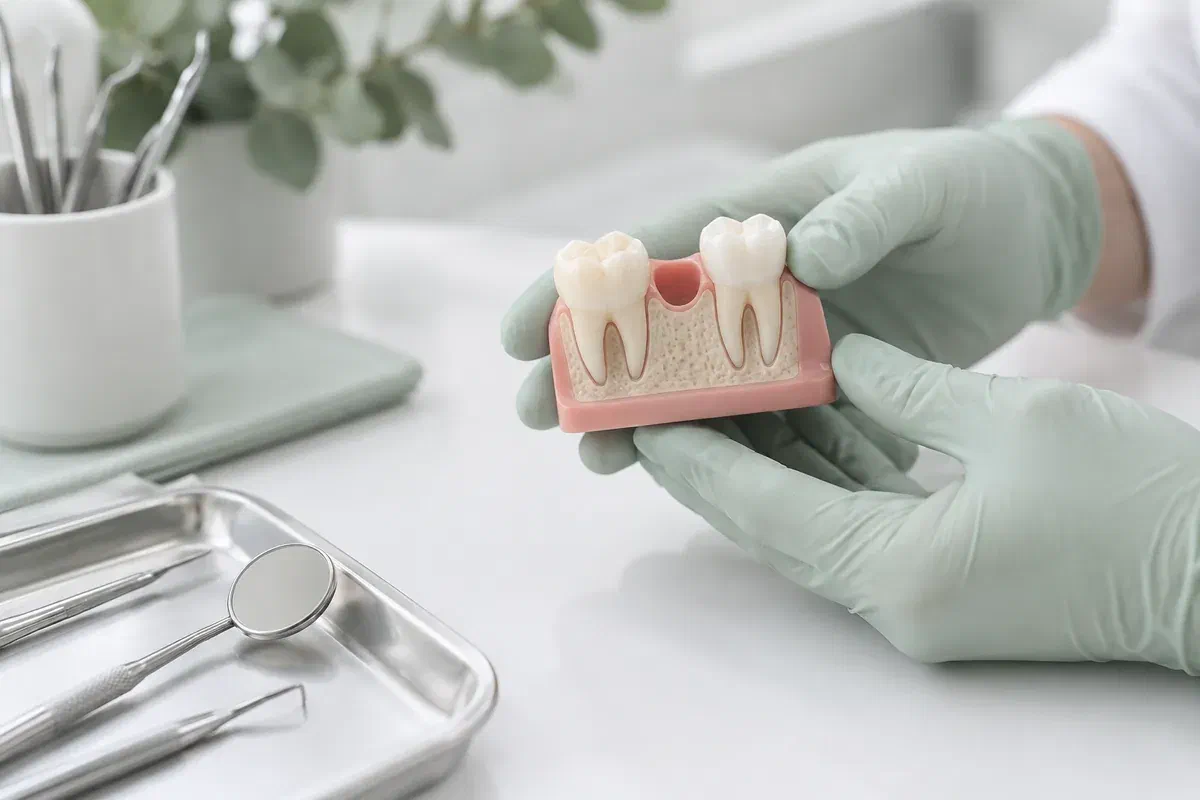
Dental teaching model showing a single tooth space and surrounding structures
Old Milton questions before removal

Three situations worth raising early

Decisions about removing a tooth and replacing it are easier when they are made together. Tell the team what you care about, from how your smile looks to how many appointments you can manage, so those priorities sit next to the clinical findings.

The tooth has been repaired more than once

Repeated repairs do not automatically mean extraction. Ask what has changed this time and whether another restoration is realistic. Implant timing only comes up once keeping the tooth has been honestly ruled out.

It sits where people would notice

Covering the gap during healing is its own decision. An implant can sometimes go in at extraction without a tooth being attached to it that day, so a temporary solution may still be part of the plan.

You would rather not stretch treatment out

Joining steps together is sometimes possible, though not something to count on. Ask which findings could change the sequence and how healing, grafting or the type of crown affects the overall timeline.

Even a carefully planned immediate implant may have to be postponed if the socket is not suitable once the tooth is removed. Knowing this ahead of time helps you agree to the plan with open eyes.

What same-visit placement can offer

Useful in the right socket, and only there

When the site is favourable, putting the implant in at extraction can bring parts of the surgery together. That has to be set against the precision needed to angle the implant correctly and to manage the gum and bone around it during the same procedure.

Every option carries risk, and this one is no exception: infection, an implant that fails to bond with the bone, gum or bone changes, and a result that looks different from what you expected. Ask how your health history influences the recommendation and what waiting or another approach would offer instead. The timing is a choice to examine, never a promise of a better tooth.

Patient information: International Team for Implantology — immediate placement and restoration selection

Start from the tooth you want to end up with

Planning the final tooth alongside the extraction clarifies where it should sit, how the space will be covered in the meantime and which records the team needs. It also lets you understand each step before one that cannot be undone.

Hear the case for both timings

Ask what immediate placement would add in your situation and what would point toward waiting. The reasoning should come from your socket and restorative plan, not from a wish to move quickly.

Know what happens if plans shift

A backup plan describes what follows if same-visit placement turns out not to suit you. Talk through the temporary tooth, any care for the site, a later review and any change in cost or timing.

From first visit to finished tooth

Four stages, each with a checkpoint

You may see more than one clinician between the first assessment and the final restoration. It is reasonable to ask who handles each stage and how notes and follow-up are shared.

  1. Look closely at the tooth’s history

    The clinician reviews why the tooth is failing, your medical background and whether an implant suits you. Imaging and other records show the site and the structures nearby before any timing is recommended.

  2. Settle the main plan and the backup

    Discuss same-visit placement, delayed placement and options that do not involve an implant. Clarify whether grafting may be needed, how the gap will be covered, the risks and fees, and what happens if the site surprises anyone.

  3. Extract, then decide on the spot

    After removal, the treating clinician checks whether the socket offers what the planned implant needs. If it does, placement can go ahead; if it does not, the backup plan guides care of the site and the later stages.

  4. Let healing set the pace

    Review appointments look at how the area is recovering and whether the next step can begin. The timing of a temporary or permanent tooth rests on healing and the plan, not on the day the implant went in.

Recovering at home

What the first weeks ask of you

Instructions differ depending on the extraction, the implant, any graft and the temporary tooth. Make sure you leave with written guidance and a number to call, and follow the advice of whoever performed your procedure.

Be gentle with eating and brushing

Ask how to clean near the site and which kinds of pressure to avoid. A temporary tooth may have limits of its own, and an absence of discomfort does not mean the area is ready for normal chewing.

Stick to the medicines you were given

Raise allergies, your regular medications and any doubts about the prescription before heading home. Do not alter long-standing medicines or add remedies just because the extraction and implant were combined.

Come back for each review

Tell the team about symptoms that worsen, unexpected movement or any other warning sign listed in your instructions. These checks help decide when the next restorative step is possible and whether the timeline should change.

Ways to replace a failing tooth

Choose the approach first, then the date.

Which route suits you depends on whether the tooth can be kept, the condition of the site and whether the planned restoration is right for you. Ask how each realistic option compares.

If the socket supports it

Same-day implant in the socket

The implant may be placed at the extraction visit when the clinical findings allow. The temporary and final teeth are still separate decisions, and extra care for the surrounding tissue may be required.

If a pause would help

Delayed implant placement

Allowing the site to heal, or treating it first, can come before the implant. Ask what you are waiting for during that time and how the gap will be managed in between.

If another path fits better

Repair, a bridge or a removable tooth

Depending on the findings, keeping the tooth or choosing a bridge or removable appliance may be worth exploring. You should hear what each relevant option does well and where it falls short.

Questions we hear in Old Milton

What people ask about older teeth and implants

Heavily restored teeth bring their own questions. These answers explain what tends to depend on the findings and what alternatives you should understand.

(905) 876-4488
My tooth already has a root canal and crown. Can it still receive an immediate implant if it comes out?
Possibly. Previous treatment does not rule it out, but it can affect the bone and gum around the tooth. Suitability is judged from imaging, examination and what the socket looks like once the tooth is removed.
Could the tooth be saved instead?
Ask directly. Depending on the problem, another restoration or other treatment may be reasonable. The recommendation to remove a tooth should come with a clear explanation of why keeping it is not advised.
Will I need a bone graft?
It depends on the shape of the site and what the planned implant needs. Some immediate placements still involve grafting or other site care. Ask what is expected and how it would affect healing and the timeline.
What will cover the gap while I heal?
Options can include a temporary tooth on the implant in suitable cases, a removable temporary or a bonded temporary. Which one fits depends on your bite, the site and the plan.
Are older bone and gums a barrier to implants?
Age alone is not the deciding factor. Health conditions, medications, bone quality and gum health matter more. Your clinician will review your history and explain how it shapes the advice.
Can my existing records help with planning?
Yes. Recent X-rays, scans or notes from earlier treatment can be useful. Bring what you have, and the team will tell you whether any new imaging is needed.
Implant planning for Old Milton

Bring the tooth’s story, and we’ll plan its replacement.

Book a visit at our Bronte Street practice to talk about removing the tooth and what could follow. We can look at where things stand, walk through the timing choices and point out any further records or specialist advice that may help.

If you have past X-rays, treatment notes or a referral, bring them along, and tell us about any extraction already booked.

Visit Milton Dental Clinic
Unit 1, 342 Bronte St. S, Milton, ON L9T 5B7
Get directions Clinic hours
Monday–Thursday
11am–7pm
Friday–Sunday
By appointment only

Areas we serve

  • Milton
  • Oakville
  • Mississauga
  • Georgetown
  • Halton Hills
  • Acton
  • Campbellville
  • Brampton
  • Burlington
  • Puslinch
  • Rockwood
  • Erin
  • Caledon
  • Etobicoke
  • Old Milton
  • Bronte Meadows
  • Timberlea
  • Dorset Park
  • Dempsey
  • Clarke
  • Beaty
  • Coates
  • Harrison
  • Scott
  • Willmott
  • Ford
  • Bowes
  • Cobden
  • Walker
  • Mountain View
  • Milton Heights
  • Hawthorne Village
  • Valley View
  • Fallingbrook
  • Nassagaweya
  • Trafalgar
  • Esquesing
  • Nelson
  • Brookville
  • Moffat
  • Glen Williams
  • Norval
  • Limehouse
  • Stewarttown
  • Ashgrove
  • Hornby
  • Silver Creek
  • Speyside
  • Scotch Block
  • North Oakville
  • River Oaks
  • Glen Abbey
  • West Oak Trails
  • Palermo
  • Bronte Creek
  • College Park
  • Joshua Creek
  • Uptown Core
  • Preserve
  • Iroquois Ridge
  • Lisgar
  • Meadowvale
  • Meadowvale Village
  • Churchill Meadows
  • Erin Mills
  • Central Erin Mills
  • Streetsville
  • East Credit
  • Creditview
  • Heartland
  • Sheridan
  • Mount Pleasant
  • Credit Valley
  • Huttonville
  • Churchville
  • Springbrook
  • Northwest Brampton
  • Bram West
  • Fletcher's Meadow
  • Fletcher's Creek South
  • Alton Village
  • Orchard
  • Millcroft
  • Headon Forest
  • Tansley
  • Brant Hills
  • Tyandaga
  • Kilbride
  • Lowville
  • Aberfoyle
  • Morriston
  • Arkell
  • Hillsburgh
  • Freelton
  • Carlisle
  • Waterdown
  • Flamborough
  • Mountsberg

How can we help?

Milton Dental Clinic

Have a question about your smile? Choose the option that works best for you.

For urgent dental concerns, please call.
Messages are reviewed during clinic hours.