A tooth needs to come out and you have a medical condition
First confirm why removal is advised and whether the tooth can be kept. Then ask how your condition might affect the surgery, healing and the choice of implant timing.


Your health history shapes implant planning as much as the tooth does. For people coming from Puslinch, we look at medical conditions, medicines and habits alongside the socket itself, so the choice between an implant at extraction and a staged plan is well informed.
Diabetes, heart conditions, medicines that affect bleeding or bone, past radiation to the head or neck, smoking: these are the kinds of details a clinician needs before suggesting when an implant should go in. They can influence healing, infection risk and whether surgery needs to be coordinated with your physician.
Immediate placement itself is simple to define. The implant enters the socket during the same procedure in which the tooth is removed. A crown that day is a different matter, as is chewing on the new tooth soon afterwards. Suitability then depends on the remaining bone, the gum, where the tooth sits and whether the implant can be held firmly, with some of that confirmed only after removal.
When you visit our Bronte Street practice, we review your history together with the tooth, explain whether same-visit timing deserves a look and suggest when a specialist or your doctor should be involved. We still start from the essentials: does the tooth need to come out, and what replacement makes sense for you?
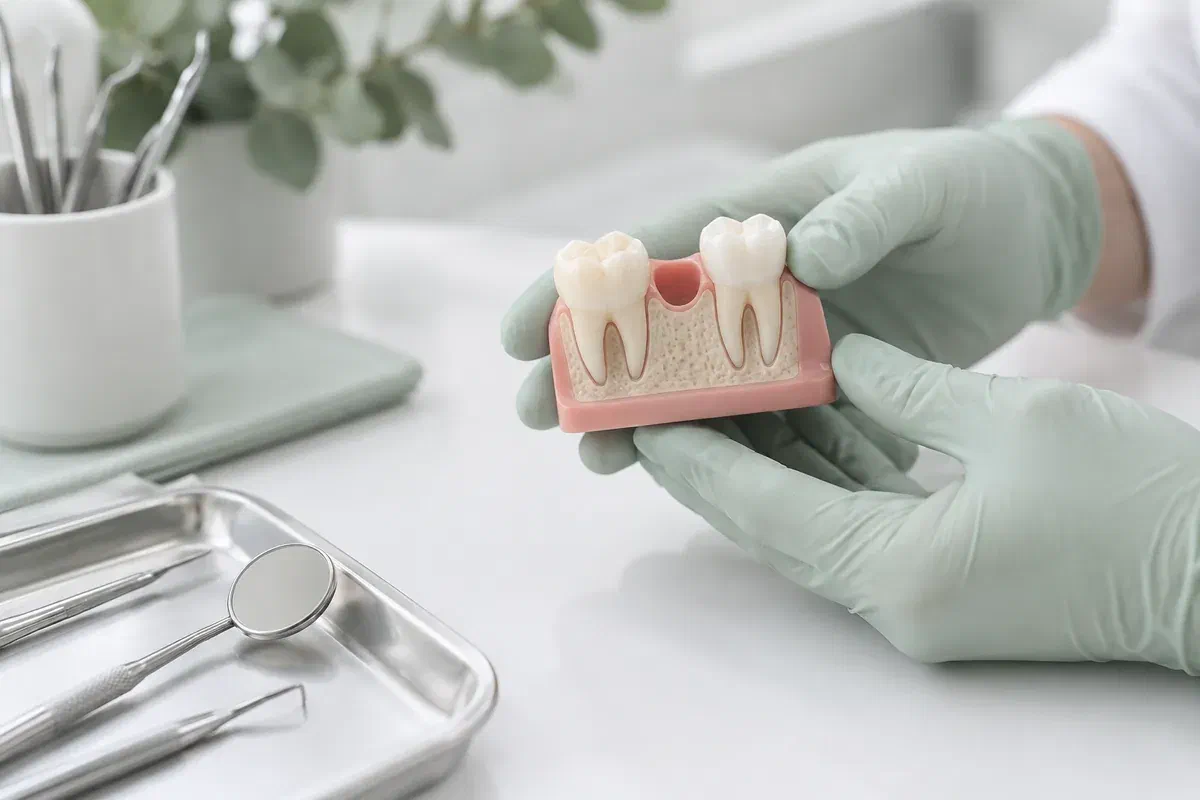
A complete picture helps the team give advice that fits you. Mention your conditions, every medicine and supplement you take and what matters to you about appearance and appointments.
First confirm why removal is advised and whether the tooth can be kept. Then ask how your condition might affect the surgery, healing and the choice of implant timing.
The temporary plan needs as much thought as the implant. Placement at extraction may not include a tooth on the day, so ask what would cover the space for you.
Combining steps can sometimes reduce surgeries, but your health may tip the balance toward staging. Ask how grafting, healing and your medical needs would shape the timeline.
Even with a plan agreed in advance, the socket may not suit an implant once the tooth is out. Health factors can also make a staged approach the safer choice, which is worth hearing before surgery.
With a suitable socket, setting the implant during removal can merge parts of the surgical work, which some people find easier to plan around. That gain is weighed against the precision needed to position the implant well and care for the surrounding tissue at the same time.
Risks such as infection, an implant that does not bond, gum or bone changes and an unexpected appearance can be influenced by general health. Ask how your conditions, medicines and habits shift these risks and what a delayed or non-implant route would mean. Immediate timing should be judged case by case; it carries no promise of a better result.
Patient information: International Team for Implantology — immediate placement and restoration selection
Prescriptions, over-the-counter products and supplements can all matter for surgery. A complete list helps the team plan safely and decide whether your physician should be consulted.
Find out whether your history makes same-visit placement more or less advisable. The reasoning should combine your health, your socket and the planned restoration.
Agree on what happens if immediate placement is not suitable during surgery. Discuss the temporary, site care, when you would be reassessed and any change to cost or timing.
Your dentist, a surgical specialist and your physician may all contribute. Ask who is coordinating the plan and how medical information will be shared with your consent.
The clinician goes through your medical history, medicines and the diagnosis. Imaging and other records show the site and nearby structures before any implant timing is offered.
Some conditions or medicines call for input from your physician before surgery. Agree on the preferred plan, the alternative, the temporary, grafting, risks and costs once that input is in.
During surgery, the treating clinician checks whether the socket is right for the planned implant. It is placed only when appropriate; otherwise, the agreed alternative guides what follows.
Reviews look at how the site is settling, which may take longer with some conditions. The timing of the temporary or final tooth follows that healing and the plan.
Postoperative advice reflects both the procedure and your health. Ask for written instructions, check how they fit with your regular medicines and keep a contact route for questions.
Ask which foods to avoid and how to clean near the area. Temporaries can have their own limits, and an absence of discomfort does not mean the site can take normal chewing.
Any change to blood thinners, diabetes medicines or other long-term treatment should be guided by your prescribing doctor and the treating clinician. Mention allergies before you leave.
Tell the team about worsening symptoms, unexpected movement or other changes your instructions mention. Reviews help decide when to move on and whether the timeline should change.
Health questions are some of the most important to ask before an implant. These answers explain what is usually considered.
Arrange a visit at our Bronte Street practice to talk about removing the tooth, replacing it and how your health fits in. We can review your starting point, explain timing options and identify any records, medical input or specialist advice needed.
Bring your medication list, any X-rays or referral notes, and tell us about an extraction already scheduled.
