Your denture moves when you chew
Tell us which foods cause trouble and when the denture shifts or lifts. Those details shape the options, though struggling at meals with removable teeth is not, on its own, proof that a fixed arch is suitable.


For many people the real test of a full arch is a family meal. Adults in Erin and Hillsburgh can read about the assessment and stages behind a fixed implant denture, what eating may be like along the way, and the cleaning it needs.
Cutting corn off the cob, skipping the crusty bread, chewing carefully on one side: small habits like these often lead people to ask about fixed teeth. A fixed implant denture, also called a fixed implant bridge, is a full arch of teeth secured to implants. It stays in while you eat and sleep, unlike an overdenture that you remove to clean.
Eating well with it depends on two things working together. Implants in the jaw provide support, and the arch replaces teeth and, where needed, receded gum. Planning covers how the teeth meet when you chew, how they look and sound, and how food that slips underneath will be cleaned away each day.
From Erin, Hillsburgh or the surrounding countryside north of Milton, a first visit to our Bronte Street clinic is a good place to talk through your goals. Dr. Anjum will check your teeth and gums, weigh fixed against removable designs with you, and say which records or specialist care might be needed. We will be honest about what eating may be like at each stage, too.
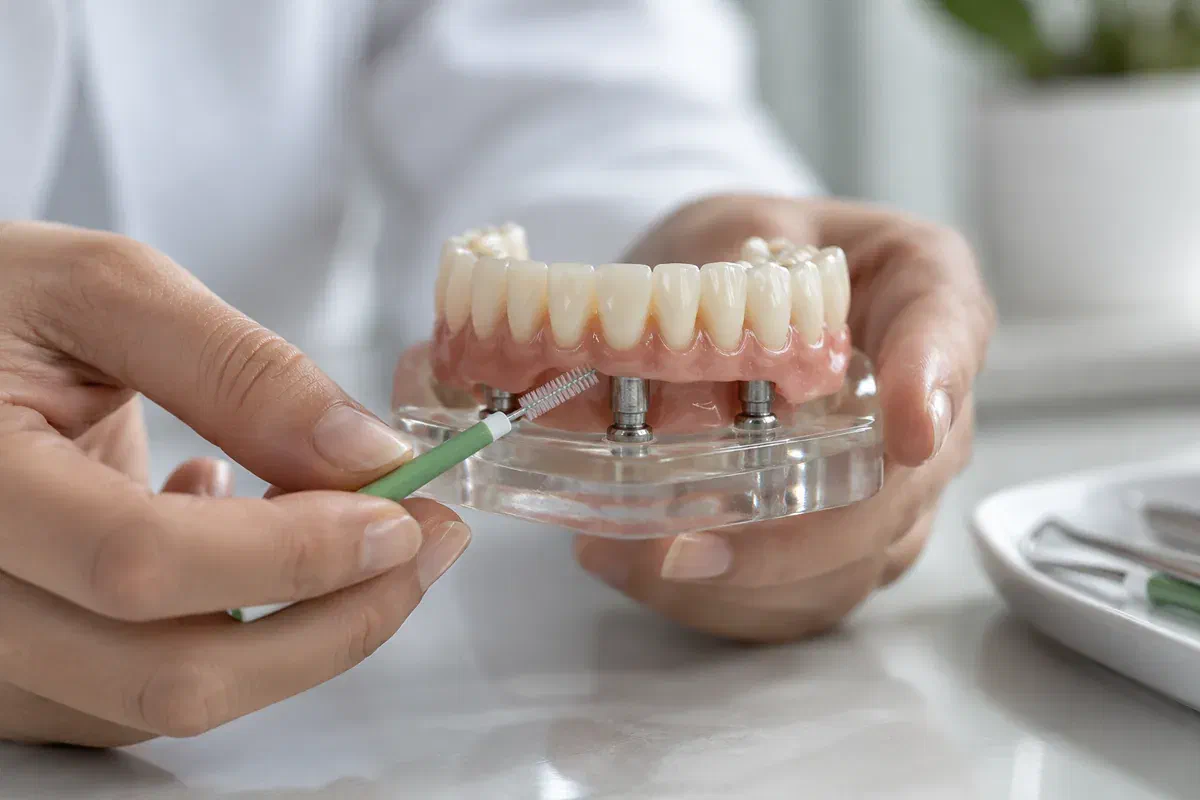
A fixed arch is usually considered when most of a jaw’s teeth are gone or expected to go. Suitability is set by examination, and that includes whether your remaining natural teeth could be kept.
Tell us which foods cause trouble and when the denture shifts or lifts. Those details shape the options, though struggling at meals with removable teeth is not, on its own, proof that a fixed arch is suitable.
Ask what is wrong with each tooth you are protecting and whether any could be treated and kept. A full-arch plan should follow that discussion rather than assume every tooth needs removal.
Food can collect beneath a fixed arch, so daily access matters from the start. Mention your grip, eyesight and dexterity, and any help you have, so the design can be judged practically.
Implant number and position come from your examination and the design of the teeth. Neither an advertised count nor a package name can tell you what your mouth needs.
For a suitable patient, implant-supported fixed teeth stay attached through ordinary meals and conversation. What that could mean for your eating should be explained against your current difficulties and what planning shows.
It is not maintenance-free, and it is not guaranteed for life. Implants, gums, the arch and the forces of chewing all need review over time, and very hard foods can damage tooth material. Ask about complications, repair arrangements and ongoing costs at the outset.
Patient information: Leeds Teaching Hospitals — dental implant patient information
Your clinician should explain how the implants support the arch. With that in mind, you can compare fixed and removable options by how they handle real meals rather than by marketing claims.
Tooth position, gum replacement, speech and the way your teeth meet all interact. Share your priorities and ask when the planned arrangement can be tried before the final arch is made.
A design suits you only if you can keep it clean. Ask how food is cleared from beneath the arch and how often professional reviews are needed, before agreeing to treatment.
Treatment runs over several stages and may involve a team. Ask who provides each one, what interim teeth you will have, what you can chew at each point and what might change the plan.
Your teeth, gums, existing appliance and health history are reviewed, along with suitable imaging. Tell the clinician how you eat now, since that helps frame what the plan needs to achieve.
Discuss fixed and removable designs, implant support, materials, interim arrangements, risks and maintenance. Ask the reason behind any extraction or graft, because those steps cannot be reversed.
The order depends on your findings and plan. When interim teeth go in, and how hard you may chew on them, are decided separately, so eating normally soon after surgery should not be assumed.
Try-ins and records shape the finished teeth. The team checks how your teeth meet when you chew, shows you how to clean underneath and schedules check-ups for the teeth and the tissues around the implants.
Because the arch stays in, cleaning must reach beneath it and around its supports, where food tends to gather. A hands-on lesson with your own arch, and tools sized for its gaps, is worth asking for.
Work out a routine that reaches under the arch gently, without forcing tools that are too big. If food keeps lodging in one place, tell the team so the technique or design can be checked.
Reviews check gum health, hygiene, contacts and components. Your interval should match your needs, and you should hear whether the arch will be taken off at the clinic for maintenance.
Call about looseness, a chip, an uneven bite, persistent bleeding or soreness. Do not test the arch by moving it or tighten parts at home; the cause needs assessment.
Patient information: Canadian Dental Association — dental implants and ongoing care
Eating comfortably is often the reason people consider a full arch. These answers cover common questions to raise at your consultation.
Book a visit with Dr. Anjum at our Bronte Street clinic to talk about a full-arch replacement. We will assess your mouth, compare designs that could suit you and explain whether further records or specialist input are needed.
Bring paperwork from earlier implant or denture care if you have it, plus a short list of the foods you find hardest to manage now.
