Your removable teeth make daily life harder
Note when your denture moves, which meals are difficult and what taking it out is like. That detail helps the comparison, but it cannot by itself establish that fixed implant teeth suit you.


Full-arch treatment takes several stages, which matters when you are travelling from Etobicoke. Learn how a fixed implant denture is assessed and sequenced, how visits can be grouped, and what ongoing cleaning and reviews involve.
A full arch is not a one-visit job, so it pays to know the shape of the journey before it begins. The treatment in question is a fixed implant denture, sometimes called a fixed implant bridge: one jaw’s worth of teeth fastened to implants. You cannot unclip it at home the way you would an overdenture, which changes how it is cleaned and maintained.
There are really two projects running in parallel. One is the implants, which supply anchorage in the bone. The other is the arch itself, replacing teeth and, where the ridge has shrunk, some gum. Each affects the other, so the plan has to cover appearance, speech and bite along with the access a brush will need underneath.
For people coming from Etobicoke, the first appointment at our Bronte Street office is a chance to map things out. Dr. Anjum can assess your mouth, compare fixed and removable designs and explain what records or specialist care might be involved. You can also ask how stages could be grouped so the trips you make count.
Clinicians usually discuss a fixed arch when a jaw is missing most of its teeth, or that loss is expected. Only examination shows whether it fits, and part of that is asking which of your own teeth might stay.
Note when your denture moves, which meals are difficult and what taking it out is like. That detail helps the comparison, but it cannot by itself establish that fixed implant teeth suit you.
You should hear the diagnosis for each one and what keeping it would take. A plan to replace the arch belongs after that conversation, rather than beginning from the view that all of them should go.
Cleaning under a fixed arch is a daily task that starts at planning. Mention dexterity, eyesight and grip, and whether anyone assists you, so the design can be judged against your real routine.
Your mouth, not a brochure, sets how many implants are placed and where. A named offer or advertised count is not a substitute for an assessment.
With a suitable mouth and plan, an implant-supported fixed arch keeps teeth attached through ordinary meals and conversation. Any expected benefit should be tied to what troubles you now and to what the records show.
Fixed is not the same as maintenance-free, and there is no lifetime guarantee. The implants and gums, the arch and the forces it handles all need regular review. Ask early about complications, repairs and the ongoing costs involved.
Patient information: Leeds Teaching Hospitals — dental implant patient information
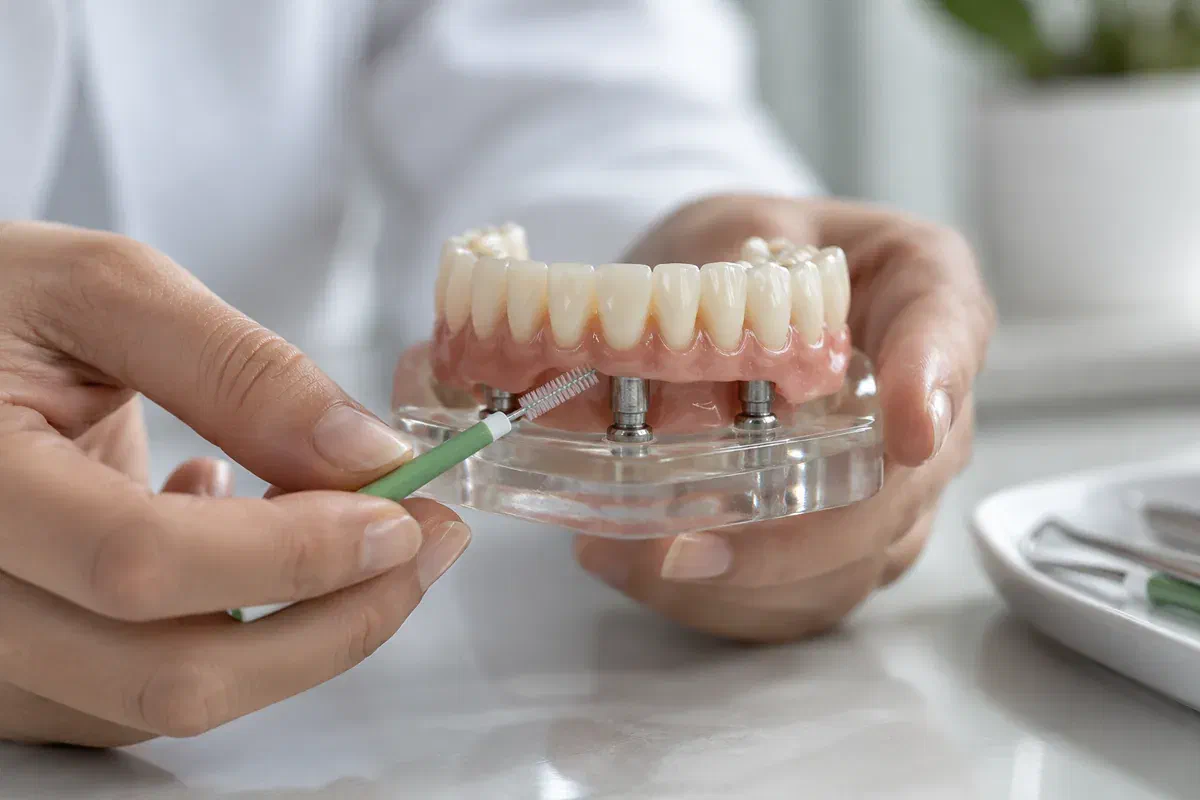
Ask the clinician to show how the implants and arch relate. That makes it possible to compare a fixed design with a removable one by how each actually works.
Tooth position, gum replacement, speech and how your teeth meet are intertwined. Explain your priorities and ask when you can preview the arrangement before the final arch is made.
Your ability to clean and attend reviews is part of whether the design suits you. When travel is involved, ask how often professional visits are likely so you can plan around them.
Expect a staged treatment that may involve more than one clinician. Ask who handles each step, what teeth you will wear during healing and what might change the order, so travel can be planned around it.
Remaining teeth, gum health, any current denture and your medical history are reviewed, along with suitable imaging. Where possible, ask whether several records can be taken in one visit.
Go over fixed and removable designs, how the implants will hold the arch, materials, what you will wear in the interim, risks and upkeep. Any proposed extraction or graft should be explained, since it cannot be undone.
The order follows your findings and the agreed plan. When interim teeth are placed, and what you may chew on them, are separate clinical decisions; aiming for fixed final teeth does not mean fixed teeth on day one.
Try-ins and records guide the finished arch. The team checks your bite, shows you how to clean and books reviews of the arch and the implant tissues at intervals that suit you.
Because the arch stays in, cleaning has to reach beneath it and around the parts that hold it. Ask for a practical demonstration on your own arch using tools that match its spaces.
Practise reaching under the arch without forcing in tools that are too big. If a spot is hard to manage, mention it so the method or design can be reviewed rather than that area being missed.
Reviews check gums, hygiene, contacts and components. Ask for intervals that suit your needs and your travel, and whether professional removal or other maintenance is expected.
Phone us about looseness, a chip, persistent bleeding or discomfort. Do not rock the arch or tighten parts yourself. For severe swelling, fever or injury, seek urgent care close to home.
Patient information: Canadian Dental Association — dental implants and ongoing care
Full-arch care involves several appointments over time. These answers can help you plan ahead and know what to ask.
Book a consultation at our Bronte Street office to talk about replacing a full arch. We will look at your starting point, compare designs that may suit you and outline the stages, including any specialist involvement, so you can plan your trips.
Bring any records of existing implants or dentures and let us know which days suit you best for travel.
