You dislike handling a removable denture
Be specific about what bothers you, whether it is movement, taking it out or eating with it. Those details matter to the comparison, but they cannot on their own prove that a fixed arch is suitable.


Seen a full-arch package advertised and want the plain version? From Oakville, you can get a personal assessment for a fixed implant denture, with a clear account of who it suits, how it is staged and the long-term care involved.
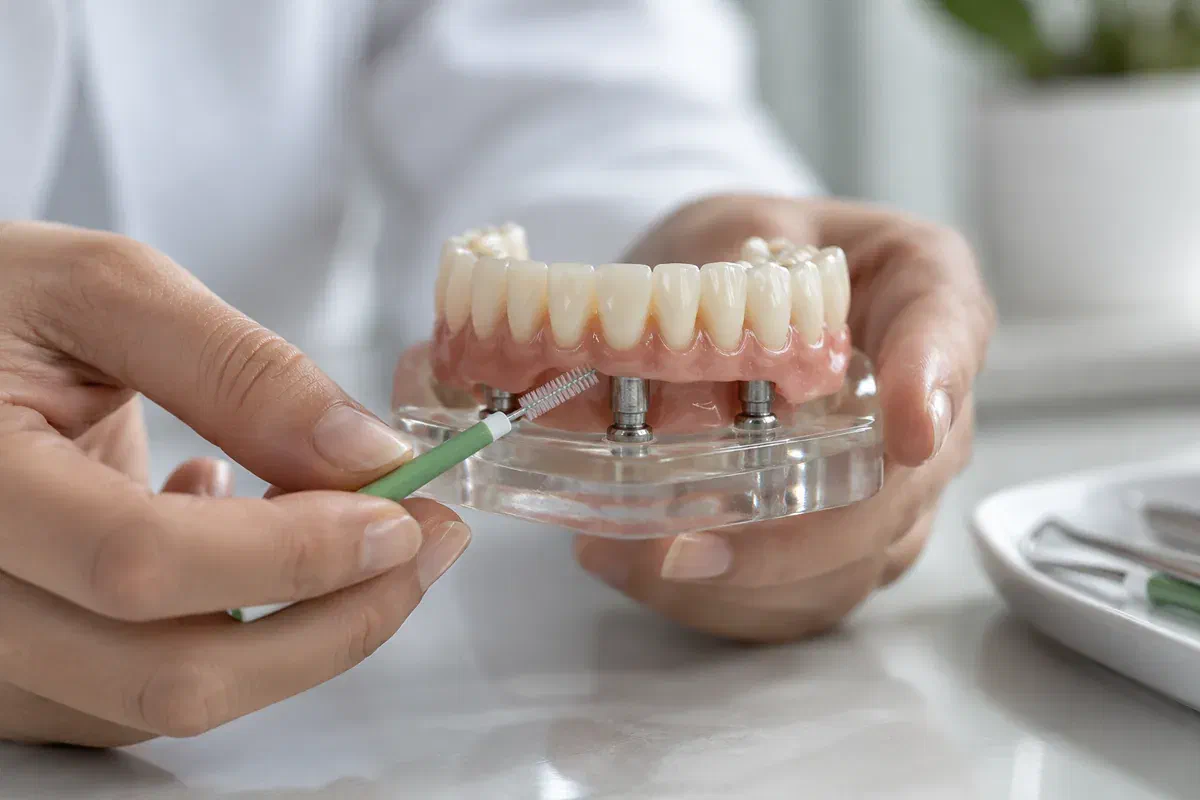
Full-arch offers tend to lead with a catchy name and a set number of implants. Underneath the branding sits a fairly specific treatment: a fixed implant denture, also known as a fixed implant bridge, is one complete arch of teeth held on implants. It stays in your mouth, unlike an overdenture, which you unclip and clean by hand.
Two jobs are being done. Implants in the bone provide the foundation, and the arch on top replaces the teeth plus, in many cases, gum that has receded. Getting one right without the other does not work, so a sound plan considers how the teeth will look and sound, how your bite will meet and how you will clean the spaces below.
Many people from Oakville, particularly the northern neighbourhoods, start with a consultation at our Bronte Street practice. Dr. Anjum will review where your mouth stands, compare fixed and removable designs and say plainly which records or specialist opinions would be needed. The goal is a decision that weighs surgery and maintenance as seriously as convenience.
This design is generally considered when an arch is missing most of its teeth or heavy tooth loss lies ahead. Suitability comes only from examination, and that includes asking which natural teeth might reasonably be kept.
Be specific about what bothers you, whether it is movement, taking it out or eating with it. Those details matter to the comparison, but they cannot on their own prove that a fixed arch is suitable.
Ask what the diagnosis is for each tooth and what it would take to keep any that are useful. A whole-arch plan should follow that conversation rather than begin from the idea that everything comes out.
Cleaning under a fixed arch is part of suitability from the start. Talk about your dexterity, vision and grip, and whether anyone helps you, so the proposal can be judged in practical terms.
An offer that names an implant count in advance skips a step. The number and position of implants should be set by your examination and the restorative design, not by the package.
In a well-chosen case, an implant-supported fixed arch keeps the teeth in place through ordinary eating and speaking. How much that improves your situation should be explained in light of your present problems and what planning shows.
Fixed is not a synonym for permanent or carefree. The implants, the gum tissue, the arch itself and the way your bite stresses it all need ongoing checks. Complications, repair arrangements and future costs should be part of the conversation before treatment, not after.
Patient information: Leeds Teaching Hospitals — dental implant patient information
You should understand how implant support and the final arch connect. That lets you compare fixed and removable proposals on how they actually work, rather than on brand names or brochure language.
Tooth placement, any pink gum replacement, speech and bite all influence one another. Say which matters most to you and ask whether you can review a trial version before the definitive arch is made.
Your ability to clean an arch is part of whether it suits you. Ask to have the access and the review schedule explained concretely, so nothing about the ongoing routine is a surprise.
Full-arch care normally runs over several stages, sometimes with a team. Ask who carries out each part, what you will wear during healing and what could change the order of treatment.
Your teeth, gums, existing dentures and medical background are reviewed. Appropriate imaging and records clarify the support available and whether more assessment or preliminary care should come first.
Go over fixed and removable alternatives, how the implants will support the arch, materials, interim teeth, risks and upkeep. Every extraction or graft proposed should come with its reasoning, since none can be reversed.
Sequence follows your findings and the agreed plan. Interim teeth timing and permitted chewing load are separate clinical calls; a fixed final arch is not a promise of fixed teeth immediately.
Try-ins and records guide the finished arch. The team checks how your teeth meet and work, shows you the cleaning routine and schedules reviews for the arch and the tissue around each implant.
Your arch stays in, so cleaning must reach the gap beneath it and the parts holding it. Ask to be shown on your actual arch with tools that suit its spaces.
Learn to reach beneath the arch without wedging in tools that are too large. Tell the team about any spot you cannot get to, so the technique or design can be adjusted rather than the area being left.
Each review assesses gum health, hygiene, contacts and component wear. The interval should reflect your needs, and the team should tell you whether professional removal or other servicing is expected.
Phone if the arch feels loose, has chipped, the gums bleed persistently or something hurts. Do not test movement or try to tighten parts yourself; the cause has to be found.
Patient information: Canadian Dental Association — dental implants and ongoing care
A full-arch decision deserves time and clear explanations. These questions cover what people often want to know before committing.
Arrange a consultation at our Bronte Street practice to talk about a full arch. We will examine your starting point, compare designs that could suit you and explain any further planning or specialist assessment involved.
If you already have a quote or treatment plan from elsewhere, bring it along with any existing implant or denture records.
