

Illustrative consultation about a temporary removable tooth replacement
Restorative Dentistry

Flipper Teeth

A flipper tooth can provide a removable way to fill a gap while a longer-term plan develops. Explore flipper teeth in Milton and discuss appearance, comfort, eating limitations, and the care your temporary appliance needs.

A closer look at flipper teeth

A temporary tooth with a clear place in your plan.

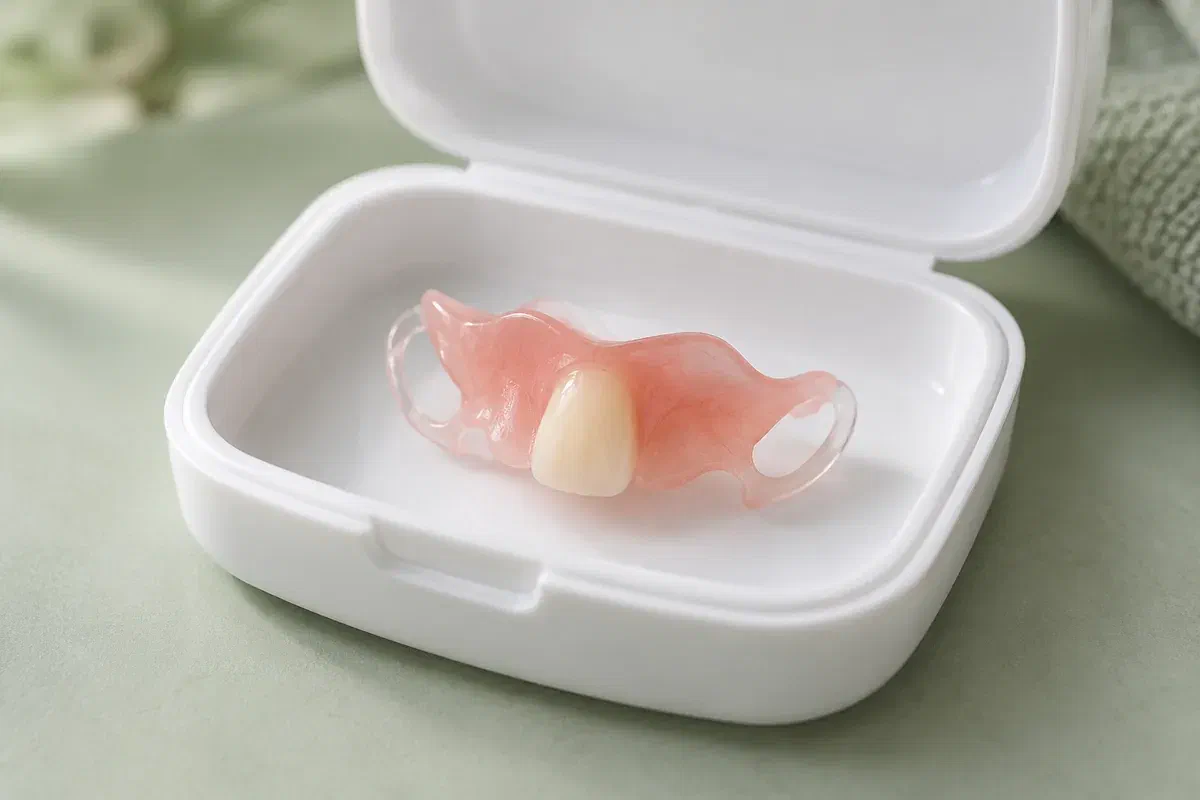
A flipper is an informal name for a small removable partial denture, commonly used as an interim replacement for one or more missing teeth. An artificial tooth is carried on a base that fits within the mouth. The design and retention depend on the space, surrounding teeth, and purpose of the appliance.

It may be discussed while an extraction site heals, while another replacement is being planned, or when a temporary appearance solution is needed. Its role should be explained clearly. A flipper is not automatically designed for the same chewing demands or long-term use as every definitive partial denture.

At Milton Dental Clinic, we can assess the gap and discuss whether an interim appliance would be appropriate. Tell us about upcoming commitments and your longer-term treatment plans, but also about comfort and handling concerns. The aim is to choose a practical temporary option with understandable limits and a review schedule.

Discuss a temporary tooth replacement
Small acrylic temporary partial denture resting in an appliance case
When an interim appliance may be useful

Fill the gap without losing sight of the next step.

A temporary tooth serves a particular period in your care. Its suitability depends on what is happening in the mouth now and what treatment is expected afterward.

A visible tooth space is affecting confidence

Explain what you want to improve for everyday conversation or an upcoming event. The clinician can discuss the appearance possible with a removable appliance and whether the timing allows appropriate assessment and fitting.

The mouth is healing after tooth removal

A healing site needs consideration before an appliance is placed against or near it. Ask when the temporary tooth can be worn and how the fit will be reviewed as the tissues change.

A longer-term replacement is still being arranged

An interim appliance may form part of a staged plan, but it should not obscure the decisions still needed. Clarify the intended duration and what appointments or treatment will follow.

If an extraction is planned, discuss temporary tooth options before the appointment where possible. An appliance may need records and preparation in advance.

Understanding the role of a flipper

A useful temporary option starts with realistic expectations.

A suitable flipper can provide a visible replacement tooth during a transition in treatment. Because it is removable, it can be taken out as instructed for care and review. The value lies in how well its limited role matches the particular gap and stage of treatment.

Comfort, speech, and handling may take some adaptation. Eating instructions depend on the design and the condition of the mouth, especially near a healing site. Ask what the appliance is intended to do rather than assuming that wearing a replacement tooth means unrestricted use.

Patient information: American Dental Association — removable partial dentures

Address appearance during a treatment interval

An interim tooth can be discussed when a definitive restoration is not yet ready. Tell the clinician which features matter to you, including tooth position and how much of the appliance may show.

Keep the future treatment visible

A temporary plan can clarify the steps between tooth loss and a longer-term option. Ask what findings or healing milestones will determine when the next decision is made.

Understand the daily responsibilities early

Knowing how to insert, remove, clean, and store the appliance helps you judge whether it is practical. Bring up difficulties with grip, gagging, or handling before the design is finalized.

Planning and fitting a temporary tooth

Agree on its purpose before the appliance is made.

The process depends on whether the tooth is already missing, whether an extraction is planned, and which longer-term treatments are under consideration. Ask about records, fitting appointments, and expected reviews.

  1. Assess the gap and surrounding mouth

    The dentist reviews the space, nearby teeth, tissues, and relevant treatment plans. Explain why you want the temporary appliance and whether there are any imminent appointments or events that affect timing.

  2. Discuss design, limits, and alternatives

    Ask how the appliance will be retained and what it may feel like. Review appearance, eating restrictions, care requirements, costs, and whether another temporary option is more suitable for the circumstances.

  3. Obtain records and arrange fabrication

    Appropriate impressions or other records guide the appliance. If it is intended for use after extraction, the team explains the fitting arrangements and what may need reassessment once the tooth has been removed.

  4. Check fit and practise handling

    At fitting, the appliance is assessed in the mouth and you are shown how to use it. Ask for clarification before leaving and attend the planned review, particularly when the supporting tissues are still changing.

Looking after a flipper tooth

Treat temporary care as part of the treatment.

Follow the instructions for your particular appliance and stage of healing. A flipper needs cleaning, careful handling, and reassessment if it becomes loose or uncomfortable.

Follow the wearing and eating advice

Ask whether the appliance should be removed for meals and at night, and follow any specific postoperative directions. Do not assume that instructions for a previous denture apply to this temporary design.

Clean the appliance and remaining teeth

Confirm which products and techniques are compatible with the appliance. Keep the surrounding mouth clean as instructed, and ask for help if the base or retaining features make certain areas difficult to reach.

Protect it when it is out of the mouth

Use a suitable container and follow the storage advice provided. Avoid wrapping it in a tissue where it could be discarded, and keep it away from heat, pets, and surfaces where it can be damaged.

Choosing a way to manage the space

Temporary and definitive options serve different needs.

The gap, the surrounding teeth, healing, and your future treatment plan determine which choices are relevant. Ask how the proposed interim appliance fits into the overall sequence.

When a flipper suits the temporary role

A removable interim partial denture

A small removable appliance may provide a useful tooth replacement during a defined interval. Its retention, appearance, wearing instructions, and expected limitations should be discussed for the actual design.

When the site or treatment plan calls for it

Another temporary replacement approach

Other provisional approaches may be considered depending on the teeth and planned care. Ask why one is recommended and how it affects the healing site, cleaning, and next stage of treatment.

When the mouth is ready for the next decision

A longer-term tooth replacement

A bridge, implant-related restoration, or definitive removable partial may be relevant after assessment. Each has different requirements, and the interim appliance should not be treated as a commitment to one choice.

Questions about flipper teeth

Know the limits of the temporary tooth.

The instructions for a flipper depend on its design and your treatment stage. These questions help clarify practical details before you begin using the appliance.

(905) 876-4488
Is a flipper tooth intended to be my permanent replacement?
It is commonly used as an interim appliance, but the intended role should be stated in your plan. Ask how long it is expected to be used and what determines the next step. Continuing indefinitely without review may leave changing fit or treatment needs unaddressed.
Can I eat normally while wearing a flipper?
That depends on the design and the condition of the mouth. Some interim appliances have important eating limitations or should be removed for meals. Follow the instructions given at fitting rather than testing the appliance with hard or sticky foods.
Can a flipper be ready for the day a front tooth is removed?
It may be possible with advance planning, appropriate records, and a suitable clinical situation. Discuss it before the extraction rather than assuming an appliance can be made on the day. The fit may need review as the mouth heals.
Will a flipper affect how I pronounce words?
A removable appliance may feel unfamiliar and can affect speech while you adapt. Tell the team about persistent difficulties or movement rather than assuming they must be tolerated. The design and fit may need review in relation to your symptoms.
What should I do if my flipper becomes loose during healing?
Contact the clinic for assessment. Tissue changes can alter how an interim appliance fits, but the appropriate response depends on the mouth and design. Do not add household materials, bend retaining parts, or continue using an appliance that no longer feels secure.
Can a flipper be used while I decide between a bridge and an implant?
It may be one temporary option, subject to assessment. Ask how it would relate to the site and the possible future treatments. A useful plan includes review dates and the information still needed to make the longer-term decision.
Flipper teeth in Milton

Let’s give the temporary tooth a clear purpose.

Arrange a visit at our Bronte Street clinic to discuss an interim replacement for a missing tooth. We can assess the space, explain suitable options, and plan the fitting and reviews around your next stage of care.

Tell us about any planned extraction or upcoming event when booking so we can discuss realistic preparation and timing.

Visit Milton Dental Clinic
Unit 1, 342 Bronte St. S, Milton, ON L9T 5B7
Get directions Clinic hours
Monday–Thursday
11am–7pm
Friday–Sunday
By appointment only

How can we help?

Milton Dental Clinic

Have a question about your smile? Choose the option that works best for you.

For urgent dental concerns, please call.
Messages are reviewed during clinic hours.