The gap is visible and it bothers you
Tell us how the space affects you, from daily chats to a special date. We can explain what a removable tooth may look like and whether there is time to assess and fit it properly.


Temporary should mean something specific: a start, a set of check-ins and an end. A flipper tooth is a removable appliance that may cover a gap for a defined stretch while you heal or plan. Travelling from Acton, ask us how long yours is likely to last and what decides the next step.
“How long will I be wearing this?” is one of the most useful questions to ask before a temporary tooth is made. The appliance known as a flipper is a small removable partial denture: one or more replacement teeth held on a base that fits along your gums and is anchored by neighbouring teeth.
It is typically used for an interval, such as the weeks or months a socket needs to heal or the time it takes to plan a lasting replacement. Because it is not designed for the bite or the lifespan of a definitive denture, an open-ended timeline can cause problems. Fit changes, and needs move on.
For anyone coming from Acton, the trip is easier to plan when the whole sequence is clear. We can examine the gap, discuss whether a temporary appliance suits your situation and sketch out the reviews that keep it on track. Tell us about comfort concerns and upcoming commitments, too.
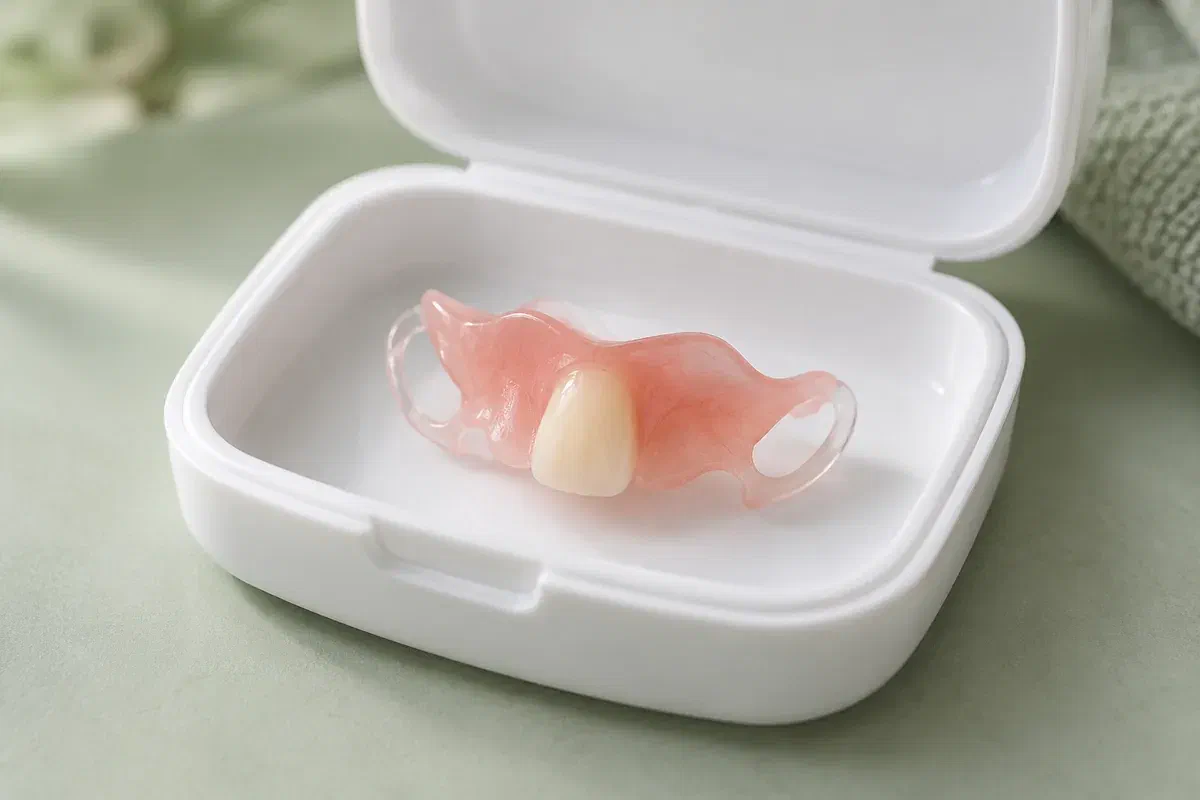
A flipper serves one portion of treatment. Its suitability depends on what is going on in your mouth right now and what is expected next.
Tell us how the space affects you, from daily chats to a special date. We can explain what a removable tooth may look like and whether there is time to assess and fit it properly.
The tissues over a socket change as they mend, which affects any appliance resting nearby. Ask when wearing can begin and how often the fit will be checked during that period.
A flipper can keep you comfortable during a staged plan, as long as the next decision stays in sight. Agree on a likely duration and the appointments that follow it.
If a tooth is to be removed, ask about a temporary replacement before the extraction date. The appliance may need records and lab time beforehand.
A temporary tooth tends to work best when everyone knows what it is waiting for. Is the socket healing? Is more information needed before a bridge or implant can be discussed? Naming that milestone turns an open-ended appliance into a step with a purpose, and it tells you when to expect the next conversation.
Meanwhile, a suitable flipper keeps a tooth visible and comes out for cleaning and reviews as instructed. Comfort, speech and handling take some adjustment, and the food rules vary with the design and the stage of recovery. Ask what the appliance can manage, so it is not pushed beyond its role.
Patient information: American Dental Association — removable partial dentures
Consider a temporary tooth when the permanent restoration is not yet ready. Share what you care about most, such as shade, position and whether the base will show.
A defined interim period makes each step toward a long-term replacement easier to follow. Ask which healing signs or findings will set the date for the next decision.
Practising how to insert, remove, clean and store the appliance shows whether it is practical. Raise any trouble with grip or gagging before the design is finalised.
The sequence varies with whether the tooth is gone, whether an extraction is ahead and which long-term options are on the table. Ask for an outline of visits and review points.
We examine the gap, nearby teeth, gums and any existing plan. If you already know what the next step is meant to be, tell us, since it shapes how long the flipper is needed.
You will hear how it is retained, what it may feel like and how long it is likely to be used. We also cover appearance, eating limits, care, fees and other short-term options.
Impressions or other records guide fabrication. When the appliance is planned for wear right after a tooth comes out, we talk through that fitting and the adjustments healing may call for.
We check the appliance in your mouth and show you how to handle it. Before you leave, put the first review in your calendar, since the tissues may still be changing.
Follow the instructions for your appliance and healing stage. A flipper needs daily cleaning, gentle handling and a review whenever it becomes loose or uncomfortable.
Ask whether to remove it for eating and sleeping, and follow any after-extraction directions. Habits from an old denture may not suit this one.
Find out which cleaning products the material tolerates. Keep up with brushing your natural teeth and gums, and ask for help if parts of the appliance get in the way.
When it is out, keep it in a proper container and follow the storage instructions. A tissue can be thrown away by mistake, and heat, pets and hard floors can all cause damage.
The details depend on your appliance and your stage of treatment. These answers focus on how long a flipper is used and what keeps it working along the way.
Visit our Bronte Street clinic to talk about a temporary tooth and how long it should be part of your care. We can examine the space, explain your options and schedule fitting and reviews that lead to the next stage.
When you book, tell us about any planned extraction or long-term treatment already under discussion, so we can map out the timeline.
