You notice the gap every time you smile
Point out the moments when it bothers you most. We can be specific about the look a removable tooth can give and whether there is room in the schedule to plan and fit it carefully.


Putting a removable tooth in, taking it out and keeping it clean is a skill you learn. A flipper tooth is a temporary partial that may cover a gap until lasting treatment, and handling it should feel manageable. From Halton Hills, ask us about grip, gagging, comfort and everyday care.
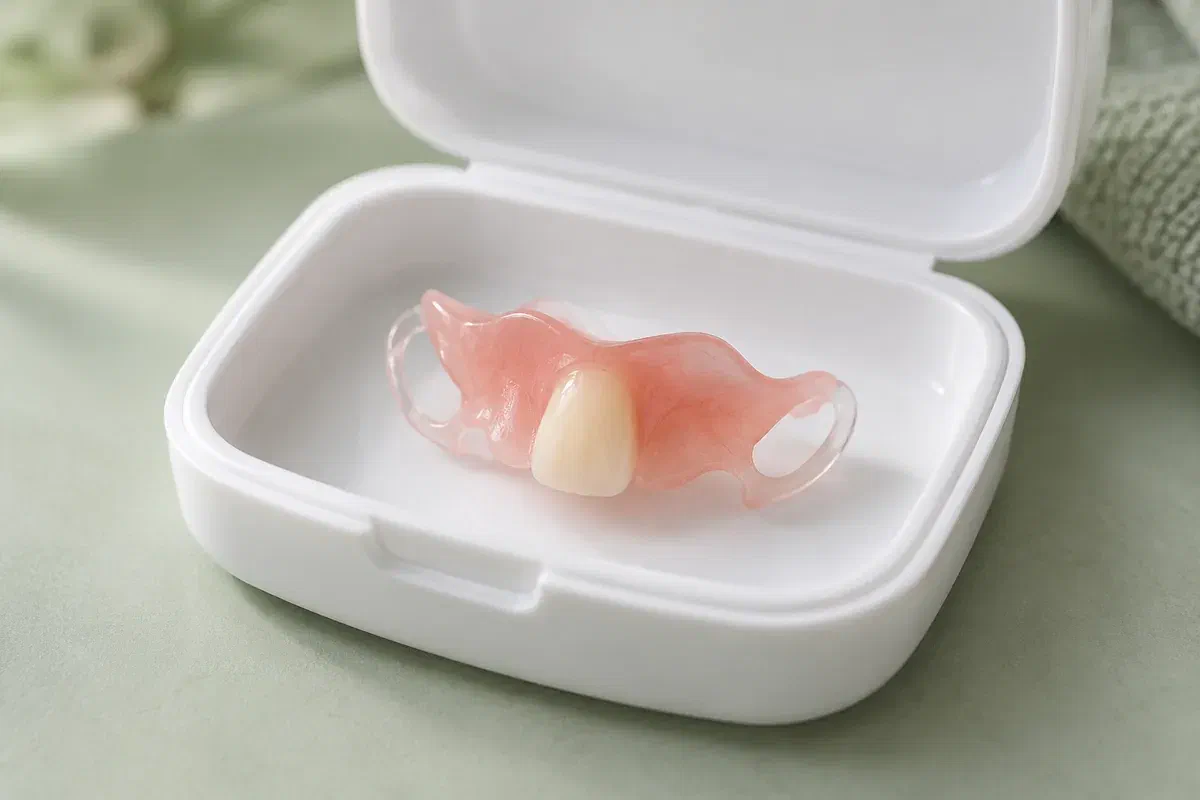
It is a fair worry. A removable appliance asks something of you every day: lining it up, seating it, lifting it out and cleaning it. The appliance people call a flipper is a small removable partial denture, with a replacement tooth or two mounted on a base that rests along the gums and sometimes across the palate.
Each one is shaped for a particular space and held by the surrounding teeth in a way that suits that mouth. Usually it is temporary, filling in while a socket heals or while a lasting option is prepared. It lacks the strength and longevity of a definitive denture, so its role is modest by design.
Households across Halton Hills, from Georgetown to Acton and the smaller hamlets, often plan around work, school and the drive. When you come in, we can look at the gap and explain exactly what handling a removable tooth involves. Mention arthritis, a sensitive gag reflex or anything else that could make daily use harder.
An interim appliance covers one phase of treatment. Whether it is sensible depends on your mouth today and on the care planned for later.
Point out the moments when it bothers you most. We can be specific about the look a removable tooth can give and whether there is room in the schedule to plan and fit it carefully.
Soft tissue reshapes for a while after a tooth comes out, and an appliance pressing there needs thought. Ask about the right moment to start wearing it and how its fit will be watched.
The flipper can bridge a staged plan, though it should not leave the next choice hanging. Settle how long it is meant to stay in use and what treatment comes after.
With an extraction on the horizon, ask about a temporary tooth before the appointment. Making the appliance may depend on records taken early.
Most people find the first few days are the clumsiest. With practice, inserting and removing the appliance usually becomes routine. If it stays difficult, or you notice gagging, sore spots or the appliance shifting, tell the team. The design or fit may need attention, and struggling quietly does not help the healing area.
A well-suited flipper keeps a tooth in view during a break between treatment stages, and you take it out for cleaning and appointments as advised. Eating guidance depends on its design and on how the mouth is healing. Ask what it is intended to do so you do not ask more of it than it can give.
Patient information: American Dental Association — removable partial dentures
An interim tooth is worth raising when your lasting restoration is not ready. Mention the features you care about, such as shade, tooth position and how much of the base may show.
Thinking of the temporary phase as a stage, with an end, keeps the later choices on track. Ask which healing signs or results will bring the next conversation.
Practising with the appliance at the clinic helps you judge whether it will work at home. Grip, eyesight and gagging are all worth raising before the design is locked in.
Your path changes with whether a tooth is gone or still to be taken out, and with the long-term choices being discussed. Ask how many visits to set aside and what each one covers.
We look at the gap, the teeth on either side, the gums and any plans already made. Mention what is driving the request, along with any upcoming dates that might affect timing.
We explain how the appliance will hold on and what that means for getting it in and out. Looks, eating limits, cleaning, fees and other short-term approaches are also covered.
Records are taken so the lab can build the appliance. If it will be worn straight after an extraction, we describe how fitting will go and what might be fine-tuned afterward.
We check how it sits, then you practise placing and removing it in front of a mirror until you feel steady. Bring up any lingering doubts and return for the follow-up while the gums settle.
Instructions are set for your appliance and stage of healing. Clean it daily, handle it over something soft and book a review if it loosens or rubs.
Ask whether it should come out for eating or sleeping, and follow any after-extraction directions. Earlier denture habits may not suit this appliance, so check before relying on them.
Dropping a removable appliance onto a hard sink can crack it. Ask which brush and cleaner suit the material, and keep cleaning your natural teeth thoroughly as well.
When the flipper is out, put it straight into its container and follow the storage advice. Tissues end up in the bin, pets find appliances interesting and heat can distort some materials.
Practical answers vary with each appliance. These questions focus on handling, comfort and a few situations that surprise first-time wearers.
At our Bronte Street clinic we can examine the gap, walk you through what daily handling involves and help you decide whether a removable interim tooth suits you. If it does, we will schedule the fitting and reviews to fit your next stage of care.
When booking, let us know about grip, dexterity or gagging concerns, and any extraction date, so the appointment can be planned around them.
