You are conscious of the missing tooth
Explain where the space bothers you most and whether a particular date matters. We can describe what a removable tooth may look like and whether there is time to fit it carefully.


After a tooth comes out, the gum underneath keeps changing for a while, and a temporary tooth has to keep up. A flipper tooth is a removable partial that may cover the gap during healing. For households in Puslinch, we can explain how the fit is checked, what it can handle and how to care for it.
Many people are surprised when a temporary tooth that felt snug at first starts to feel different a few weeks later. That is often linked to healing, as the tissue over an extraction site reshapes. A flipper, the casual name for a small removable partial denture, rests on that changing area, carrying one or more artificial teeth on a fitted base.
Its shape is set by the gap and the neighbouring teeth that help retain it. For most people it is a stopgap during recovery or while a lasting replacement is planned. It is not intended to take the full chewing force or the long service of a definitive partial denture, and it relies on reviews to stay comfortable.
From rural Puslinch, it makes sense to plan those reviews alongside your other visits rather than leave them to chance. When you come in, we can examine the space, explain how healing may affect the appliance and talk through comfort and handling. Then we can agree on a temporary tooth, its limits and a schedule of checks.
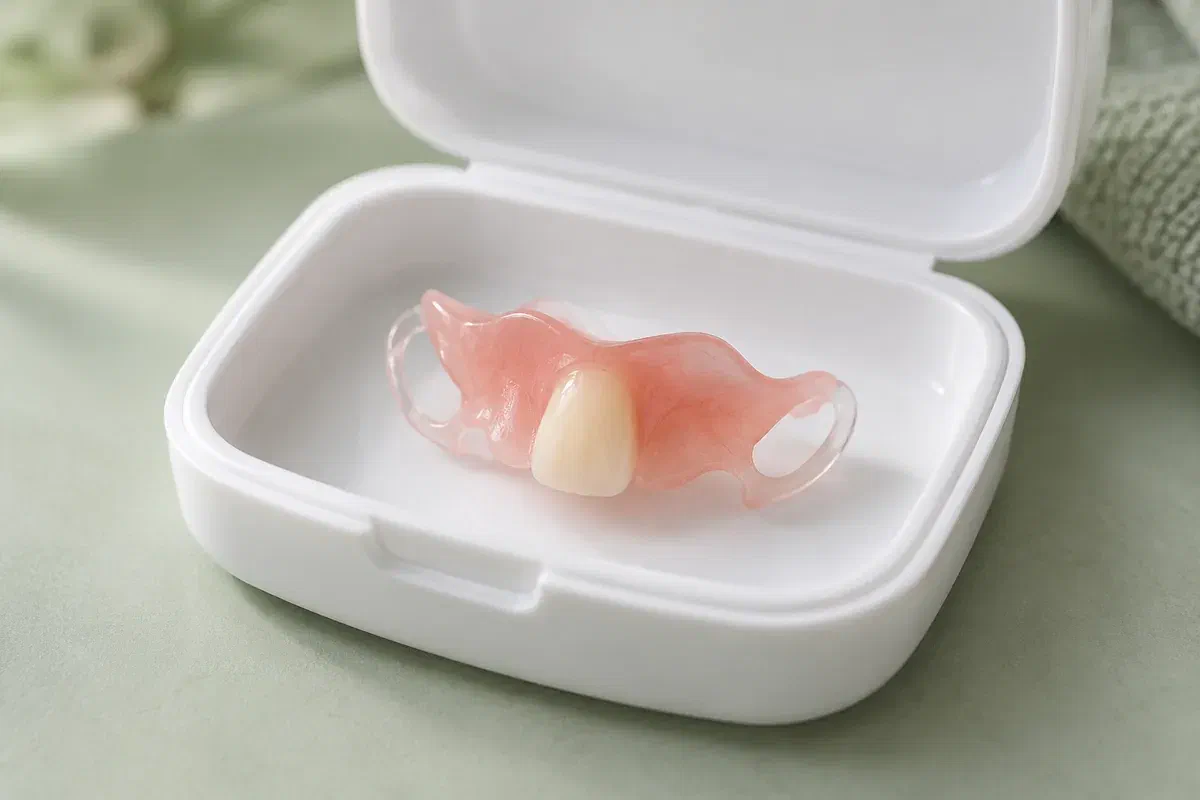
A flipper fills one defined part of treatment. Its suitability depends on your mouth now and on what is expected to come afterward.
Explain where the space bothers you most and whether a particular date matters. We can describe what a removable tooth may look like and whether there is time to fit it carefully.
This is where planning counts most. Ask when the appliance can first be worn, what changes to expect in the gum and when the fit will be reassessed.
An interim appliance can support a staged approach without making the decision for you. Clarify how long it is meant to last and which visits come next.
If an extraction is booked, raise a temporary tooth beforehand. Records may need to be taken in advance so the appliance can be prepared.
Healing gums and bone shift as they recover, and an appliance resting on them may need to be reviewed or adjusted. Sore spots, rocking or a gap under the base can all be signs of change. Reporting them early gives the team a chance to assess things before discomfort builds or the healing area is irritated.
When it suits the situation, a flipper keeps a tooth in view during the pause between treatments, and it comes out for cleaning and appointments as instructed. Speech, comfort and handling take some getting used to. Meal guidance depends on the design and the healing site, so ask what it can handle.
Patient information: American Dental Association — removable partial dentures
An interim replacement can be discussed when the permanent restoration has to wait for healing. Share what matters to you, such as shade, position and how much of the base shows.
Building review dates into the plan shows how the interim stage connects to a long-term option. Ask which healing milestones will signal the next decision.
A little hands-on practice with insertion, removal, cleaning and storage tells you a lot about whether the appliance is workable for you. Bring up grip or gagging concerns before the design is finalised.
Your path depends on whether the tooth has already been removed, whether an extraction is ahead and which lasting options are being considered. Ask how reviews will be timed to the healing process.
We assess the gap, nearby teeth, gums and any treatment already discussed. Tell us why you would like a temporary tooth and when the extraction, if any, is scheduled.
You will hear how the appliance is held, how it may feel and how healing may affect it. We also cover appearance, food limits, cleaning, fees and other interim choices.
Impressions or other records guide fabrication. If the flipper is for use straight after an extraction, we explain the fitting arrangement and what may need adjusting as the gum recovers.
We check the fit and coach you on handling the appliance. Keep the follow-up visits, since that is when changes from healing are most likely to show.
Follow the instructions given for your appliance and the stage of healing. A flipper needs daily cleaning, careful handling and a review whenever the fit or comfort changes.
Ask whether the appliance should be worn or removed at meals and overnight during healing. Instructions may change as you recover, so check at each review.
Find out which cleaning products suit the appliance, and clean around the healing site exactly as shown. Tell us if the base makes certain areas difficult to reach.
Store it in its case and follow the storage advice. Tissues can be mistaken for rubbish, and heat, pets and hard floors may damage it.
Your instructions depend on your appliance and how healing is progressing. These answers focus on the changes people notice in the weeks after fitting.
Bring your extraction date, or your questions about one, to our Bronte Street clinic. After an examination we can explain the interim choices and arrange fitting and check-ups that keep pace with your healing on the way to lasting treatment.
When booking, share your extraction date if you have one, so we can plan the timing of fitting and reviews.
