You want the gap filled for appearance
Tell us how the space affects you socially or at work, and whether a date is approaching. We can be candid about the look a removable tooth gives and whether time allows a proper fitting.


A flipper is often the first temporary tooth people hear about, but it is not the only path. This removable partial may suit some gaps and not others. Coming from Rockwood, you can compare it with other interim approaches and with lasting replacements before anything is made.
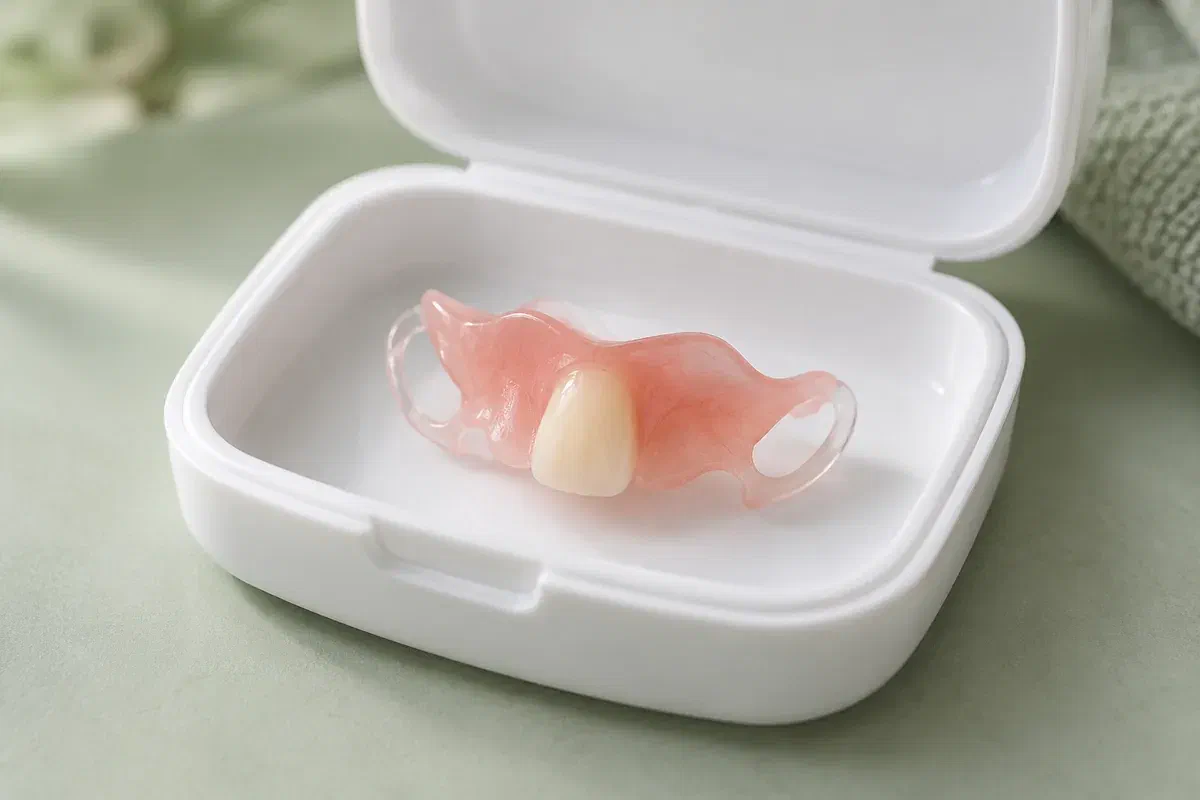
When a front tooth is lost, the word “flipper” tends to come up quickly. It describes a compact removable partial denture that sets a replacement tooth, or a few, into a base resting on the gums. It can be a sensible interim choice, yet it helps to understand what it is good at, and where it falls short, before you settle on one.
Every flipper is built around its own gap and gains its hold from the teeth nearby. It is usually a short-term measure while healing takes place or a lasting tooth is arranged. Since it is lighter in purpose than a definitive denture, it should not be expected to manage the same biting forces or last as long.
For households in Rockwood, an appointment can cover the whole picture in one conversation. We will examine the space, explain which temporary and permanent options apply and listen to your concerns about comfort, appearance or handling. If a flipper is the right fit, we will agree on its limits and when to review it.
A temporary appliance is tied to one section of your treatment. Whether it makes sense hinges on what your mouth needs today and what is planned for later.
Tell us how the space affects you socially or at work, and whether a date is approaching. We can be candid about the look a removable tooth gives and whether time allows a proper fitting.
The area changes as it heals, so anything resting there must be planned with care. Ask whether a flipper or another interim approach is kinder to the site, and how fit will be monitored.
An interim tooth can give you time to compare, but the comparison still needs finishing. Agree on how long the temporary stage should last and what information is outstanding.
If an extraction is coming, ask about temporary options beforehand. Some appliances need records and preparation before the tooth is removed.
The appeal of a flipper is that it can restore a visible tooth with a relatively simple removable appliance during a transition. It comes out for cleaning and checks. Its weaknesses are just as real: it may move, it can affect speech for a while, and it often comes with eating limits.
How much those limits matter depends on your gap, the healing site and how long you will need it. Some people find it a practical stopgap, while others are better suited to another interim approach. Asking the dentist to explain the reasoning behind a recommendation is the best way to judge it, and there is no harm in taking a little time to think it over.
Patient information: American Dental Association — removable partial dentures
A flipper can be considered when a definitive restoration is not yet ready. Discuss which details matter to you, such as the tooth’s shade, angle and how much of the base may be seen.
Laying out the interim stage alongside the permanent choices helps you see the trade-offs. Ask what findings or healing milestones will tell us when to decide.
Seeing how a flipper is placed, removed, cleaned and stored helps you weigh it against other options. Raise any grip, eyesight or gagging concerns before choosing.
How many steps there are hinges on the state of the tooth, the timing of any removal and the lasting choices you are weighing. Ask what each visit is for before you begin.
We examine the gap, nearby teeth and gums, then explain which temporary and permanent approaches are realistic. Share your priorities, whether looks, comfort, cost or timing.
If a flipper is chosen, you will hear how it is retained, how it may feel and what it cannot do. Appearance, food limits, cleaning and fees are explained before anything is ordered.
Records are made so the lab can build the appliance. For use after an extraction, we describe how fitting is arranged and what may be reassessed when the tooth is out.
We check how it sits and teach you to handle it. Bring your questions to the chair, and attend the review appointment while the gum continues to settle.
Instructions are specific to your flipper and to how healing is going. Keep it clean, handle it gently and get it checked if it loosens or rubs.
Ask whether it should come out at meals and at night, and follow any after-extraction directions. Earlier denture habits may not apply.
Confirm which products are compatible with the material. Keep brushing your own teeth and gums well, and let us know if the clasps or base get in the way.
Use the case every time and follow the storage tips. A tissue is easily thrown away, while heat, pets and hard surfaces may damage the appliance.
Your answers depend on the appliance and your stage of care. These questions help you compare options and understand daily use.
At our Bronte Street practice we can put the options side by side after examining the gap. You leave knowing why one approach is recommended, and if that turns out to be a flipper, the fitting and reviews are planned to lead into your lasting treatment.
Let us know if you have already been given treatment options elsewhere, or if an extraction is planned, so we can discuss them together.
