

Illustrative patient and dentist discussing a coordinated restorative care plan
Restorative Dentistry

Full-Mouth Rehabilitation in Milton

Another crown, another chipped filling, another emergency visit. When repairs keep stacking up, a single coordinated look at your whole mouth can show how the pieces connect and what deserves attention first.

Breaking the repair cycle in Milton

When one fix keeps leading to the next

Many people arrive at this conversation after years of separate appointments: a cracked molar one winter, a lost filling the next spring, a gap that was never replaced. Each visit made sense on its own. Together, they can hide a pattern that is easier to see when the whole mouth is reviewed at once.

Full-mouth rehabilitation describes that broader approach. It can include repairing damaged teeth, replacing missing ones and looking at the bite and other conditions that affect how everything works. There is no fixed package of procedures; the combination depends on what an examination actually finds, tooth by tooth.

Our role is to help you gather the history, explain the findings and talk through what a coordinated plan could look like. Some situations call for a prosthodontist or another specialist. Before anything begins, you should know who would carry out each stage, why it is recommended and how the plan will be revisited along the way.

Start with a full assessment
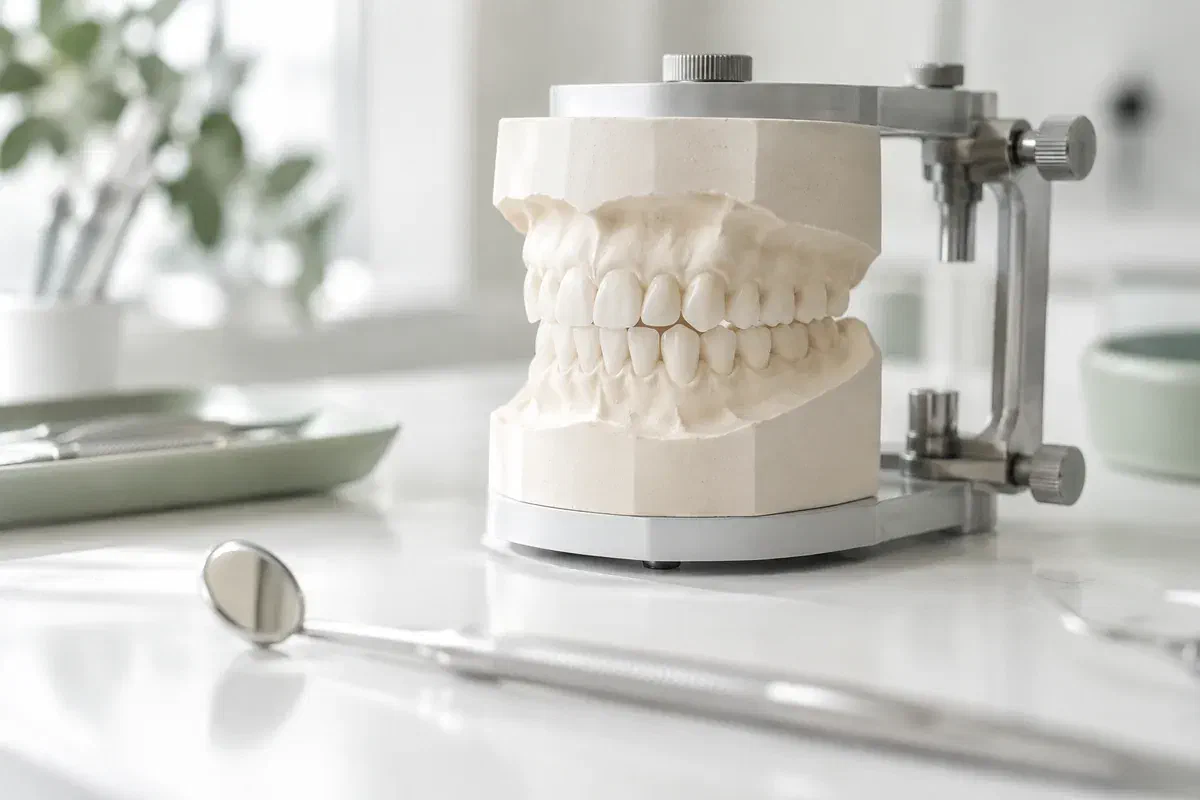
Upper and lower dental study models mounted in an articulator
Signs the bigger picture matters

Several problems, one mouth

A wider review earns its place when a choice about one tooth could change the options for another. Bring notes on earlier treatment and say which problems disrupt daily life most.

Teeth that keep breaking or wearing down

Fractures that return, edges that look shorter each year and restorations covering most of a tooth are worth reviewing as a group. The examination should look at likely causes before anyone decides how much rebuilding makes sense.

Gaps that put pressure on neighbouring teeth

Filling a space involves the teeth beside it, the support available and the teeth it meets when you bite. A good question to ask is how a replacement would suit the long-term outlook for everything around it.

A history of urgent fixes with no overall plan

Tell us if most of your recent dental care has been reactive. The full record can separate what needs attention now from decisions that call for more information, a specialist opinion or a gradual sequence.

If something hurts now, or a tooth has just broken, that may need care before the larger plan is ready. Mention any current symptoms when you book so the visit can be arranged appropriately.

What a coordinated plan offers

Each step explained in relation to the rest.

The real strength of rehabilitation planning lies in the connections. A crown or bridge should suit its own tooth and also the teeth around and opposite it. Seeing everything together shows which decisions depend on one another and which can be made separately.

Honest planning also names its limits. Expect a discussion of uncertainty, alternatives, upkeep and what could happen if a stage is postponed. Extensive work is not a guaranteed lifetime fix, and it should not be offered as the only route before simpler options are weighed.

Patient information: American College of Prosthodontists — full-mouth reconstruction

Know what is urgent and what is optional

Treating disease or restoring function can carry a different timeline from changing how teeth look. Ask the dentist to label the purpose of each item so you can see where a decision is pressing and where you have room to think.

Think carefully before permanent changes

Taking out a tooth or reshaping enamel can narrow what is possible later. A comprehensive plan creates space to talk through those knock-on effects first and to ask for another opinion if that would help.

Fit care around family and work

Busy Milton households juggle school runs, shifts and other commitments. Raise appointment limits, healing time, budget and home-care demands early so the sequence is realistic.

How planning unfolds

Understanding comes before the final work

Rehabilitation moves through assessment, planning, treatment and review. How many visits and how many clinicians are involved depends on what is found and which options you choose.

  1. Listen, record and examine

    We talk about symptoms, past dental work, general health and what matters most to you. X-rays, photographs and models of the teeth may be used to study the tissues and the way your upper and lower teeth come together.

  2. Name the problems and weigh the options

    Together we look at which teeth can reasonably be kept and what each concern requires. A specialist referral may be suggested. You should receive the proposed order, alternatives, risks, fees and upkeep in a clear, readable form.

  3. Settle active problems and watch the response

    Early stages often focus on controlling decay, infection or breakage, sometimes with interim restorations before anything permanent. These steps give a chance to reassess and to see how proposed changes feel and function.

  4. Finish the agreed work and plan the upkeep

    Permanent treatment follows the plan you agreed to, with checks suited to each procedure. Afterwards, the team should summarize what is complete, what is still being watched and how future exams and repairs will be handled.

Looking after the result

Maintenance is part of the plan, not an afterthought

After rehabilitation, your mouth may hold natural teeth alongside several materials and replacement parts. Cleaning and check-ups should suit that mix, not one generic routine.

A cleaning method for every type of restoration

Natural teeth, bridges, implants and removable appliances each have their own needs. Ask to be shown the tricky spots in person and to be told which brushes, threaders or other aids will make daily care manageable.

Keep working on the original causes

If grinding, a high cavity risk or another recurring factor contributed to the damage, make sure you understand the prevention side. New restorations cannot on their own remove every reason the problems started.

Report changes rather than waiting

Let the team know about fresh sensitivity, a bite that feels different, chipped material or a spot that is hard to clean. Ask who should look at each concern and how records move between offices.

Deciding how far to go

A full review can still lead to a modest plan

Different parts of the mouth may need different answers. Any recommended combination should come with a reason, and each stage should have a clear role in the overall goal.

When targeted care meets today’s needs

Stabilize first, then reassess

Prevention, repairs or limited treatment can sometimes manage the current concerns while other areas are monitored. Ask what this route can realistically accomplish and which questions it leaves open for later.

When damage across many teeth is related

Rebuild several teeth as one project

Fillings, onlays, crowns or other procedures may be combined when they suit the situation. Each choice should match the condition of that tooth and the job it does within the bite.

When missing teeth widen the scope

Replace teeth with specialist involvement

Bridges, dentures or implant-supported restorations may sit alongside other treatment. More complex needs can involve several disciplines, and the alternatives should be discussed openly before work begins.

Milton questions, answered plainly

Before you agree to a big plan

These answers cover common worries about scope, timing and choices. Your own examination will shape the details, and the reasons behind each suggestion should always be explained.

(905) 876-4488
I’ve had a lot of dental work over the years. Can any of it stay?
Often, yes. Older fillings, crowns or bridges that are sound and well sealed may continue to serve you. The assessment looks at each one individually. Ask which existing restorations are being kept, which are being watched and why any are proposed for replacement.
How do I know which problem to deal with first?
Pain, infection, active decay and teeth at risk of breaking usually come before cosmetic or elective changes. The dentist should explain how each priority was set. If two issues seem equally pressing, ask how treating one affects the timing of the other.
Does a comprehensive plan always involve every tooth?
No. Some areas may need repair or replacement while others only need cleaning, prevention and regular monitoring. The word comprehensive refers to how the mouth is assessed, not to treating every tooth. Ask what simpler options were considered for each area.
Can grinding or clenching undo restorative work?
Heavy forces can damage teeth and restorations, so habits like grinding are worth identifying early. The plan may include ways to reduce that strain, such as a night guard where appropriate. Ask how your bite and habits were considered in the choice of materials.
Who coordinates things if a specialist joins my care?
That should be agreed at the start. One clinician often oversees the overall sequence while others carry out particular stages. Ask who your main contact is, how findings will be shared and who handles follow-up for each part of the work.
We have young kids and limited free time. Can treatment work around that?
Scheduling is a fair thing to raise. Some stages can be grouped, while others depend on healing time and cannot be rushed. Tell us which days and times suit your household, and ask which appointments are essential and which have flexibility.
Rehabilitation planning here in Milton

One assessment, a clearer path forward

Book a comprehensive assessment at our Bronte Street clinic and bring the concerns that have been building up. We will look at where things stand, help sort out priorities and explain whether further planning or a specialist opinion makes sense.

If you have records or notes from earlier treatment, bring them, along with a short list of the problems you most want solved.

Visit Milton Dental Clinic
Unit 1, 342 Bronte St. S, Milton, ON L9T 5B7
Get directions Clinic hours
Monday–Thursday
11am–7pm
Friday–Sunday
By appointment only

Areas we serve

  • Milton
  • Oakville
  • Mississauga
  • Georgetown
  • Halton Hills
  • Acton
  • Campbellville
  • Brampton
  • Burlington
  • Puslinch
  • Rockwood
  • Erin
  • Caledon
  • Etobicoke
  • Old Milton
  • Bronte Meadows
  • Timberlea
  • Dorset Park
  • Dempsey
  • Clarke
  • Beaty
  • Coates
  • Harrison
  • Scott
  • Willmott
  • Ford
  • Bowes
  • Cobden
  • Walker
  • Mountain View
  • Milton Heights
  • Hawthorne Village
  • Valley View
  • Fallingbrook
  • Nassagaweya
  • Trafalgar
  • Esquesing
  • Nelson
  • Brookville
  • Moffat
  • Glen Williams
  • Norval
  • Limehouse
  • Stewarttown
  • Ashgrove
  • Hornby
  • Silver Creek
  • Speyside
  • Scotch Block
  • North Oakville
  • River Oaks
  • Glen Abbey
  • West Oak Trails
  • Palermo
  • Bronte Creek
  • College Park
  • Joshua Creek
  • Uptown Core
  • Preserve
  • Iroquois Ridge
  • Lisgar
  • Meadowvale
  • Meadowvale Village
  • Churchill Meadows
  • Erin Mills
  • Central Erin Mills
  • Streetsville
  • East Credit
  • Creditview
  • Heartland
  • Sheridan
  • Mount Pleasant
  • Credit Valley
  • Huttonville
  • Churchville
  • Springbrook
  • Northwest Brampton
  • Bram West
  • Fletcher's Meadow
  • Fletcher's Creek South
  • Alton Village
  • Orchard
  • Millcroft
  • Headon Forest
  • Tansley
  • Brant Hills
  • Tyandaga
  • Kilbride
  • Lowville
  • Aberfoyle
  • Morriston
  • Arkell
  • Hillsburgh
  • Freelton
  • Carlisle
  • Waterdown
  • Flamborough
  • Mountsberg

How can we help?

Milton Dental Clinic

Have a question about your smile? Choose the option that works best for you.

For urgent dental concerns, please call.
Messages are reviewed during clinic hours.