Will the planned position support a lasting tooth?
Implant position affects how the crown looks, meets the opposing tooth and can be cleaned. Ask how the plan connects the implant to that final tooth and its long-term upkeep.


Diabetes, blood thinners, smoking or a past bone condition can all shape an implant plan, and a guide changes none of them. From Acton, learn how guided implant surgery is planned around your health history, how the template is checked, and what still depends on healing.
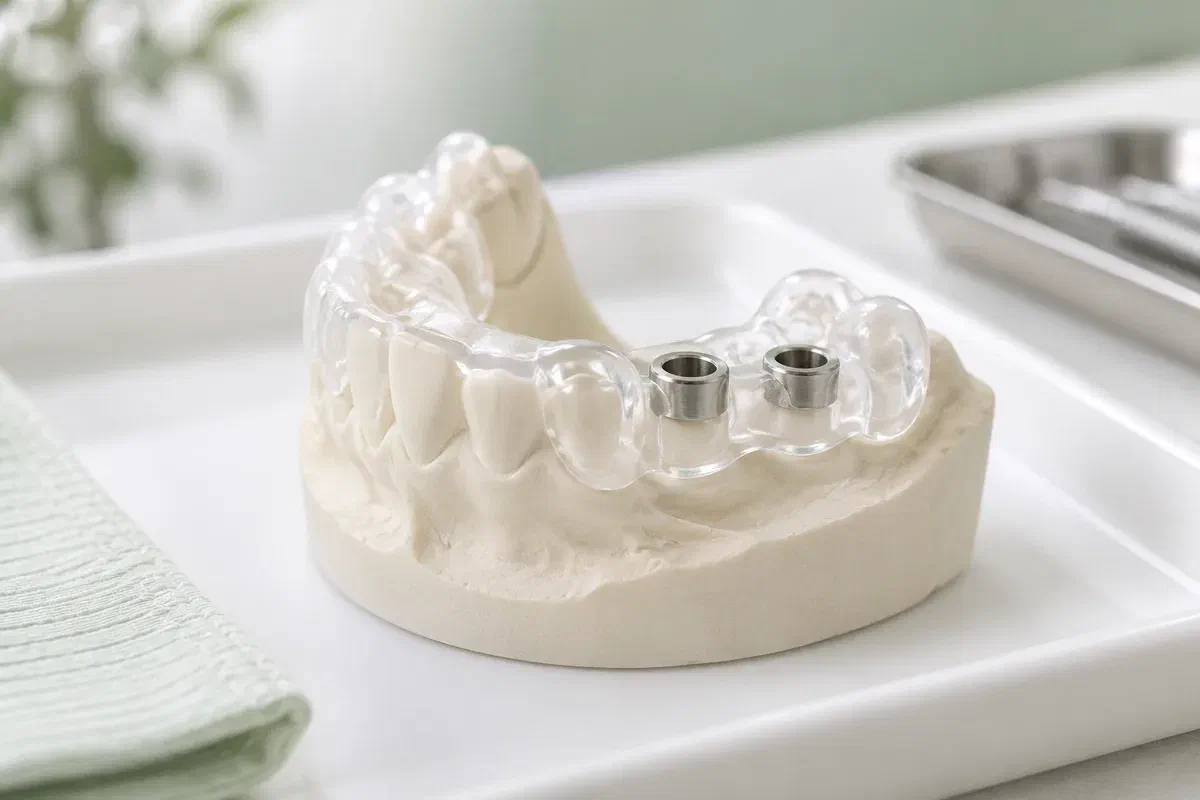
People often ask about the technology first and their medical history second. It usually works better the other way around. Conditions such as diabetes, medications that affect bleeding or bone, smoking and past radiation treatment can all influence whether implants suit you and how healing goes. Once those are understood, a surgical guide may be considered: a custom template built from your scans that seats on teeth or tissue and helps direct certain surgical steps.
A guide transfers a position. It has no effect on how bone heals, how gum tissue responds, or how your health affects recovery. The replacement tooth, the bone, nearby structures, the gum and access for instruments still have to be assessed, and the surgeon’s judgement still governs what is appropriate.
If you are coming from Acton for an implant assessment, bring an up-to-date list of medications and any recent medical information. Then ask which steps a guide would cover, how its fit will be confirmed, and what the plan is if it cannot be used. Those answers, alongside a frank look at your health, are a sounder basis than the idea that digital surgery removes risk.
Guidance is weighed against one plan for one person. Your dentist should explain what it is meant to help with, what it depends on, and how your health affects the overall approach.
Implant position affects how the crown looks, meets the opposing tooth and can be cleaned. Ask how the plan connects the implant to that final tooth and its long-term upkeep.
Imaging shows bone and nearby structures; your history shows how you are likely to heal. A guide does not remove the need for safety margins or for coordination with your physician where relevant.
Ask which steps would be guided and which would rely on other methods. You should also hear about the guide’s limitations, cost and any extra visits.
Guided refers to positioning. It does not mean the procedure is lower risk for every health condition, nor does it promise no incision, a same-day tooth or quicker healing.
In a suitable case, a guide gives a physical reference linking the planned implant position to the site. It works only as well as the records it came from, the care in its design and manufacture, the stability of its fit, and how it is used.
Healing is a separate matter. Even with an accurate placement, outcomes depend on your health, your habits and aftercare. The achieved position can also vary from the plan, and the surgeon must respond to findings. Ask why guidance is proposed and how its limits are handled.
Patient information: International Team for Implantology — computer-guided implant surgery
Planning the crown and implant together helps explain how placement affects appearance, chewing and cleaning, which matters more for someone at higher risk of gum problems.
Scans of bone and teeth have to line up for the guide to seat. Ask how this is verified and whether changes in your mouth before surgery could affect it.
If the guide does not fit, or your health shifts before the appointment, the procedure may need to change or be postponed. Ask how such decisions are made.
The workflow depends on your plan and the guide system. Ask who coordinates with your doctor if needed, and who is responsible for planning, the guide, the surgery and the final tooth.
Your health history, medications, mouth and replacement options are reviewed together. The dentist explains the risks that apply to you and whether an implant is a reasonable choice.
Imaging sets the planned position and the guide’s shape. The team considers its support, access, nearby structures, any grafting and whether medical input or a specialist is needed.
The guide’s seating is checked, and so is anything in your health that has changed. If either rules out proceeding as planned, the surgeon follows an agreed alternative.
Follow-up frequency and the timing of the crown depend on how you heal. Some health conditions mean the team watches the site more closely before moving on.
Aftercare depends on what was done, including any extraction, graft or temporary tooth, and on your medical situation. Follow the written guidance you are given.
Ask how to clean the site, what to eat and how to manage any temporary appliance. If you smoke, ask about stopping or cutting down during healing.
Keep the instructions and phone numbers handy. Call about listed symptoms, any movement, or a change in your health or medication during the healing period.
Daily cleaning and regular professional reviews help protect the gum and bone around an implant. Ask how often you should be seen, given your health history.
These answers are general. Your own plan depends on a full assessment, so ask how each point applies to your health and the guide proposed.
Arrange an implant consultation at our Bronte Street practice. We will review your medical and dental history, look at the site and explain whether more records or a specialist opinion would be useful.
Bring your medication list and any recent X-rays, and tell us about any health concerns you would like to discuss.
