Placement that serves the tooth
The tooth you will eventually see and clean is the real goal. Ask how the planned implant angle and depth were chosen so that crown can look, bite and be cleaned as it should.


Nervous about implant day and wondering what the guide actually does in the chair? Coming from Brampton, you can learn how a surgical guide is made from your records, why its fit is tested first, and which decisions remain with the clinician throughout.
Knowing what will happen tends to make a procedure feel more manageable. On the day of a guided implant, the surgeon places a custom-made template over your teeth or gum. It was designed from your scans, and its small sleeves help direct particular steps of the drilling and placement toward a position worked out in advance. When those steps are done, it comes out.
Everything important was decided before that template existed. The look and bite of the new tooth, the bone available, where nerves or the sinus lie, how healthy the gum is, and whether there is room for the instruments were all assessed first. A guide cannot rescue a site that was not suitable, and the surgeon’s own assessment still governs every choice.
Many people travelling from Brampton like to ask their questions well before surgery. Which steps will the guide direct? How will the team know it fits? What happens if it does not? Getting clear answers in advance is more useful than relying on the idea that a digital plan takes away all doubt.
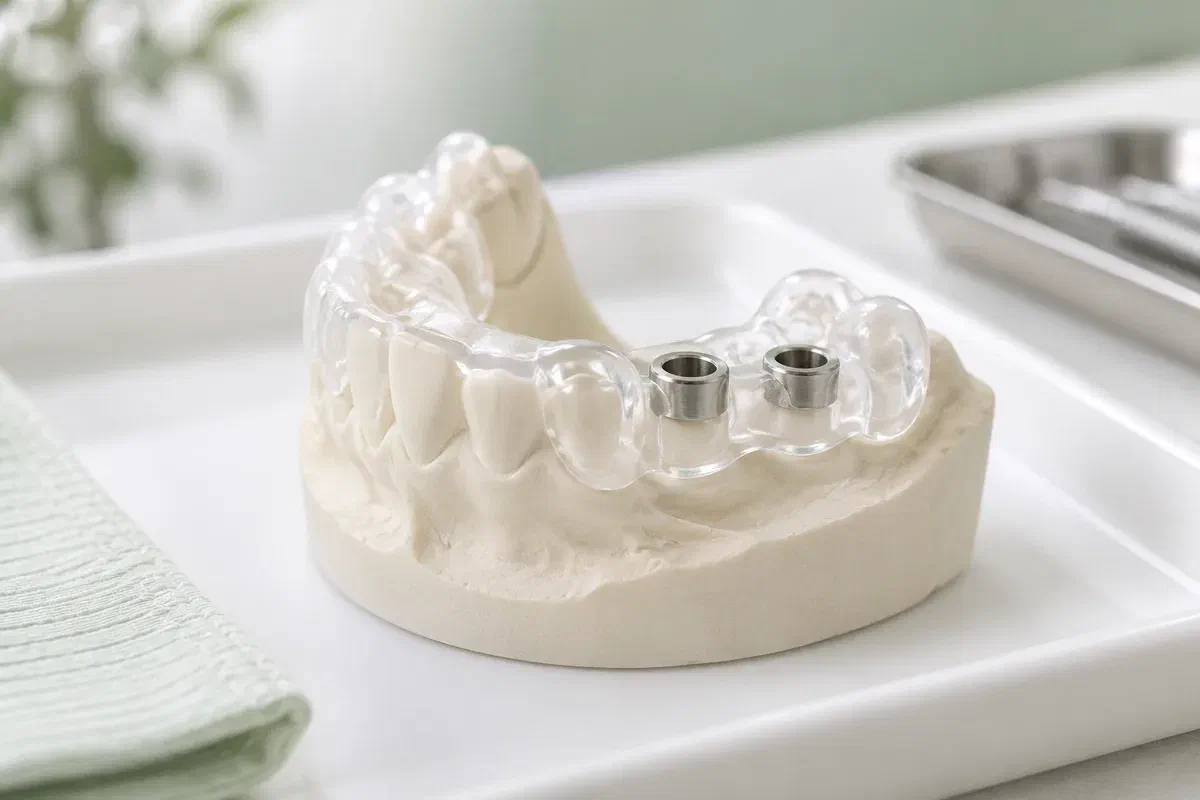
Guidance is considered within one clinical plan. Your dentist should be able to say what the guide is meant to help with and what conditions it depends on.
The tooth you will eventually see and clean is the real goal. Ask how the planned implant angle and depth were chosen so that crown can look, bite and be cleaned as it should.
Imaging and an exam reveal what lies nearby and how much access there is. The plan should still leave a margin for error, and instrument reach has to be checked in your mouth.
Ask which parts of the procedure follow the template and which use other techniques. You should also hear about the guide’s limits, its cost and any extra appointments.
The word guided refers to how the implant is positioned. It is not shorthand for no stitches, a same-day tooth, no discomfort or quicker healing.
Used in the right case, a guide gives the surgeon a physical reference that relates the planned position to your jaw. That only works when the records are accurate, the guide is well designed and made, it seats firmly, and it is used with care.
Experience and judgement are still at the centre. The final position can differ a little from the plan, and the surgeon must be free to respond to what appears once treatment starts. You are entitled to ask why guidance is being proposed and how its limits are handled.
Patient information: International Team for Implantology — computer-guided implant surgery
Planning the crown and the implant together helps everyone see how placement affects appearance, chewing and later cleaning, before a single step is taken.
Scans of bone and teeth must line up for the guide to fit. Ask how they are compared and whether a change in your mouth before the appointment could matter.
A guide that does not sit firmly should not be used anyway. Ask how that would be judged on the day and whether the procedure or schedule could change.
Steps vary with your plan and the guide system chosen. Find out who plans, who makes the guide, who operates and who makes the final tooth, particularly where several clinicians share the work.
Your mouth and medical history are reviewed along with replacement choices and risks. The right records show whether an implant is a good option and what the future tooth will need.
Scans set the intended position and the guide’s shape. The team thinks about what the guide sits on, access, nearby anatomy, and whether grafting or a specialist should be involved.
The guide is seated and checked before treatment begins. If it cannot be used safely, the surgeon moves to an alternative that was already considered rather than forcing it.
Follow-ups and the timing of the final tooth depend on how you heal. A guided procedure still involves examining the site and the implant before the restoration is started.
Aftercare reflects what was done, including any extraction, graft or temporary tooth. Rely on the written instructions you receive rather than assuming guided surgery has its own rules.
Find out how to keep the area clean, what to eat for now, and how to handle a temporary appliance. Feeling well that evening does not mean you are healed.
Put your aftercare sheet and the clinic’s contact details somewhere easy to find. Call about the symptoms it lists, anything that shifts, or trouble with a temporary tooth.
When the final tooth is in place, daily cleaning and regular professional care carry on. Ask about the best cleaning aids for your implant and how it will be checked over time.
These answers separate the planning tool from the treatment result. For your own plan, ask about the specific guide and approach proposed.
A consultation at our Bronte Street practice is where this starts. We will look at your starting point, discuss the placement approaches that could work, and explain whether more records or a specialist opinion are needed before anything is booked.
Bring any scans, X-rays or written plans you have, and let us know what worries you most about the procedure.
