Is the position right for the finished tooth?
Appearance, bite and cleaning all depend on where the implant ends up. Ask how the plan relates the implant to the crown you will actually see and look after.


Keyhole, flapless, teeth in a day: online descriptions of guided implants can promise a lot. From Caledon, get a grounded account of what a surgical guide actually is, how it is made and checked, and which claims depend on your own case rather than on the guide.
Search for guided implants and you will find words like keyhole, flapless and same-day. Some of those can apply in particular cases, but none is built into the idea of a guide. At its simplest, a surgical guide is a made-to-measure template, created from 3D imaging and a scan of your teeth and gum, that seats in the mouth and helps steer chosen steps of implant placement toward a planned position.
What makes a plan sound has little to do with the template. It is the assessment underneath: the tooth to be replaced, how much bone there is, where the nerve or sinus runs, the health of the gum and whether instruments fit. A guide cannot make an unsuitable site suitable, and the person operating keeps full responsibility for decisions made on the day.
For a household in Caledon weighing up treatment, a calm consultation helps cut through the noise. Ask which steps would actually be guided, how fit is confirmed before use, and what the fallback is if the guide cannot be relied on. Specific answers about your mouth matter far more than general promises about digital dentistry.
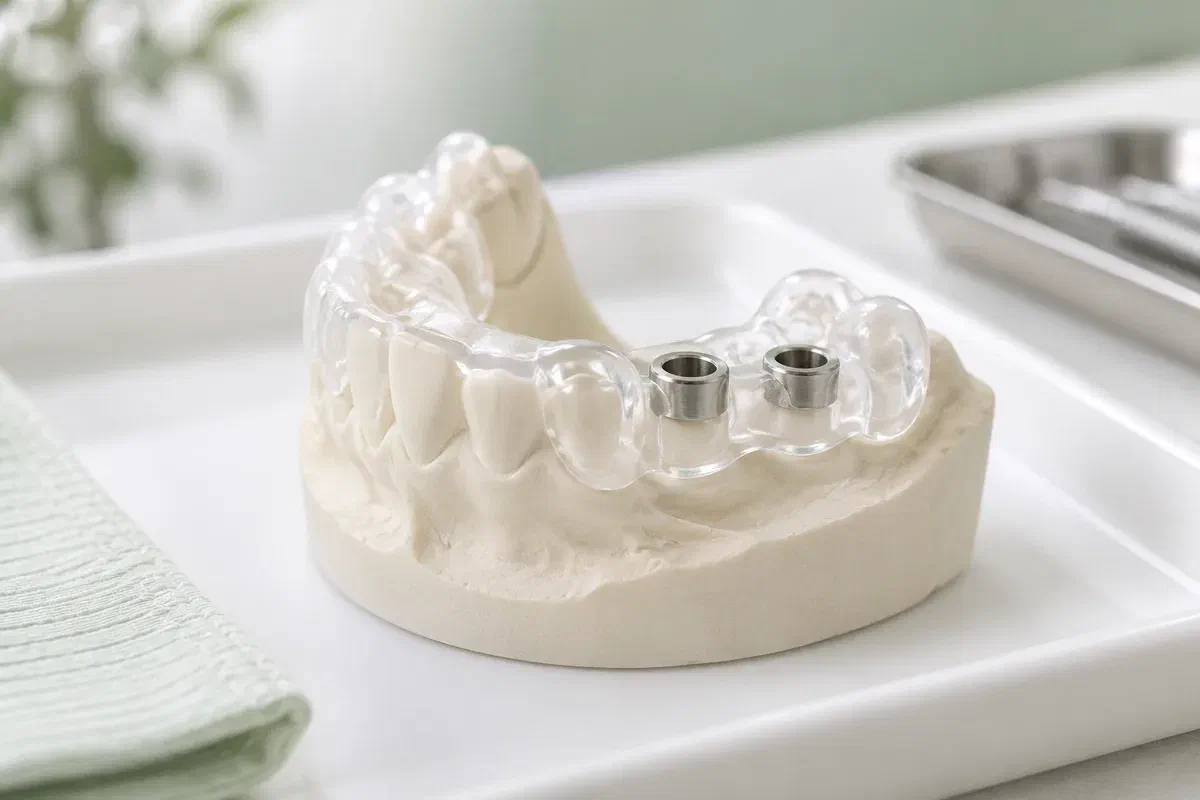
A guide is chosen for a specific purpose within one plan. The conversation should name that purpose and explain what has to be true for the guide to achieve it.
Appearance, bite and cleaning all depend on where the implant ends up. Ask how the plan relates the implant to the crown you will actually see and look after.
Imaging and an exam reveal nearby structures and working room. Whatever the marketing says, the plan still needs a safety margin and a real check of instrument access.
Ask which steps are guided and which use other techniques, and whether claims such as flapless or same-day apply to your case. Limits and cost belong in the answer.
A guide affects how the implant is positioned. Whether surgery is flapless, a tooth is fitted the same day, or healing is quick depends on your case, not on the word guided.
In a suitable case, a guide offers a physical way to relate the planned implant position to the site. Its benefit rests on reliable records, careful design and manufacture, a stable seat and skilled use, not on the technology alone.
Clinical judgement is never switched off. Small differences between planned and final positions can occur, and the operator must react to what is found. Ask why guidance is suggested for you and how its limitations have been factored in.
Patient information: International Team for Implantology — computer-guided implant surgery
Planning software lets the team design the visible tooth and the implant together, making it easier to explain how placement affects appearance, function and cleaning access.
Imaging and surface scans have to be aligned for the guide to sit correctly. Ask how alignment is checked and whether dental changes before surgery could affect it.
A guide that does not seat properly should be set aside, not forced. Ask how that decision is made and how it could change the procedure or its date.
Sequences vary with the plan and guide system. Ask who plans, who makes the guide, who operates and who completes the crown, especially if more than one clinician shares the work.
Your mouth, health history and replacement choices are reviewed, with the risks explained plainly. Only if an implant is a sensible option are detailed planning records taken.
Imaging and scans determine the position and the guide design. The team considers what the guide will sit on, access, anatomy, and whether grafting or specialist care is needed.
On the day, the template is seated and examined. If it is unstable or incorrect, the surgeon switches to a method agreed beforehand rather than trusting it.
How soon the final tooth is made depends on healing and the plan, not on the guide. The implant and gum are assessed before the restorative stage begins.
Aftercare reflects what was done: an extraction, a graft or a temporary tooth all add their own instructions. Rely on the sheet you take home rather than claims of a guided recovery.
Ask how to clean near the implant, what to eat and how to care for any temporary. Even if you feel well quickly, bone and gum need longer to settle.
Keep the clinic’s number and your instructions within easy reach. Call about any symptom they list, unexpected movement, or a concern with a temporary tooth.
After the crown is fitted, cleaning around it and regular professional checks remain necessary. Ask which aids suit your crown and how the implant will be monitored.
These answers address common claims about guided implants. Ask how each one applies to the guide and approach proposed for you.
Come to our Bronte Street practice for an implant consultation. We will look at your starting point, explain which placement approaches may suit you and what further records or specialist input could help.
Bring any ads, articles or plans that raised questions, along with recent X-rays, and we will go through them with you.
