The future crown still sets the goal
Even when a tooth is being removed, the replacement tooth should guide the plan. Ask how the implant position relates to the crown’s appearance, bite and cleaning access.


A cracked or failing tooth has to come out, and the next question is what replaces it. From Georgetown, find out how a surgical guide can fit into an implant plan around an extraction, how its fit is confirmed, and why guided never automatically means same-day.
Sometimes the conversation about an implant begins with bad news: a split root, a crack below the gum, a tooth that cannot be saved. Planning ahead lets you understand your options before the tooth is removed. In some plans a surgical guide is part of that picture. It is a template made from imaging and scans that sits on neighbouring teeth or tissue and helps direct particular steps toward the intended implant position.
A guide is a carrier, not a decision-maker. The planned replacement tooth, the bone around and below the root, nearby structures, the gum, and access all need assessing first. The socket left after an extraction can also look different from what imaging suggested. No guide turns an unsuitable site into a good one, and the surgeon decides what is appropriate once the area can be seen.
Coming from Georgetown, you might want the extraction and implant questions answered together. Ask whether the implant would go in at the same visit or after healing, which steps a guide would control, how its fit is checked, and what happens if it cannot be used. Those specifics are more helpful than assuming the technology settles everything.
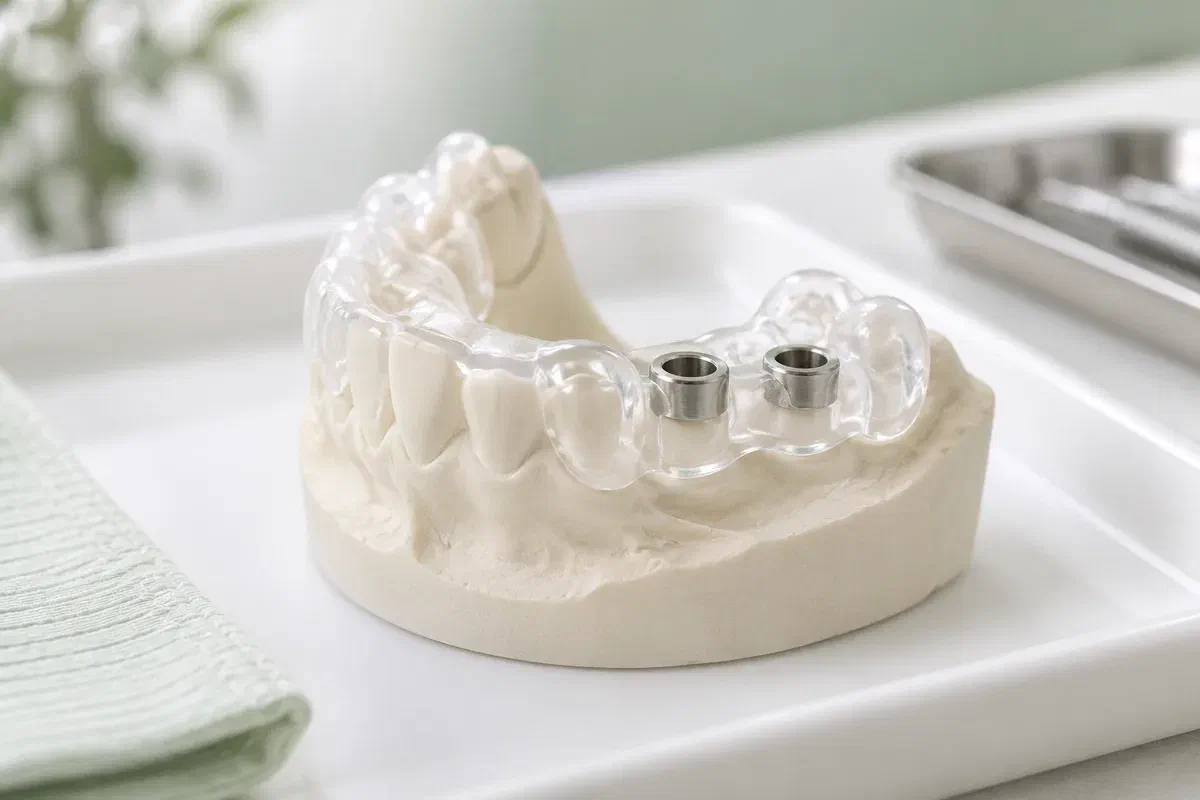
A guided approach is considered within one plan, and the timing of the implant is part of that plan. The discussion should explain what the guide is meant to help with and what it needs in order to work.
Even when a tooth is being removed, the replacement tooth should guide the plan. Ask how the implant position relates to the crown’s appearance, bite and cleaning access.
Imaging shows a lot, but the socket after extraction may differ. A guide does not remove the need for a safety margin or for confirming instrument access in the mouth.
Ask which steps would be guided and which done another way, and whether guidance affects the decision to place now or later. Its limits and cost should be part of the answer.
Guided describes how the implant is positioned. It does not on its own mean the implant goes in the day the tooth comes out, a temporary tooth straight away, no discomfort or faster healing.
In suitable cases, a guide gives a physical link between the planned position and the site, which can be useful when a root is being removed and familiar landmarks change. Its value rests on accurate records, good design and manufacture, solid support and careful use.
Judgement remains central, perhaps more so around an extraction. Planned and achieved positions can differ, and the surgeon must respond to what the socket actually shows. Ask why guidance has been suggested and how the plan allows for surprises.
Patient information: International Team for Implantology — computer-guided implant surgery
Designing the replacement tooth and implant at the same time helps explain how placement affects appearance, function and cleaning once everything has healed.
Planning often uses scans taken before extraction. Ask how those records are checked against each other and how the plan adapts if the socket is different.
If the guide does not seat correctly or the site is not as expected, it should not be used regardless. Ask whether the implant might be delayed and how that decision is made.
The order of steps depends on your plan and the guide system. Ask who handles the extraction, the planning and guide, the implant surgery and the final crown, particularly if more than one clinician is involved.
Your dentist confirms why the tooth cannot be kept, reviews health history and discusses replacements and risks. Records show whether an implant is suitable and what timing makes sense.
Imaging shapes the planned position and the guide’s design. The team considers its support, access, anatomy, whether grafting is needed and whether to place at extraction or later.
Seating is checked before guided steps begin. If the site or fit rules it out, the surgeon follows an alternative that was considered beforehand, which may include delaying placement.
Reviews and the timing of the final tooth depend on how the site heals. A guided procedure does not skip the assessment of healing and implant support before restoration.
Aftercare depends on what happened, including the extraction, any grafting and any temporary tooth. Follow the written guidance you are given rather than assuming guided placement changes it.
Ask how to clean nearby, what to eat, and whether to avoid rinsing or sucking motions early on. A calm first day does not mean healing is complete.
Note the clinic’s number and the symptoms to report. Get in touch about anything listed, unexpected movement, or concerns with a temporary tooth.
Once the crown is in, cleaning around it and regular professional reviews remain essential. Ask which aids suit the space and what will be checked at recall visits.
Templates are equipment; healing and results depend on far more. Use these answers as a starting point, then ask about the specific plan proposed for your tooth.
We will examine the tooth, set out the options for replacing it and explain how a guided approach might fit, along with any records or specialist opinions that may be needed. Visits take place at our Bronte Street practice.
If you have recent X-rays or a diagnosis from another dentist, bring them along so we can build on that work.
